Singapore first data centre under stricter green rules, Digi Mart USA News (Singapore): The first data centre built in Singapore under stricter green rules opened on November 6, as the country balances growing demand for computing power with energy and land constraints.
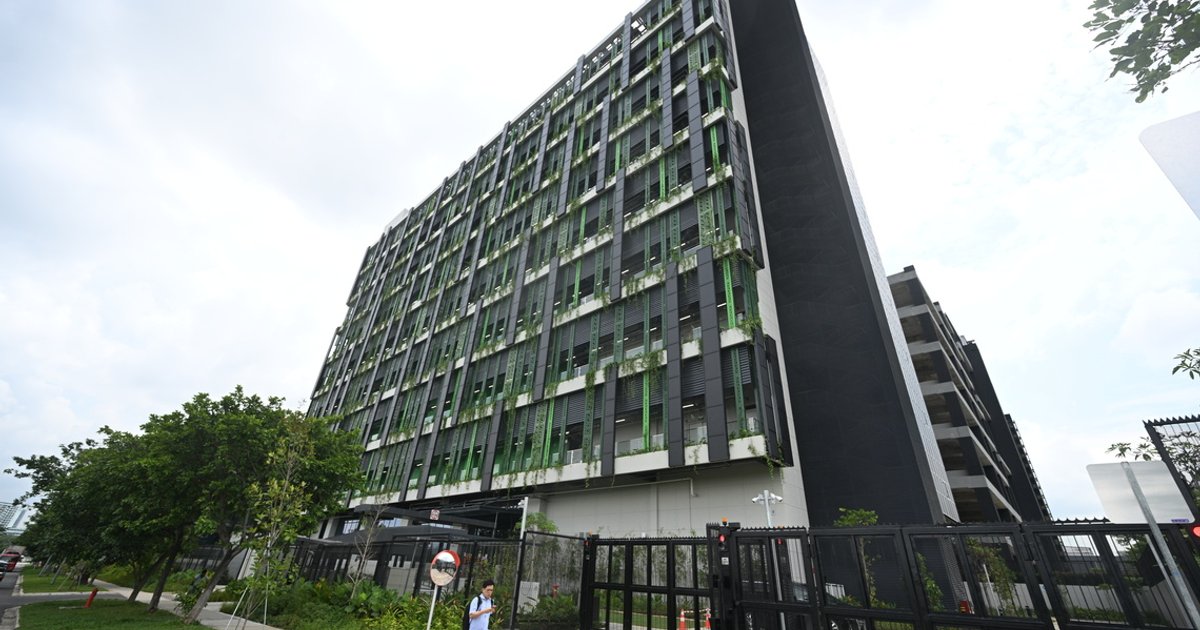
US data centre operator Equinix invested US$290 million (S$370 million) in SG6, its sixth facility in Singapore. The nine-storey building in Jalan Tukang will initially accommodate about 1,550 server cabinets and provide 20 megawatts of computing capacity when fully built.
SG6 is among four projects selected by the authorities after the lifting in 2022 of a three-year moratorium on new data centre developments, which had been imposed to review how the sector could grow sustainably. The projects were assessed on sustainability, strategic contribution and economic value, rather than simply speed or scale.
SG6 is designed to achieve a power usage effectiveness (PUE) ratio of 1.2, better than the ceiling of 1.3 required under the government’s pilot Data Centre – Call for Application exercise. PUE measures how efficiently a data centre uses energy, and a score closer to 1 indicates greater efficiency.
Equinix said it aimed for 1.2 because it believed that level was achievable.
To reduce energy use, the company worked with manufacturers to select efficient chillers, fine-tune pumps and size cooling equipment appropriately, getting more cooling from each unit of electricity. SG6 will also operate at about 27 degrees Celsius, compared with around 25 degrees Celsius at typical data centres, since warmer temperatures reduce the energy needed to keep servers cool.
The facility also supports liquid cooling, which carries heat away from powerful computer chips more effectively than air.
Such improvements matter in Singapore, where limited land, electricity and water constrain how much computing infrastructure can be added. Senior Minister of State for Digital Development and Information Tan Kiat How, who was guest of honour at the opening, said efficiency could create room for more digital activities despite resource constraints.
“Singapore’s ambition is not maximum compute; it is maximum value from compute,” he said. A data centre’s value should be measured through the businesses it connects, the high-value computing tasks it supports, the capabilities it anchors and the innovation around it, he added.
The facility supports artificial intelligence, high-performance computing and other data-intensive tasks. Equinix said it already has AI customers at SG6 but declined to identify them, citing business confidentiality.
Tan also said SG6 is part of a larger digital infrastructure system taking shape across Southeast Asia. “SG6 provides trusted, highly connected infrastructure for workloads that benefit from being in Singapore,” he said.
SG6 will also host a research and testing facility developed with the National University of Singapore’s Energy Solutions Hub, targeted to open in 2027, which will let researchers and companies trial technologies in a working data centre. The pilot projects, intended to last up to a year, will explore areas including liquid cooling, digital twins and battery energy storage.
Digital twins are virtual models of physical equipment and systems that can help operators test how changes to cooling or operating settings might affect performance before making adjustments in the actual facility.
Liquid-cooling trials will explore ways to remove heat from increasingly powerful servers, while battery storage research will examine how stored electricity can support data centre operations. “Regulations set the baseline, but innovation must raise the ceiling,” Tan said, adding that successful solutions could subsequently be deployed across Singapore and the region.
Tan said digital and energy infrastructure should increasingly be planned together, as data centres could account for about one-fifth of ASEAN’s growth in electricity demand between 2025 and 2030. Countries bring complementary strengths: some have more land and energy, while others offer large markets, industrial ecosystems or talent.
Singapore contributes connectivity, capital, trusted institutions and a strong business ecosystem, with infrastructure suited to tasks where reliability, security and proximity to businesses matter, he said.
“That is how I see Singapore’s contribution. Not to pull every workload here into Singapore, not to compete for every megawatt, but to help make the regional system work better.”