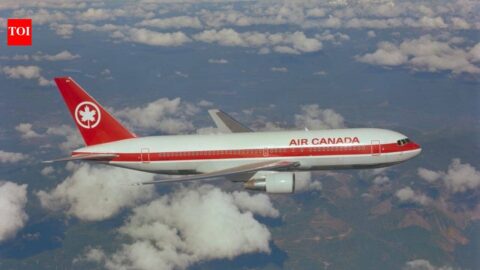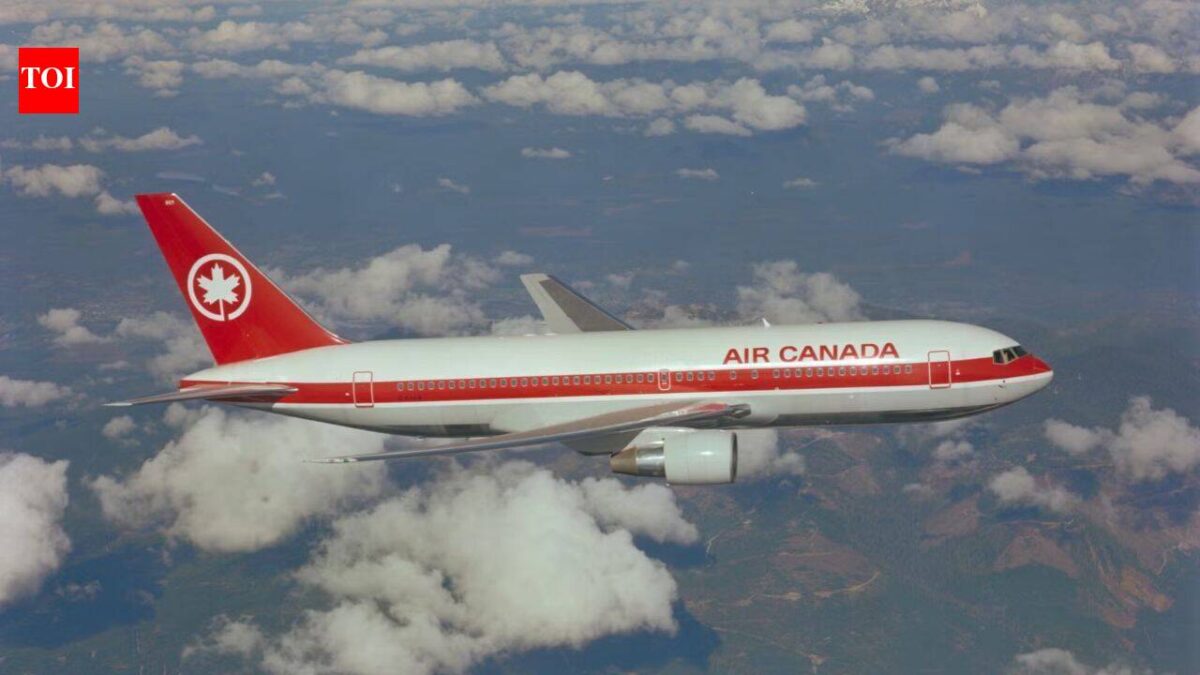
Air Canada Flight 143 Gimli glide landing 1983, Digi Mart USA News (Manitoba, Canada): An Air Canada Boeing 767 carrying 61 passengers and eight crew members ran completely out of fuel at 41,000 feet over Manitoba after a mistake in converting measurements caused ground staff to load less than half the required fuel. The pilots glided the 132-tonne plane for 17 minutes without engine power and made an emergency landing on a former military runway that had been turned into a sports car race track.
According to the official inquiry by the Aviation Safety Board of Canada, all 69 people on board survived the incident on July 23, 1983. Only minor injuries were reported during the evacuation.
Confusion over kilograms and pounds
The fueling mistake happened on the ground in Montreal before the flight departed for Edmonton via Ottawa. The aircraft’s digital Fuel Quantity Indicator System was not working because of a faulty channel, and maintenance workers had already recorded the problem.
Because the automatic fuel gauge showed no readings, the ground crew and pilots had to work out the fuel amount manually using a dipstick that measured fuel volume in litres.
At the time, Air Canada was changing its fleet to the metric system. The newly purchased Boeing 767 was the airline’s first aircraft to use metric measurements throughout.
The flight management computers required fuel amounts in kilograms, but during the manual calculations the crew used the conversion figure for pounds instead of kilograms. Instead of multiplying the fuel volume in litres by 0.8, they multiplied it by 1.77, the imperial conversion figure.
As a result, the aircraft took off with just 22,300 pounds (10,100 kg) of fuel. This was only about 45 percent of the 49,200 pounds (22,300 kg) needed to complete the journey to Edmonton.
Total power loss in mid-air
While flying over Red Lake, Ontario, at 41,000 feet, the pilots received warnings about low fuel pressure. Captain Robert Pearson and First Officer Maurice Quintal first believed there was a problem with a fuel pump and planned to divert to Winnipeg.
Within minutes, both Pratt & Whitney JT9D engines stopped, cutting power to the main electrical generators.
With both engines out, the cockpit displays went blank, leaving the pilots with only a few battery-powered emergency instruments. These did not include a vertical speed indicator, making it difficult to judge how quickly the aircraft was losing height.
Without engine power to run the hydraulic pumps, the normal flight controls could no longer move the control surfaces. The aircraft’s automatic emergency system released a ram air turbine, a small propeller driven by airflow outside the aircraft, which produced just enough hydraulic pressure for the pilots to steer and control the nose position manually.
Race track diversion at Gimli
After realizing they could not reach Winnipeg, First Officer Quintal suggested landing at the former Royal Canadian Air Force Station Gimli, a military airfield where he had trained. The crew did not know the closed base had been turned into the Gimli Motorsports Park.
On the day of the incident, part of the main runway was being used for a sports car event organized by the Winnipeg Sports Car Club, with spectators, campers and racing cars along the runway.
As Captain Pearson, who had years of experience as a glider pilot, brought the aircraft in, he realized it was moving too fast and was too high to stop safely on the remaining paved runway. Because both engines had stopped, the crew could not use the wing flaps or slats.
Pearson used a forward slip, a rare maneuver for commercial aircraft, which uses the rudder and ailerons in opposite directions to increase air resistance and lose height quickly. The sideways movement briefly reduced airflow to the ram air turbine, making the controls harder to operate just before landing, but Pearson straightened the aircraft in time.
Landing on the dragstrip
The crew lowered the landing gear using a manual gravity release system. The main gear locked into position, but the nose gear did not lock properly.
The Boeing 767 touched down on the dragstrip section of the airfield. Pearson applied the main wheel brakes, causing two tires to burst.
Two boys riding bicycles on the runway got out of the way as the silent aircraft approached.
Because the nose gear had not locked, the front of the aircraft dropped onto the runway, and the nose scraped along the concrete, creating friction that helped slow the heavy plane. The front section then struck a steel guardrail along the middle of the dragstrip, which helped keep the aircraft moving straight instead of turning toward the spectators.
The aircraft stopped completely within 3,000 feet of touching down. A small fire near the nose was extinguished by race track staff using portable extinguishers.
Passengers left the aircraft using emergency slides. Because the nose had collapsed, the slides hung at steep angles.
Some passengers suffered minor cuts, scrapes and sprains during the evacuation.
Investigation findings and aftermath
The Canadian Aviation Safety Board report identified failures in procedures, gaps in staff training, and Air Canada’s use of both metric and imperial measurements across its fleet as the main factors behind the incident. The damaged Boeing 767, registered as C-GAUN, was repaired at the Gimli site and returned to commercial service with Air Canada.
It continued flying for another 25 years before being retired in 2008.