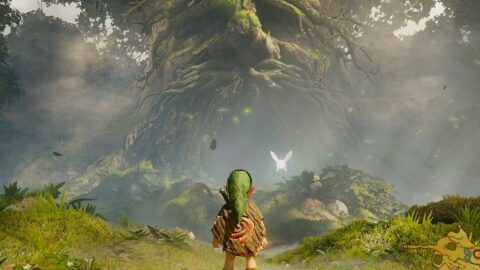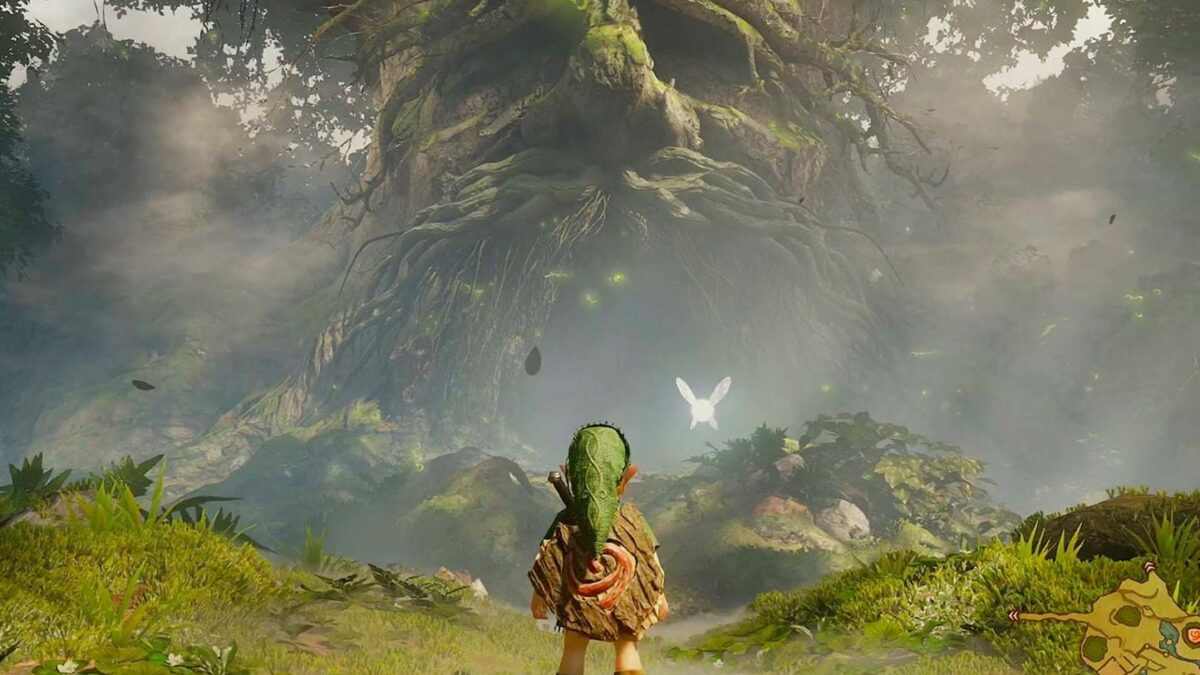
Ocarina of Time remake and its place in the Zelda franchise, Digi Mart USA News: Since Thursday, a large number of adult fans have returned to the forest of children. For the 40th anniversary of the Zelda series, Nintendo is re-releasing The Legend of Zelda: Ocarina of Time, the fifth installment of the series, first published in late 1998 on the Nintendo 64.
Following an earlier remake on the 3DS in 2011, this version rebuilds the game with redone graphics, reorchestrated music, cutscenes dubbed in French and a free camera.
Link can now jump on command, whereas he previously jumped on his own, and veterans are rediscovering the experience of falling into a void through overconfidence. The fairy Navi keeps her famous “Hey!
Listen!” line, but her hints now appear in small speech bubbles that no longer interrupt play. Link himself remains silent.
The story is unchanged: a young boy in a green tunic tries to stop the sinister Ganondorf from seizing the Triforce, a relic that grants the wishes of its holder.
He pulls the Master Sword from its pedestal and awakens seven years later as an adult in a devastated kingdom. The fairy tale becomes a story of a stolen childhood, and the player moves back and forth between two eras.
This transgenerational appeal is central to the re-release. “It is the favorite episode of fans over 40, who now have the chance to show ‘their’ Zelda to their children,” says Bruno, a Micromania salesperson in Vélizy.
Ocarina of Time is also a milestone in video game history. Technically, it established conventions that are now universal.
Target lock, which allows players to circle an enemy without losing their balance, now seems commonplace. More broadly, the game was a technical breakthrough in bringing 3D gaming to the general public.
Dan Houser, co-founder of Rockstar, told the New York Times in 2012: “Anyone who makes 3D games and claims to have borrowed nothing from Zelda is lying.”
Music is another factor in its lasting success. Composer Koji Kondo built his ocarina melodies on just five notes.
The game has sold more than 7 million copies, holds a 99/100 score on Metacritic that remains unmatched, and has driven increased sales of ocarinas. Few games can claim to have revived a musical instrument.
The game’s story also offers three endings. The fans debated the order of the series for years until the official book Hyrule Historia settled the question in 2011: the entire Zelda story splits into three timelines after Ocarina of Time.
In the first, Link wins and returns to his childhood, leading to Majora’s Mask and Twilight Princess. In the second, the future he saved continues without him until the kingdom is submerged, which leads to the ocean of The Wind Waker.
The third is the most dizzying: Link loses. Ganon seizes the Triforce before being sealed away by Zelda and the sages, a branch that leads to A Link to the Past and then to the very first Zelda game from 1986.
The game that started it all therefore takes place in a world where the hero failed, a defeat made official twenty-five years after its release. This resolution, which settled long-standing contradictions, frustrated some fans.
Nintendo offers an out: these accounts are presented as legends passed down through generations. Ocarina of Time is not only a major installment but the crossroads from which most of the others branch out.
The hardest part to explain to newcomers is why adults shiver at hearing five ocarina notes. “For many, it is the game of their childhood,” summarizes Etienne Masson of the Nintendo-Town website, speaking to AFP.
Love also comes through suffering: merely mentioning the Water Temple and its iron boots still brings back old traumas. The “Hey!
Listen!” line has become a worldwide meme, the franchise has staged concerts around the world, and a live-action film is scheduled to be released in France on April 28, 2027. With its goddesses, parallel realities and eternal struggle between hero, princess and demon, Zelda has built a mythology that only needs the big screen.
The remake of Ocarina of Time thus has a dual mission: moving longtime fans and introducing their children to the series. And if the children fall to Ganondorf’s blows, they should not worry.
They may have just invented the first Zelda.