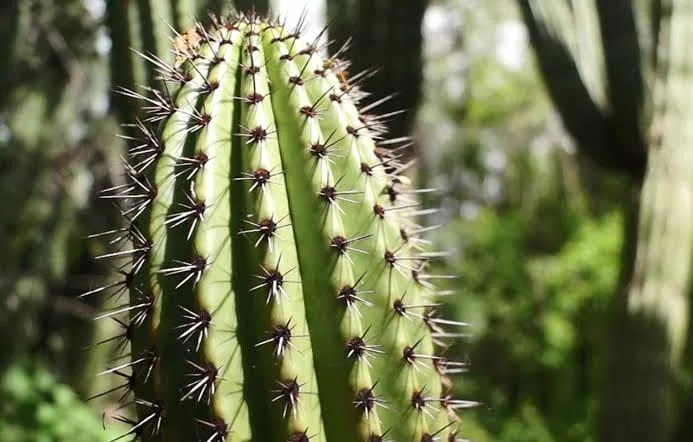
Cactus conservation corridor proposal in the Valle de México, Digi Mart USA News (Toluca, State of Mexico): The Movimiento Ciudadano (MC) parliamentary group has proposed creating a state program to conserve, manage comprehensively and restore wild cactus populations, along with recognizing a priority conservation region across 12 municipalities in the State of Mexico.
The initiative, presented to the plenary of the State of Mexico Congress by Deputy Lilia Urbina Salazar, would reform the Biodiversity Code of the State of Mexico. It would require the State Secretariat of the Environment and Sustainable Development to prepare, update and publish in the official gazette, the Gaceta del Gobierno, lists of wild species and populations that are priorities for conservation in the state.
Urbina said cacti are part of the identity, biodiversity and history of communities in the Valle de México and play an important role in maintaining ecosystem balance. She warned, however, that urban growth, changes in land use and infrastructure construction put their survival at risk.
The proposal states that the secretariat would consider natural distribution, ecosystem importance, habitat fragmentation or loss, and the best available scientific information when assessing cactus species and populations. It would also take into account risk categories set out in Mexican Official Standard NOM-059-SEMARNAT-2010, or any federal provision that replaces it, without encroaching on federal competencies.
According to the document, species and populations could be included on the list when they are shown to be important for preserving critical habitats, protecting biodiversity, preventing erosion, supporting water capture or maintaining ecological structure. The list would be updated every three years and published in full in the Gaceta del Gobierno.
The initiative, coordinated by Deputy Juan Manuel Zepeda Hernández, calls for the creation of the State Program for the Conservation, Comprehensive Management and Restoration of Wild Cacti. The program would include an updated georeferenced inventory of wild cactus populations and associated stem-succulent species, identify and map populations that host protected species, and define priority polygons and microbasins for conservation, recovery and biological connectivity.
The proposal also includes rescue, propagation, relocation and ecological restoration actions on degraded soils, as well as community monitoring and coordination with federal authorities to prevent the illegal extraction, trafficking, transport and trade of wild specimens. It further proposes agreements with higher education institutions, research centers and botanical gardens to conserve germplasm such as seeds, tissues, pollen and genetic material.
The initiative also seeks to strengthen technical capacity and provide incentives to legally registered producers through Wildlife Conservation Management Units and certified nurseries. It would also design compensation programs and economic incentives, including payments for environmental services, for agrarian communities, ejidos and private owners who voluntarily set aside land for the conservation of these populations.
On land use, the proposal would recognize a Priority Region for Cactus Conservation in the State of Mexico covering 12 municipalities: Tecámac, Temascalapa, Acolman, San Martín de las Pirámides, San Juan Teotihuacán, Axapusco, Nopaltepec, Otumba, Zumpango, Hueypoxtla, Tequixquiac and Apaxco. The designation would serve ecological planning purposes only.
It would not constitute a Protected Natural Area declaration or impose general restrictions or charges on legally recognized private, ejidal or communal property rights.
The text also states that, within the polygons identified by the program’s technical diagnosis, the municipalities involved, in coordination with the secretariat, would seek to incorporate preservation criteria into updates of their urban development plans and local ecological zoning programs. In state or municipal environmental impact assessments for new works or activities, authorities would evaluate the presence of wild cactus populations and determine, where appropriate, the need for rescue, transplant, seed bank and environmental compensation programs within the same microbasin.
The proposal states that acquired rights and environmental permits granted before the decree takes effect would be respected, so new management measures would apply only going forward.
Under the transitional articles, the secretariat would have 180 calendar days to prepare and publish the state program and, in coordination with the municipalities involved, carry out an initial diagnosis of wild cactus populations in the priority region. A report on their conservation status would be published at least every three years.