
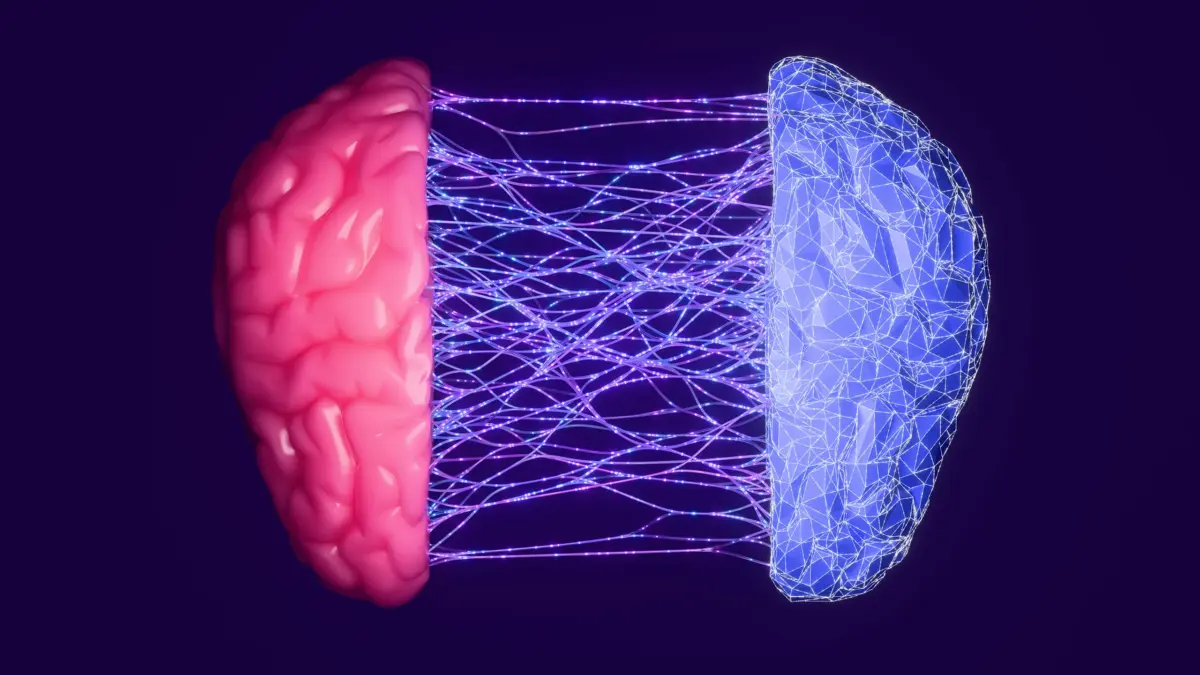
Brain crossed wiring theory, Digimart Global: The human brain, like the brains of most vertebrates, is wired in a crossed pattern: the left side controls the right side of the body, and sensory input from the right side is processed in the left side of the brain. Scientists have proposed many explanations for this arrangement, but its biological and evolutionary origins have not been firmly settled.
Neuroscientists Martin Wessendorf and Daniel Wang, from the University of Minnesota, have published a study in Frontiers in Neuroanatomy suggesting a new explanation. Taking an evolutionary perspective, they looked back hundreds of millions of years for the earliest evidence of contralateral organisation in animals.
The researchers did not carry out new experiments or identify new fossils; instead, they reviewed existing studies across the major vertebrate groups, from amphibians to mammals, to examine how crossed pathways overlapped between species.
According to the researchers, the first wire crossing most likely occurred in vision, in jawless fish more than 500 million years ago. The eyes of these fish naturally flipped incoming light, and signals from each eye crossed to the opposite side of a brain region called the optic tectum, known as the superior colliculus in mammals.
As sensory inputs for touch, vibration and pain developed, they appear to have followed this same pattern.
The researchers argue that when mammals evolved their more advanced cerebral cortex, it was most efficient to build on the existing contralateral arrangement rather than rewire the system. In their words, the contralateral organisation of the optic tectum biased the later evolution of sensory and motor systems toward the same arrangement.
True mammals appeared about 165 million years ago, by which time their contralaterally organised somatosensory, rubrospinal and tectospinal systems had already existed for almost 200 million years.
Earlier explanations have suggested the crossed wiring is more efficient, or that the body of an ancient vertebrate ancestor twisted. Wessendorf and Wang argue these accounts do not fully capture the evolutionary picture.
The matter is not considered settled: the authors note that fossils of the 500-million-year-old fish could provide further evidence, and that mapping the neural wiring of animals such as crocodiles and birds could offer more clues. The researchers predict that most or all vertebrate brains will show the contralateral wiring design to be more efficient than plausible alternatives, though this remains a prediction to be tested.