

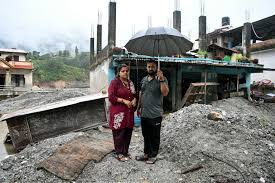
Climate finance for developing countries, Digimart Global (Nepal-Tibet border): Earlier this year, a massive flash flood tore through townships along the Bhote Koshi river system on the Nepal-Tibet border, leaving more than 1,400 people dead and at least 5,000 missing, according to a report published by The Conversation.
The article says climate change contributed to the glacial mountain collapse that triggered the flood. Nepal, a developing country of about 30 million people, produces only 0.05% of the world’s carbon emissions, yet it is now facing a multi-billion dollar reconstruction bill.
What climate finance is meant to do
Climate finance refers to funding that helps countries protect their people and economies from the effects of global warming. This can include building sea walls, developing drought-tolerant crops, strengthening infrastructure against extreme weather, and funding renewable energy and electric transport that reduce emissions.
Developing countries, particularly in the Pacific, have argued since the first UN climate summit in 1995 that wealthy countries should lead on climate finance because they developed using fossil fuels and contribute most to climate change.
Agreements and the loss and damage fund
At the 2024 climate summit in Baku, Azerbaijan, developed countries committed to raise US$300 billion (A$436 billion) a year for the world’s poorest nations by 2035. The article describes this as far short of the global need.
A UN-backed loss and damage fund was agreed at COP27 in Egypt in 2022. Its first call for submissions was made at COP30 in Belém in 2025, and it received almost 180 requests totalling US$2.8 billion (A$4 billion) by the June 2026 deadline. Pledges to the fund now exceed US$820 million (A$1.2 billion), leaving a significant gap against demand.
The Nepal test case
Nepal asked the fund for an emergency payout of the maximum allowable amount of US$20 million (A$29 million). At its first extraordinary meeting, the fund’s board set aside US$21.6 million (A$31 million), which the article says is only about 0.7% of Nepal’s estimated economic loss and damage cost, and does not include non-economic losses related to health, culture or nature.
The article notes that the speed of the decision is historic for the UN process. Other countries must wait until December 2026 for the outcome of their submissions.
What comes next for COP31
The article says Australia’s climate minister Chris Bowen, as president of the COP31 negotiations, has an opportunity to raise issues it says Turkey is avoiding, including a fossil fuel phase-out. It also suggests Australia should support the Pacific Resilience Facility, a Pacific-owned and led endowment-style fund designed to generate predictable returns, although the article says it requires more long-term investment.
The author concludes that no amount of finance can respond to all the damage climate change is already causing, and that COP31 must address its root cause: the human use of fossil fuels.