

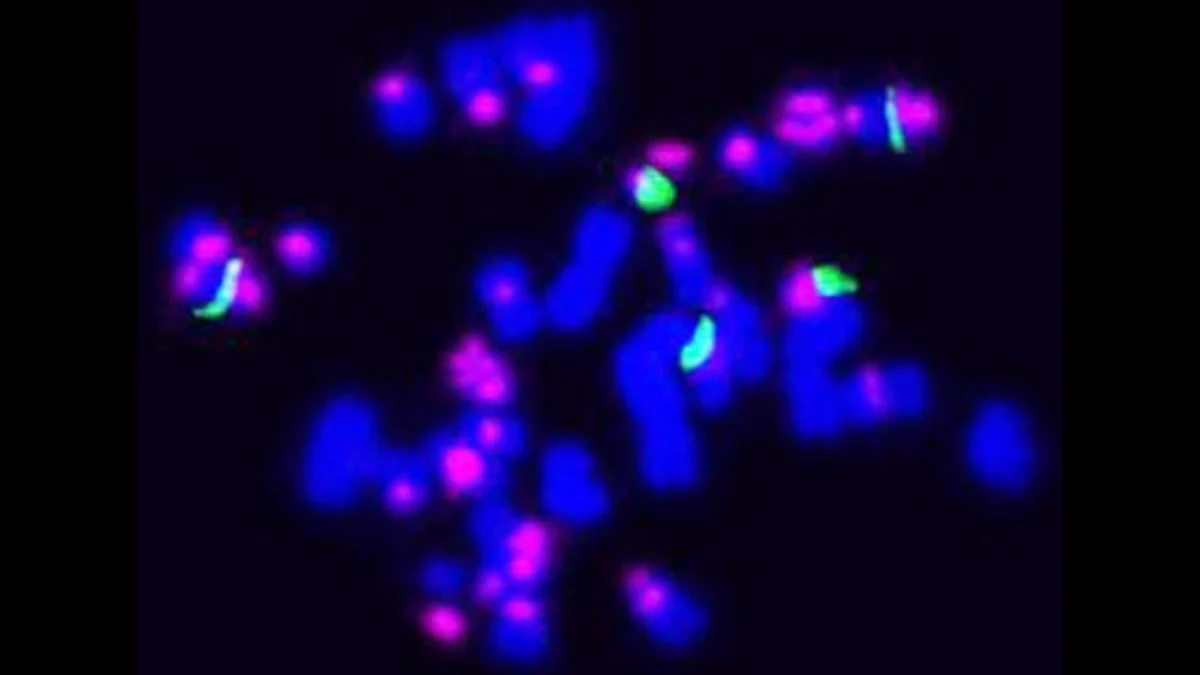
Planimal hybrid cells, Digimart Global: Scientists have created hybrid cells that combine genetic material from a hamster and an alga, according to a study led by biologist Sachihiro Matsunaga of the University of Tokyo and published in Nature Communications. The team reports that algal DNA was incorporated into hamster cell chromosomes and remained stable across more than 150 generations of cell division.
Matsunaga calls the artificial cells ‘planimals’, a blend of plant and animal. He first proposed the concept in 2018, describing animal cells fused with algae to gain plant-like traits, particularly photosynthesis.
In that earlier paper he suggested such cells could one day help reduce energy consumption in food production, enable photosynthetic therapies, and support long-distance space travel.
The idea draws on a natural example. In 2000, scientists discovered a single-celled eukaryote named Hatena arenicola on a sandy beach at Isonoura in Wakayama, Japan.
This organism spends half its life as a ‘plant’ through a close partnership with the photosynthetic alga Nephroselmis, which lives inside the Hatena cell. Scientists broadly agree that plants acquired photosynthesis through a similar process involving ancient chloroplasts.
In the laboratory work, the researchers did not use conventional genetic modification. Instead they guided the cells along pathways inspired by endosymbiosis.
One approach, phagocytosis, relies on an animal cell engulfing an alga cell, which occurred naturally when the two cell types were placed together. This produced some stable cell lines, but the success rate was very low, with only 3.7 colonies forming for every 1.2 × 10⁷ cells.
To improve results, the team treated the hamster and algae cells with polyethylene glycol, which loosened cell membranes enough for the two species to fuse. The researchers report that this method produced about 800 times more successful outcomes than relying on phagocytosis alone.
The study also examined whether the algal DNA would survive repeated cell division. According to the researchers, the planimal cells retained nearly an entire algal genome over many generations.
Matsunaga said the findings show that genetic material can cross even a vast evolutionary divide between plants and animals at the chromosome level, without sexual reproduction.
The planimal cells are not yet capable of photosynthesis. Most of the protein-coding genome from the alga was inactive, with only about 4 percent producing detectable transcripts.
Matsunaga said the red alga used has a compact genome with metabolic functions that animal cells lack, and the ultimate goal is to activate those pathways. The next challenge, he said, is working out how animal cells can use the algal genetic material.