
Whirligig children’s TV recording, Digimart Global (Grimsby, England): A chance find on an audio cassette has led to the recovery of the only known surviving material from Whirligig, one of Britain’s first popular children’s television shows. The series ran for more than 90 episodes between 1950 and 1956, and no recordings from it were thought to exist.
The discovery was made by Stuart Woodhead from Grimsby, who runs the Joy Laurey Archive, dedicated to one of the programme’s resident puppeteers. Woodhead told an episode of Secret Lincolnshire on BBC Sounds that finding the recording felt like “sheer magic”.
He said he came across it on a tape he had acquired at auction, which contained a BBC interview with Joy Laurey. At the end of that tape was a short piece of audio labelled “Whirligig, part of the final episode”.
Whirligig was the BBC’s first regular Saturday children’s TV programme. It was broadcast in five series of fortnightly editions from November 1950 until the summer of 1956, usually at 5pm.
Each hour-long episode combined a drama serial, a music feature, a comedy cowboy story and a magic slot. The shows were transmitted live from the BBC’s Lime Grove Studios in west London, and at the time preserving live programmes was generally not regarded as necessary, although recording was technically possible.
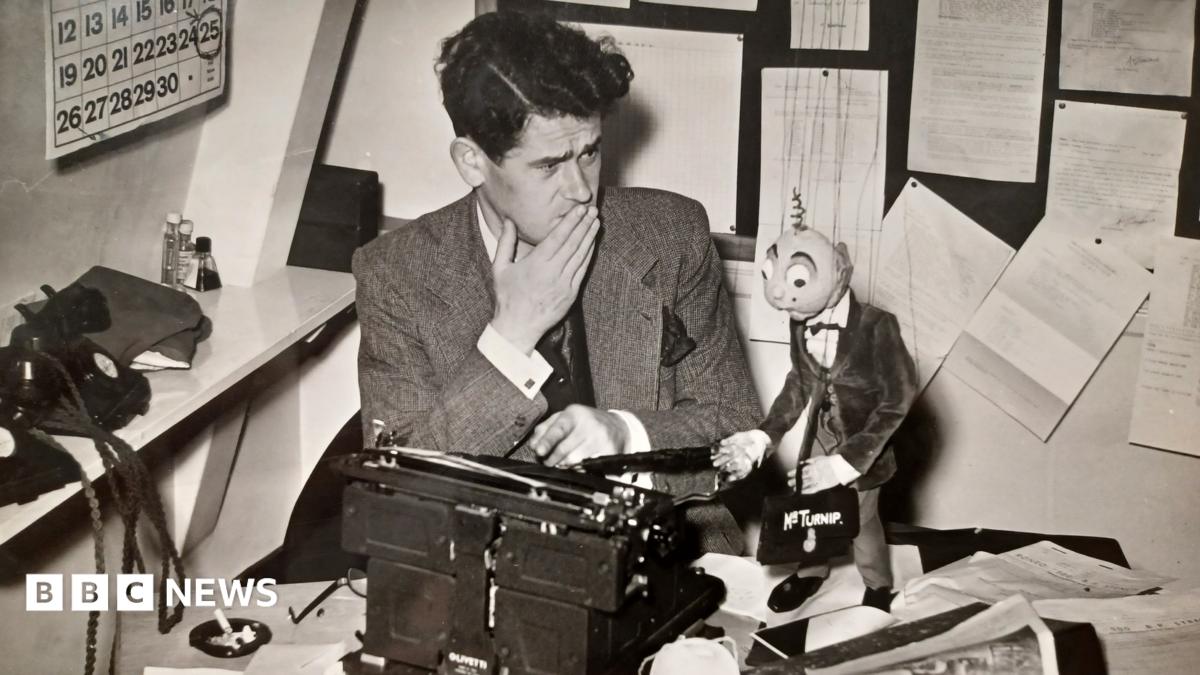
The programme was linked together by presenter Humphrey Lestocq and his puppet sidekick Mr Turnip. Laurey built and operated Mr Turnip, and the character was voiced by Peter Hawkins, who later voiced characters including Bill and Ben, Captain Pugwash and the Daleks in Doctor Who.
Woodhead, who has written a biography of Laurey titled The Girl Who Pulled the Strings, has shared pictures and details of his collection online and has staged exhibitions of some items.
Comparison with scripts held at the BBC Written Archives Centre in Caversham, Berkshire, confirms that the three-minute recording comes from the episode of 26 June 1954. That episode was originally intended to be the final instalment, but the programme’s popularity led the BBC to revive it for another run the following year. The recovered clip features regulars discussing having to “move out” as the series ends.
Paul Marshall, chairman of the Broadcast Engineering Conservation Group, which runs the Broadcast Engineering Museum at Hemswell Cliff near Gainsborough, described the discovery as “stunning”, noting that audio recordings of such early live TV shows are rare. He said owning a tape recorder at that time required money as well as enthusiasm and skill, so the survival of the recording is significant.
The audio was probably originally made on reel-to-reel tape and later transferred to cassette.