UK youth benefits reform and Labour MP concerns over sanctions, Digi Mart USA News (United Kingdom): Next week, the Labour Government will face a reckoning over how it plans to bring down the soaring benefits bill for young people. Even before Alan Milburn’s long-awaited report into youth worklessness is published, the prospect is making some Labour MPs jumpy.
The review, due as soon as next Tuesday, is likely to tell Prime Minister Andy Burnham he needs to find billions of pounds more to fund employment schemes that help the roughly one million young people not in education, employment or training (NEET) secure jobs. Countries such as the Netherlands and Denmark, which have better records on youth participation, spend three or four times as much proportionally as the £3.7bn a year that Britain gives to employment support.
Milburn’s report is likely to be wide-ranging. It may call for earlier careers conversations in schools, with teachers helping pupils plan from the age of 14, and a national framework offering every young person a job, training place or apprenticeship, on the condition that they engage with the support.
Funding changes are also likely, with combined authorities and councils, including those led by mayors, possibly receiving upfront Treasury funding to tackle local youth unemployment.
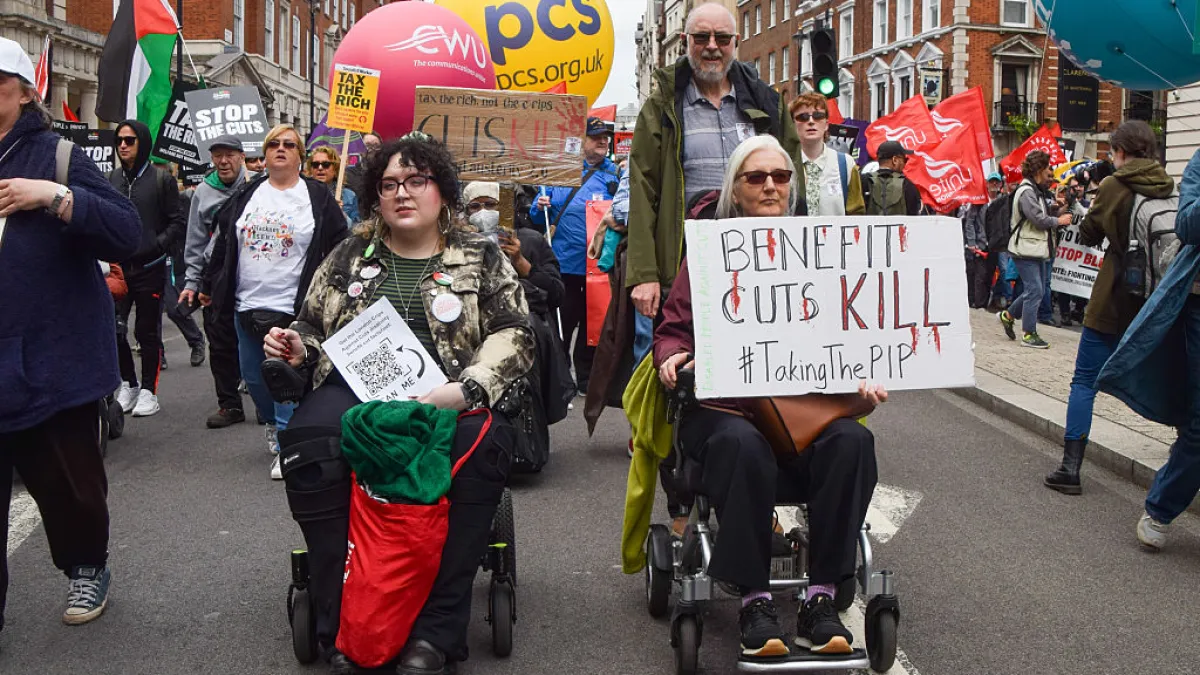
Some Labour MPs who rebelled against Sir Keir Starmer’s attempts to cut benefit costs last year are focused on two new red lines. The first is making receipt of health-related and disability-related welfare benefits conditional on young people engaging with employment, training or functional support, which raises the prospect of some young people having benefits cut under sanctions if they refuse.
The second is whether under-25s should be treated differently from older adults, with the system assuming younger adults have lower living expectations and should face stronger financial incentives to work.
“I’m concerned about a different benefit system for the under 25 being introduced. I’m also concerned about sanctions; I wouldn’t automatically vote for reforms,” one Labour MP told The i Paper.
“What is really crucial is whether or not there will be conditionality and what that conditionality will be,” a second Labour MP added. A former rebel MP said a “nervousness has kicked in” ahead of Milburn’s report, while a fourth Labour MP warned: “I’m not going to give them a free ticket if they just go ahead and say we’re going to sanction young people and put all this conditionality on it.”
Starmer’s attempt to cut £5bn from the benefits bill provoked some of the most damaging rebellions of his premiership. Now, however, the bulk of the Parliamentary Labour Party appears minded to accept Milburn’s recommendations, so long as they are carried out in what one Labour MP called a “Labour i.e.
compassionate way.” A party manager said, “People are in a much better place,” but added, “I do predict some problems ahead.”
A separate review into personal independence payments for disabled people, chaired by disability minister Sir Stephen Timms, is expected before Christmas. It is not required to find any savings but will overhaul the assessment criteria for benefits.
Legislation on both reviews is expected next year, perhaps as soon as spring. Work and Pensions Secretary Pat McFadden has conducted outreach, but some backbench Labour MPs have yet to meet him to discuss the reforms.
One Labour MP said support for his plans would be “dependent on proper engagement” with McFadden.
A minister said, “I think we are in a better place than last time, with considerably more goodwill towards Andy. However, the devil will be in the detail.
If the suggestion is that money currently going to young people is to be reduced and redirected into employment support, I think that will be potentially very problematic.”
According to the source, the UK’s total welfare and benefits spend is projected to rise by an extra £19bn to reach £353bn for the year, and the Office for Budget Responsibility forecasts it will climb to £431bn by 2031/32. Scarlett Maguire of pollster Merlin Strategy said public opinion is hardening towards welfare, with a substantial shift in favor of reducing welfare spending since this time last year.
She said focus groups suggested this shift reflects personal experience and a perception that many people are getting a “free ride,” and described it as an opportunity for the Conservatives and a potential weakness for Labour.
On Tuesday, Conservative leader Kemi Badenoch outlined the party’s conference pledge to cut £36.1bn annually from public benefits. This included a pledge to save £2.8bn a year by ending disability living allowance for families of children with “milder cases” of behavioral disorders, learning difficulties or ADHD.
Welfare spending rose by £58.3bn a year in real terms between 2010/11 and 2023/24, according to the source.
Research by the More in Common think tank found that Labour and Liberal Democrat voters favor cutting benefits more slowly to ensure results are sustainable, while Conservative and Reform voters want faster cuts. Younger people blame the rising benefits bill on a lack of jobs, while older voters say benefits are too generous.
Badenoch said the Conservatives are not minded to block Milburn’s reforms, although they are likely to disagree with large amounts of upfront spending not accompanied by immediate savings elsewhere. “Our issue is not with Alan Milburn.
Our issue is with Andy Burnham and Labour MPs who just want to look for who they can tax so they can pay for more families,” she told The i Paper.
Milburn has consulted Whitehall departments including education, health and business, and has also met opposition parties. With a wide range of measures, it is not yet clear how quickly all of his recommendations will be accepted, though ministers are expected to respond welcomingly next week.
The real fight is expected over the legislation next year. As the source concludes, next week may be “the end of the beginning” of the welfare debate.