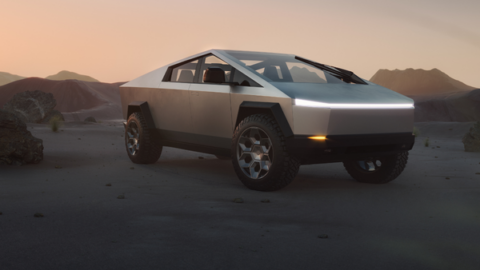
Tesla Cybertruck production end, Digi Mart USA News: Tesla’s decision to halt production of its Cybertruck next year is arguably the most striking failure in a category that automakers once promoted heavily: large electric pickup trucks. Elon Musk, Tesla’s chief executive, said in a social media post on Saturday that the company would speed up Cybertruck production at its Austin, Texas, factory to fulfill an order backlog before dismantling the assembly line around June or July.
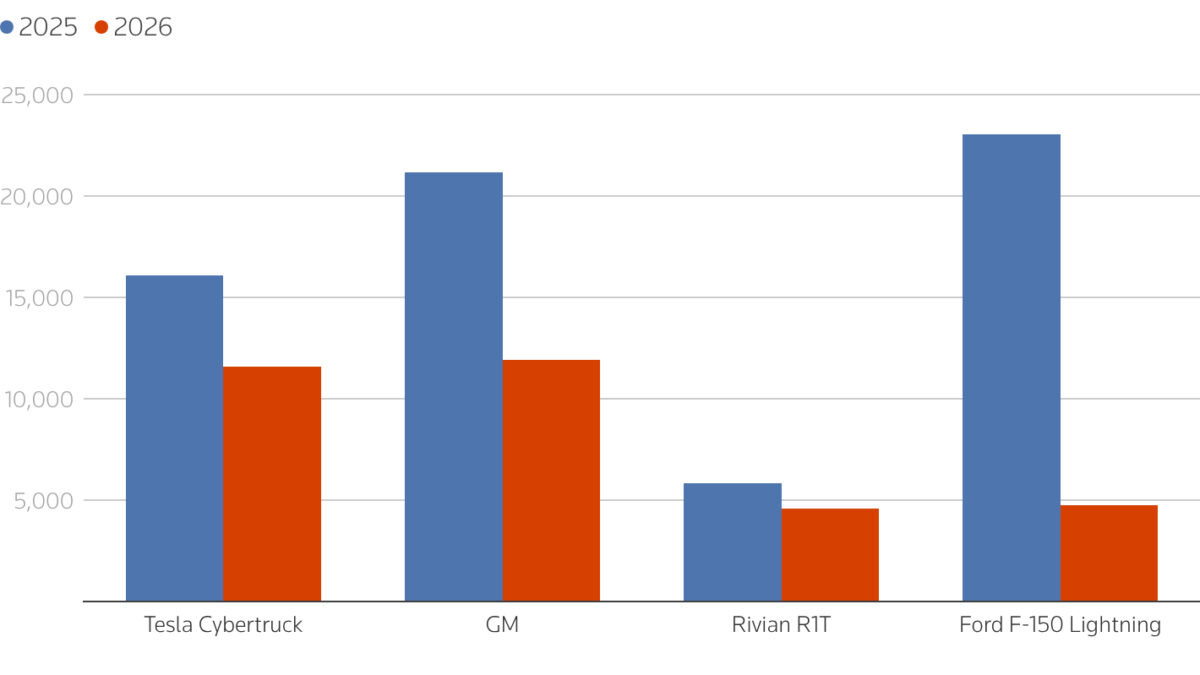
Musk added that the gradual production reduction would allow Tesla to build more Cybercab robotaxis, which have not yet been commercially launched. However, sales of Tesla’s angular stainless-steel pickup, which MotorTrend once described as having a design inspired by both a stealth bomber and a refrigerator, fell 28% this year through September to about 11,600 units, according to an estimate from research firm Motor Intelligence.
That sales pace is far below the annual level of 250,000 trucks Musk once predicted. Musk’s other company, SpaceX, also bought Cybertrucks from Tesla last year worth $131 million at list price, according to a federal regulatory filing.
More Money for Fewer Pickups
The market for large electric pickups has also proven difficult for Tesla’s competitors. Even the relatively modest deliveries of the Cybertruck exceeded sales of electric pickups from rivals General Motors and Ford Motor, whose executives once had high hopes that electric versions of their full-size pickups, their main sources of revenue, would succeed spectacularly.
Detroit automakers turned to electric pickups early in this decade, partly to counter the entry of Tesla and Rivian. GM, Ford and Stellantis, which owns the Ram brand, had for decades retained many customers by offering pickups with ever-greater power and towing capacity.
However, these companies have not succeeded in transferring that formula to electric pickups, said Karl Brauer, executive analyst at the automotive research site iSeeCars.com.
On one hand, these vehicles are expensive, partly because their massive batteries are extremely costly. GM’s Chevrolet Silverado EV, for example, starts at about $62,000.
On the other hand, these trucks often struggle to perform the tasks that gasoline pickup owners are accustomed to, such as towing a horse trailer or hauling heavy equipment. “In the end, you pay more for a less functional vehicle,” Brauer said.
Automakers Turn to Smaller Models and Range-Extending Fuel
Ford CEO Jim Farley acknowledged these economic challenges during an earnings call last year, explaining why the company would stop production of the Ford Lightning, the electric version of its popular F-150 pickup, which enjoyed relative success for a few years before demand faded. “The bigger the vehicle, the bigger the battery, the more pressure on margins, because customers are not ready to pay a premium,” Farley said.
Ford is now focusing on a smaller electric pickup, the Fathom, which it plans to launch at the end of next year with a starting price of about $28,000. Automakers are also turning to hybrid technology to offer pickup customers the capabilities they need in electric form.
Stellantis plans to launch next year an extended-range electric pickup that will use a gasoline generator to recharge the battery while driving.