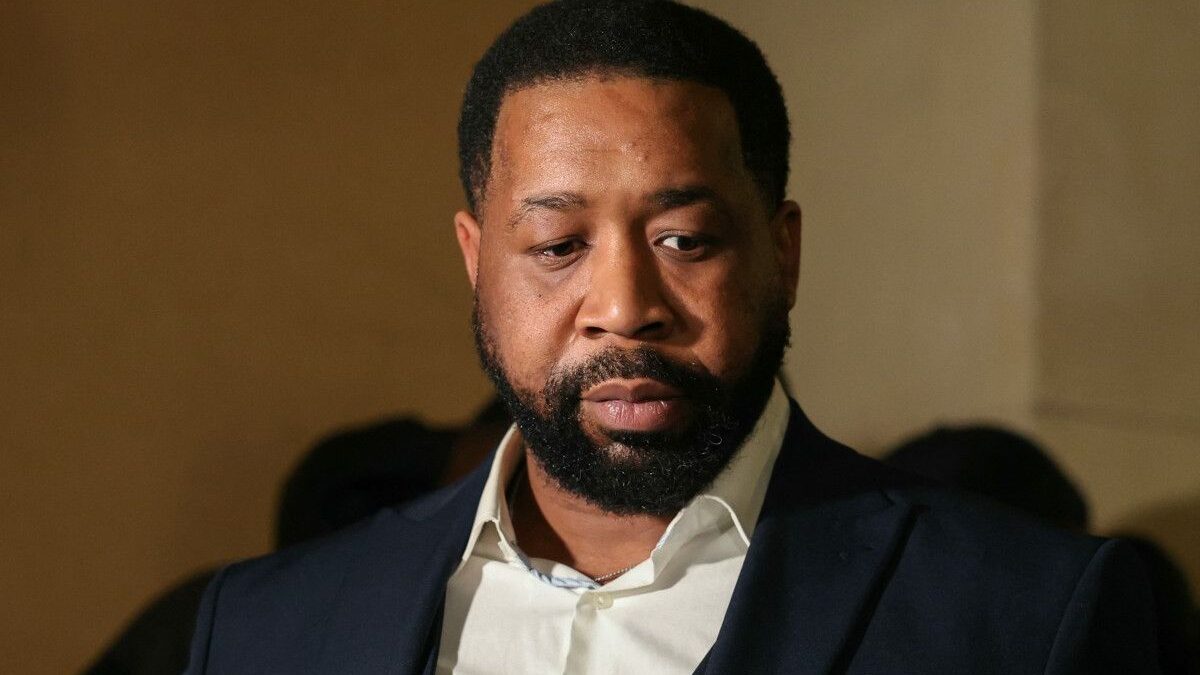
Michel Zecler police assault trial Paris criminal court, Digi Mart USA News (Paris, France): At the Paris criminal court, the focus turned to the facts after a first day devoted to the personality assessments of three police officers accused of beating Michel Zecler in November 2020. None of the three defendants had previously been found to have misused their duties, and no warning signs had emerged that could explain such a sudden outburst of violence.
The debates on Tuesday addressed the core of the case: how a routine check for not wearing a mask during Covid-19 restrictions led sworn officers to deliver, in the words of the IGPN investigator, “about thirty kicks, punches, baton strikes and even a headbutt.” The presiding judge and assessors asked whether Zecler had behaved in any way that could justify an arrest as he was heading to his recording studio.
The officers cited the smell of cannabis they said came from his bag, and the prosecutor-general asked whether that could constitute a flagrant offense. The IGPN investigator called it “a bit flimsy.”
According to the investigator, nothing authorized the officers to enter the studio, even though they believed it was a building hallway, which is also a private space under the law. He said he doubted that Zecler had pulled Aurélien L.
into the entryway, and that Zecler had not struck any blows. The officers, by contrast, “struck many.” Surveillance footage broadcast early in the afternoon showed, in the investigator’s account, that one officer’s written report was false on every point.
The footage, as described in the article, shows Aurélien L., in plain clothes and apparently without a police armband, grabbing Zecler to try to pull him out of the area. Colleague Philippe T.
joined him, quickly followed by Pierre P., and blows began to rain down. The investigator said Zecler was never seen trying to seize an officer’s weapon, contrary to the officers’ statements.
Instead, the footage shows a sustained barrage of violent blows to the victim’s face.
Philippe T., described the day before by a colleague as “never aggressive, always restrained,” delivered forceful punches to the face. Pierre P.
struck Zecler with a headbutt and baton blows, and Aurélien L. followed with two heavy telescopic baton strikes to the skull.
According to a former IGPN major who analyzed the videos, the only recognizably professional movements were possibly the initial kicks; the rest were not techniques taught in police training. Within about five minutes, the officers’ written account, the investigator said, had collapsed on its own.
The footage also shows young people in the basement studio, whom Zecler had tried to call for help, opening the door he had been holding shut, pushing the attackers out and closing it behind them. The accused said the young people shouted “We are going to kill you all,” which they said caused them to panic and strike more blows.
The investigator rejected this account, stating that almost all the blows were struck before the young people arrived.
Later, around 4:30 p.m., Zecler took the stand in a gray suit and spoke in a steady voice, a few meters from his accusers seated on the bench. He told the court that rewatching the footage was difficult because he had lived through it, and that he still dreams of the officers striking him.
“At several moments I thought I was going to die,” he said, adding that he still asks himself why.
Zecler said he wanted to respond to what he described as the lies told by the three defendants. He addressed the claim of a narcotics odor, saying no cannabis smell came from him or his studio and that he had not smoked in years.
He also said the officers called him a “sale nègre,” and said they threatened to kill him. “When I hear them say they were afraid…
they were not afraid,” he said. He described trying to calm them and speak gently, suggesting they might be looking for another Black man.
Although the prosecution did not treat the racist insults as aggravating circumstances due to insufficient material evidence, Zecler said he was disappointed that the officers would not be convicted of racism. He stated his firm conviction: “If I had been white, things would not have happened this way.”