Kraków shooting Norwegian expert advice on support for victims, Digi Mart USA News (Kraków, Poland): Following Saturday’s shooting in Kraków, Poland is confronting questions about the causes of the tragedy. Lena Fahre, director of the 22 July Center in Oslo, which documents the attacks carried out by Anders Breivik in 2011, is cautioning against drawing hasty conclusions.
Quoted by the Polish newspaper Gazeta Wyborcza, Fahre stressed that the most important priority now is support for those directly affected by the tragedy, including the families of victims and witnesses. She said psychological help should not be limited to the first days or weeks after the attack.
Norway’s experience shows that the effects of similar events can be felt for many years. “When the broadcast trucks leave, the tragedy does not end for those it directly affected,” Fahre said.
“In Norway we know that even after 15 years, people who survived the attacks and the families of victims still need help and care, not only from the state but also from society, from all of us. That is something we had to learn.”
Fahre also noted the emotions that follow such tragedies. Alongside shock and disbelief, she said, anger is often the most prominent feeling.
“We need quick answers: that is how we are built. We want to know as soon as possible what happened, why, and who is responsible.
Against our instincts, we must find the strength to let patience win.”
The expert warned against attributing motives to the perpetrator before they have been established. She said rumors and incomplete information, which can begin to function as facts, may be especially dangerous, and she encouraged people to rely on official sources.
Fahre also pointed to the need to secure witness accounts and physical traces of the tragedy. She explained that some objects, such as broken windows or damaged elements of the surroundings, may later become important historical evidence.
Norway saw this after the July 22, 2011 attacks, when part of Oslo’s government district was quickly cleared. Today the 22 July Center holds a limited number of preserved objects related to those events.
Fahre also stressed the need to separate the initial response to a tragedy from political disputes. After Breivik’s attacks, then-Prime Minister Jens Stoltenberg focused first on stabilizing the situation.
That did not mean abandoning later accountability; Norway analyzed, among other things, the actions of police and other public institutions. Fahre said similar discussions are needed in Poland but should be based on reliable information rather than emotion.
On July 22, 2011, Anders Behring Breivik detonated a bomb in Oslo’s government district, killing eight people. He then travelled to the island of Utøya, where he shot 69 participants at a Labour Party youth camp.
In total, the attacks killed 77 people.
Although 15 years have passed, Norwegians are still examining the circumstances of the perpetrator’s radicalization and preparations for the attacks. Fahre said about 20 factors that may have mattered to the course of those events have been identified.
The director of the 22 July Center fears the Kraków shooting may have a far-right motivation, but she cautioned that the causes of the attack should not be determined at this stage.
She also highlighted the problem of glorifying extremists on social media, including TikTok. In her view, arresting and convicting the perpetrator is not enough to prevent similar events; education, documenting history and studying the mechanisms of radicalization are also needed.
The 22 July Center carries out such work in Norway, cooperating among other things with institutions in Manchester and Paris. After the Kraków events, its staff met to prepare for questions from visitors to the facility.
Fahre also expressed hope that the tragedy will become an impulse for solidarity and mutual support in Polish society.
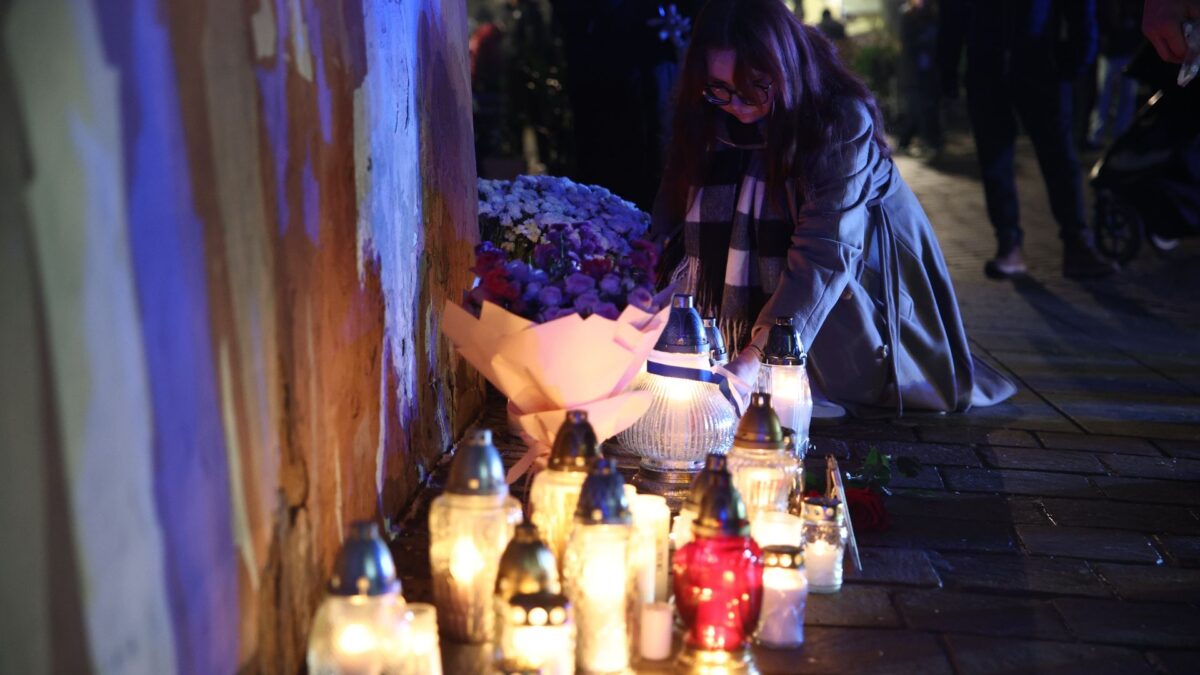
The attack took place on Saturday, November 7, at around 3 p.m. An armed man drove a car onto Main Square from Sławkowska Street and began shooting at pedestrians.
He then fled through the city streets, also firing on a No. 1 tram along the way. He was detained after an exchange of fire with police near the intersection of Stradomska and Dietla streets.
Six people were killed in the attack, including four women and two men. Another 16 people were injured, among them two police officers.
Both officers have undergone surgery and have been brought out of a coma, but their condition remains serious.
The attacker is 24-year-old Michał O. from Ostrowiec Świętokrzyski.
He was shot during his arrest and taken to hospital in critical condition. Police reported on Monday morning that the attacker had died.
At his family home, investigators found the bodies of three people with gunshot wounds. Prosecutors determined they were the parents and sister of the 24-year-old.
Two shot cats were also found.