Robot moth grows sensor using artificial blood, Digi Mart USA News (Estonia and Italy): Robots usually leave the factory with every sensor they will ever have. Researchers at the University of Tartu in Estonia and the Italian Institute of Technology (IIT) have built a moth-shaped robot that can add a sensor after it is made, using chemicals carried in its artificial blood.
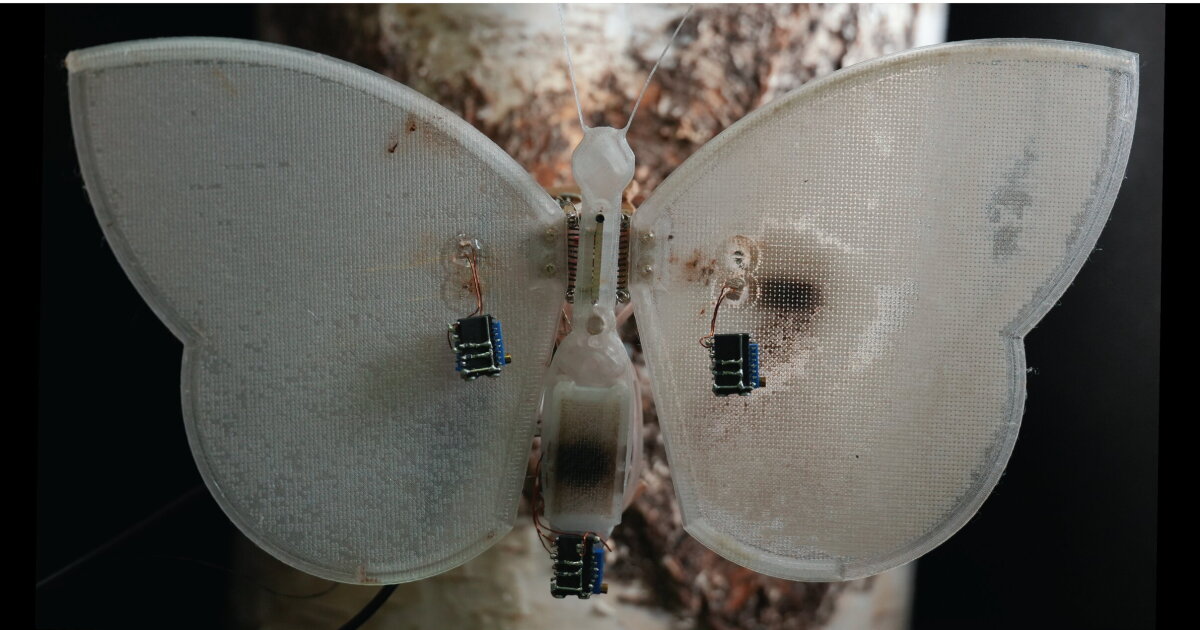
The moth’s body is 3D-printed from see-through plastic and laced with tiny veins. A small pump pushes about 3 ml of liquid through them, and some of it seeps about a hundredth of a millimeter into the surrounding plastic.
The liquid carries pyrrole, which turns into the electrically conductive plastic polypyrrole when hit by UV light with help from a light-activated additive. A stencil determines which patch of the wing is exposed, and that patch turns black as the sensing material forms.
Gold wires threaded through the body during printing pick up the change, so the robot grows the sensing material rather than the wiring. Afterward, when UV light strikes the patch, its electrical resistance drops briefly, and an onboard chip responds by blinking an LED or flapping the wings.
According to the study, published in Advanced Science, the sensor still worked after four months in storage and became more sensitive with each exposure, although it takes about five minutes to recover after each flash of UV.
The team describes the robot as a prototype with significant limits. It cannot fly, and its wings are bent by a nitinol wire heated by an external power supply.
First author Kadri-Ann Pankratov told New Atlas that the larger goal is powering the robot from energy stored in the blood itself, and the team has run initial tests to power the onboard microprocessor from reagents in the fluid. The researchers, not the robot, decided when to fill the veins, and the reaction cannot be undone.
Earlier robots have also repaired or built parts of themselves, including a Cornell soft robot that healed damage in 2022 and IIT’s FiloBot, which 3D-prints its own body as it climbs. Pankratov said the same circulatory system could in principle carry other, possibly reversible, chemicals.
She expressed hope that artificial robot blood and circulatory systems could become a common choice for some applications within about a decade.