MacBook Pro OLED teardown glowing Apple logo, Digi Mart USA News: Apple’s newly unveiled MacBook Pro models, the first in the line to combine a touchscreen with an OLED display, have drawn attention for the return of the illuminated Apple logo on the lid. Repair specialists at iFixit have now published a teardown explaining how the feature was brought back.
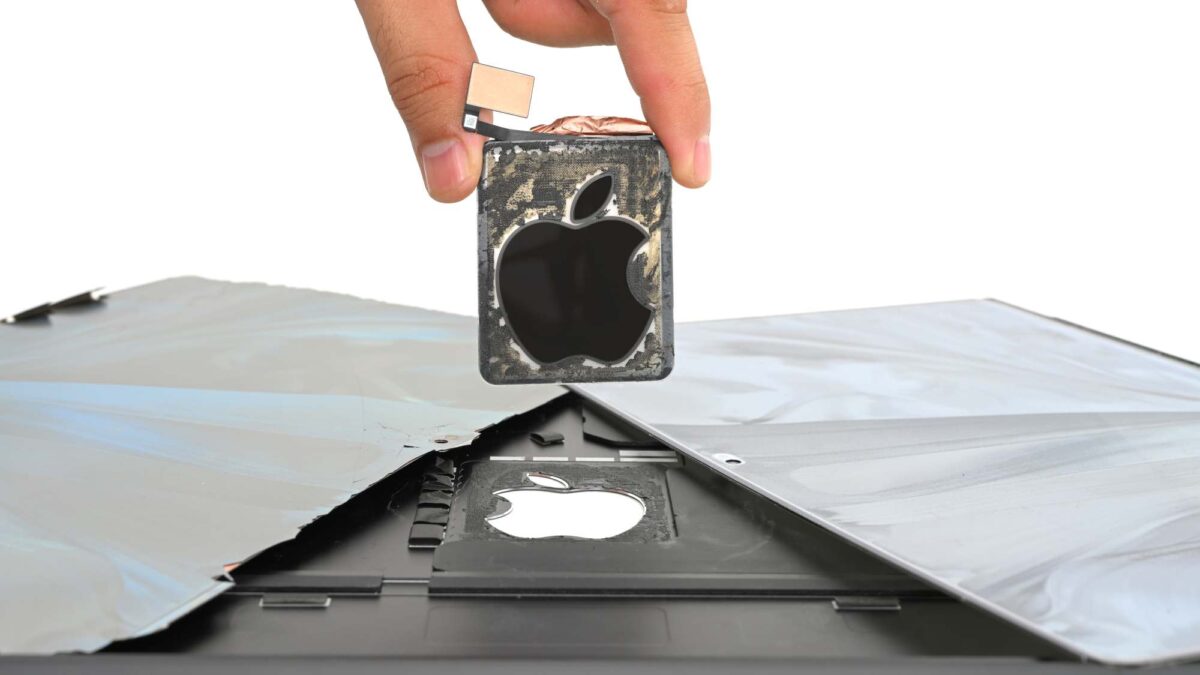
On older MacBooks, the logo glowed because light from the display backlight passed through an apple-shaped cutout, so it only lit up when the screen was on. According to iFixit, the new model uses four small LEDs mounted behind the display instead.
Their light passes through a reflective layer and a diffuser to produce an evenly lit logo, while the logo’s mirror-like coating makes it look shiny even when the LEDs are off.
The feature’s return is notable because Apple removed the illuminated logo in 2016, and it is back only after the company moved away from the LCD backlight technology that originally enabled it. iFixit also reported that getting to the lighting assembly is difficult because it sits behind the display, and that its technicians damaged the OLED panel and touch-sensitive layers while separating the glass.
The teardown suggests that repairs involving the logo or display could carry similar risk.
The teardown also described other hardware details. The tandem OLED panel is reported to have a 120 Hz refresh rate and a peak brightness of 2,000 nits.
Under a microscope, iFixit observed that the blue subpixels are considerably larger than the red and green ones, which may help reduce strain on the blue material, since blue OLED materials tend to wear out faster. Two foam pads behind the display were believed by the team to provide support when users press the touchscreen.
According to iFixit’s measurements, the 14-inch model weighs 1.38 kg, about 170 grams less than the comparable M6 MacBook Pro. The reduction is attributed to lighter aluminum bottom cover and display assembly components, with battery capacity almost unchanged, despite the added touchscreen.
On repairability, iFixit said replacing the display lid is no more difficult than on the previous generation, and the repair process no longer requires a separate lid-angle sensor. Apple’s repair software recognized a replacement logic board, display and Touch ID sensor, and both the touchscreen and Touch ID kept working after the original logic board was reinstalled.
Some familiar issues remain: the fans and USB-C ports sit beneath the logic board and are hard to access, the HDMI port and SD card reader are soldered to the board, and storage and unified memory cannot be upgraded. iFixit gave the 14-inch model a repairability score of 5 out of 10, one point higher than the previous M5 model.