Premier League VAR decisions weekend review, Digi Mart USA News (Premier League, England): Video assistant referee decisions have been largely accurate in the Premier League so far this season. The Key Match Incidents (KMI) Panel, which reviews every contentious decision and votes on whether it was right or wrong, has recorded just two VAR errors after eight rounds of matches.
At the same stage last season, there had been six mistakes.
This weekend, however, almost every top-flight game produced a controversial decision. BBC Sport examined most of these situations and assessed the likelihood that the KMI Panel will add them to the list of errors.
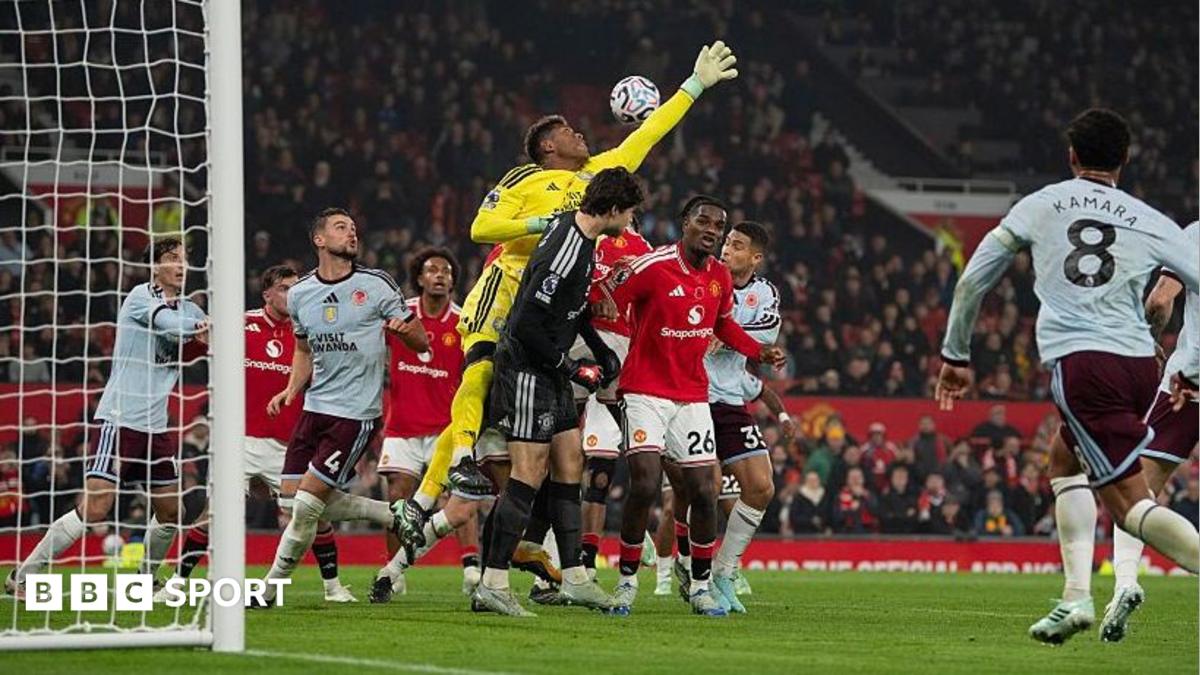
In Manchester United’s dramatic late equaliser against Aston Villa, a penalty was awarded for a foul by Boubacar Kamara on Matheus Cunha in the 16th minute. Replays clearly showed the first contact was on the Brazilian’s foot, so the spot-kick is expected to be judged correct.
A possible foul by Senne Lammens on Aston Villa goalkeeper Zion Suzuki before Patrick Dorgu’s 96th-minute equaliser was also reviewed. Because the Premier League sets a higher bar for intervention and the contact was minimal, the panel is unlikely to rule that VAR erred by not disallowing the goal.
At Hull, Kai Havertz was pulled down inside the area by Nobel Mendy. The VAR, Michael Oliver, sent referee Farai Hallam to the pitchside monitor, but no penalty was given because of an offside offence by the Germany international.
As the foul occurred before any potential offside, the penalty should have been awarded, and this is likely to be recorded as a mistake.
In the Leeds v Tottenham match, Jayden Bogle fouled Mathys Tel. Referee John Brooks gave the free-kick without a sanction, and the VAR, Tony Harrington, did not send him to the monitor for a red card.
Bogle caused the foul with his supporting foot rather than his challenging foot, making it a difficult call. Opinion is divided on whether the challenge was an unfortunate incident or one that endangered the opponent, so the outcome may depend on the panel members.
In Everton v Coventry, Coventry’s Caleb Yirenkyi appeared to have his hair pulled inside the area by James Tarkowski, but no penalty was awarded. While hair pulling is interpreted more leniently this season, replays appeared to show a yank of the hair, and the panel may judge this an incorrect decision.
A second Coventry penalty claim, involving Vitalii Mykolenko and Taiwo Awoniyi, is expected to be judged correct because the contact came just before the line. Thierno Barry’s goal, which was checked for a potential handball, may also be an error, although the VAR found no conclusive evidence and the panel’s view could split.
Brentford striker Igor Thiago was sent off after a VAR review for catching the head of Chema Andres with his forearm. The VAR intervention is likely to be supported because the law treats a strike to the head as a red card unless force is negligible, although there is doubt about whether he intended to catch the Spaniard in the face.
Crystal Palace were awarded a penalty three minutes into stoppage time for a foul by Milos Kerkez on Dario Osorio. This is more of a 50-50 clash than a comparable earlier incident, so it may be recorded as an on-field error rather than a VAR error.
Cole Palmer’s appeal for a penalty against Luke O’Nien and Jules Ahoka was rejected, and no penalty is likely to be supported because there is no conclusive evidence of initial foul contact inside the area. Newcastle’s goal at Craven Cottage was ruled out for a foul by Yoane Wissa on Timothy Castagne, a decision likely to be judged correct.
BBC Sport estimates that two decisions are very likely to be logged as VAR errors: the non-awarding of penalties to Arsenal and Coventry. Two further calls, Barry’s goal and the potential red card for Bogle, may also be errors depending on the panel’s subjective views.
The remaining incidents are likely to be correct, meaning the total could reach two to four errors, which would not be a good weekend for VAR.