US Task Force Iron Gate targeting Iran’s land routes and Caspian Sea weapons transport, Digi Mart USA News (Al Jazeera report): As fears of an escalation grow, Washington has announced Task Force Iron Gate, a unit targeting land routes and the Caspian Sea as part of efforts to choke Tehran’s military supply networks, according to Al Jazeera.
The United States Central Command (CENTCOM) announced the task force on Saturday. The military said it is trying to prevent Iran from using ground routes to transport advanced weapons and other materials.
On the same day, the Islamic Revolutionary Guard Corps (IRGC) announced plans for underground complexes capable of sustaining missile and drone production under bombardment. The announcement came amid reports of ongoing construction near Iranian missile bases, based on satellite imagery and earlier Tehran claims that US strikes failed to destroy its underground facilities.
Michael Mulroy, a former US deputy assistant defense secretary for the Middle East, told Al Jazeera the task force will aim to determine where weapons systems are entering Iran, how they could be cut off, and how Iran is transporting its energy. The unit expands the US blockade of Iranian ports to cover Iran’s land borders and the Caspian Sea and will reportedly be run by 20 civilian and military personnel.
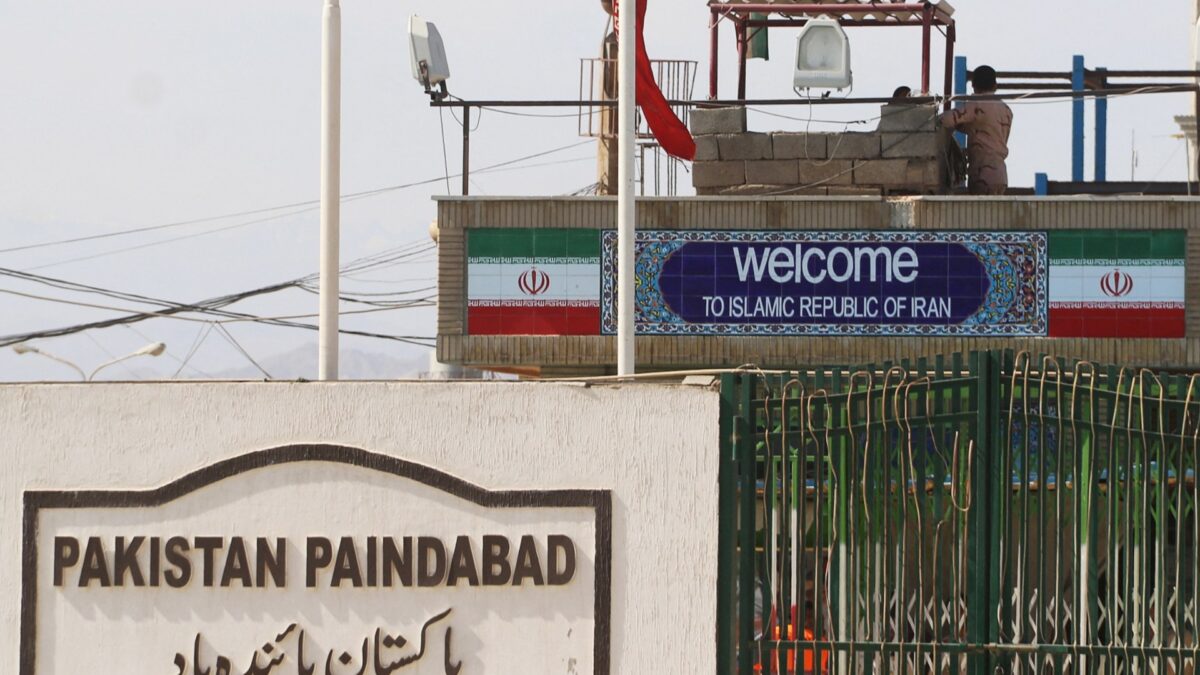
Iran shares borders with seven countries: Afghanistan, Armenia, Azerbaijan, Iraq, Pakistan, Turkiye and Turkmenistan. Based in Tampa, Florida, the unit will coordinate with other US government agencies on preventing the movement of advanced weapons systems, dual-use technologies, sanctioned materials and illegal revenue streams across Iran’s land borders and the Caspian Sea, CENTCOM said.
CENTCOM Commander Admiral Brad Cooper said the task force will reinforce the success of the ironclad blockade against Iran at sea.
Mulroy said that if US President Donald Trump escalates the conflict, attacks could target economic and infrastructure sites as part of a plan to cut the regime off from its ability to fight and fund itself. He described the task force as primarily a coordination body seeking to expand economic pressure by targeting ground routes, since maritime routes are already largely covered.
The IRGC dismissed the US plan as “just a play on words.” IRGC spokesman Sardar Mohebi, as reported by the Fars news agency, said the Americans cannot achieve their goal of collapsing the Iranian economy through this, and noted that Washington had previously claimed Iran would suffer an economic collapse within two weeks, which did not happen.
CENTCOM’s announcement did not explicitly identify Iran’s weapons trade with Russia, though analysts said the unit could disrupt supply networks with Russian connections. US media have reported that Russia has sent drone components and explosives to Iran via the Caspian Sea, and there are claims that Russian technology could be helping Iran develop advanced supersonic cruise missiles.
Mahjoob Zweiri, a professor of contemporary history and politics at Qatar University, told Al Jazeera that reports of military equipment imported via Russia are a real concern for the United States and that the task force could cause a confrontation with Russia. Rami Khouri, a public policy fellow at the American University of Beirut, said the US is doing things off the cuff regarding Iran, and that Iran’s long history of trade networks makes it virtually impossible for the US to seal off every route.
Former Trump aide and counterterrorism official Joe Kent, who resigned in March over the US war on Iran, said the task force is an attempt by CENTCOM to subvert ongoing diplomatic efforts. According to The Wall Street Journal, Cooper is among officials, alongside Defense Secretary Pete Hegseth, pressing Trump to renew attacks on Iran.
Zweiri said the task force may be largely symbolic because the US has no military presence on the Caspian Sea, and that ground troops would be required, which he considered unlikely. He also said the Caspian Sea contributes about 11 percent of Iran’s economy, a figure Al Jazeera could not independently verify, though the Soufan Center said the sea accounts for only a fraction of Iran’s overall maritime trade.