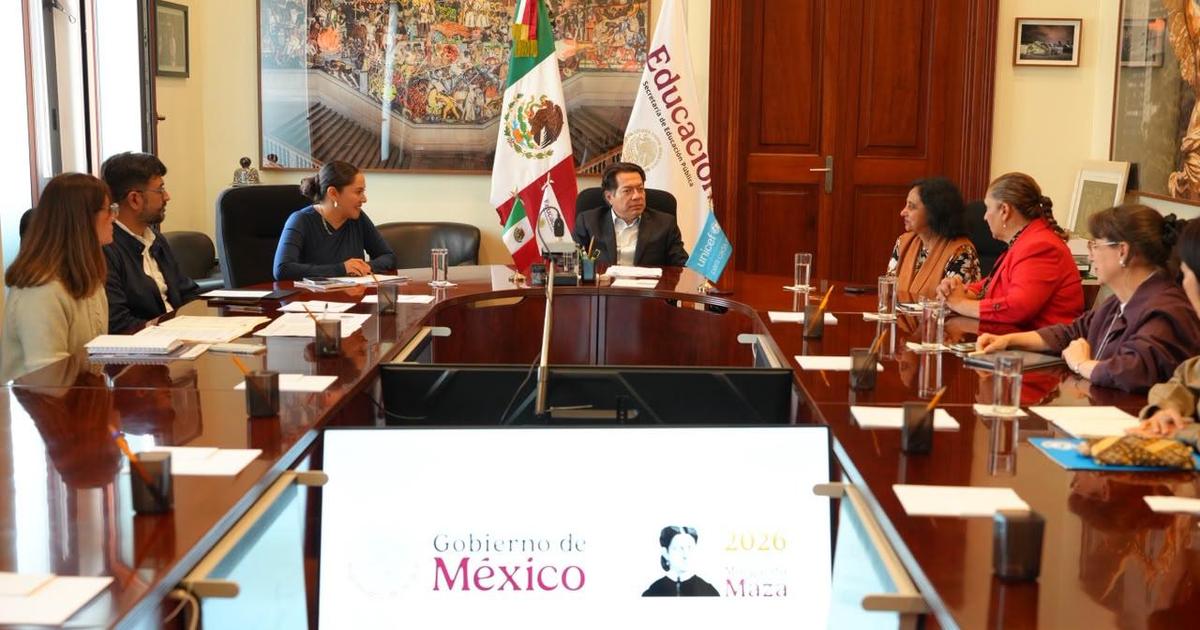
SEP and UNICEF early childhood education partnership in Mexico, Digi Mart USA News (Mexico): Mexico’s Secretary of Public Education, Mario Delgado Carrillo, met with a high-level delegation from the United Nations Children’s Fund (UNICEF), led by Dr. Chemba Raghavan, global leader for Early Childhood Development.
Raghavan recognized Mexico’s regulatory progress and the intersectoral and territorial work promoted by the government of President Claudia Sheinbaum Pardo to guarantee the rights and well-being of children.
Delgado Carrillo stated that investing in early childhood transforms lives, supports children’s comprehensive development, strengthens families, creates better opportunities for working women and contributes to the country’s economic and social growth. He said the next challenge is to expand coverage of early childhood education with quality services, sustainable financing and priority attention to the most vulnerable communities, so that no child is left behind.
Raghavan said it was very gratifying to see the progress being made in Mexico and expressed interest in the country strengthening its role as a regional reference and sharing its experiences with other nations. Both officials agreed to strengthen collaboration between Mexico and UNICEF to expand early childhood education services and guarantee children’s comprehensive development from their earliest years.
During the meeting, UNICEF representatives presented scientific and economic evidence supporting these policies, particularly the benefits of early stimulation and brain development. They also stressed the need to strengthen coordination among the education, health and social protection sectors, identify gaps in service across the territory and direct greater resources to communities with the greatest lag.
They proposed drawing on experiences from other countries in the region to strengthen implementation, monitoring and evaluation of public policies for early childhood.
Mexico outlined the challenges of fulfilling the constitutional mandate established in the 2019 reform, which incorporated early childhood education into basic education and set the state’s obligation to provide it. A study was also presented with different scenarios for expanding school-based and non-school-based services, with a proposal to double coverage by 2030, as well as options for budgeting and financing mechanisms to reach that goal.
The Secretariat of Public Education (SEP) and UNICEF reaffirmed their commitment to continued dialogue and technical cooperation to consolidate a comprehensive early childhood policy that recognizes children as rights holders and places their well-being at the center of public decisions. Both parties agreed that expanding access with quality, strengthening family support and guaranteeing sustainable resources are indispensable conditions for building better opportunities from the beginning of life.
Attending on behalf of SEP were Deputy Secretary of Basic Education Noemí Juárez Pérez, Marcela Kieller, deputy director of the Early Education Expansion Program, and Irma Luna, deputy director of Early Education in the Directorate of Curriculum Development. UNICEF participants included Olga Isabel Isaza De Francisco, deputy regional director for Latin America and the Caribbean and representative in Panama; Maki Kato, deputy representative in Mexico; Patricia Alejandra Misiego Telesca, regional specialist in Early Childhood Development; and Jimena Lazcano, national officer for Education and Early Childhood Development in Mexico.