Myc and cyclin T1 modified mRNA cardiac regeneration after myocardial infarction, Digi Mart USA News: A research article published in Nature Cardiovascular Research reports that transient expression of Myc and cyclin T1 can improve cardiac function after myocardial injury in mice. Myc is a transcription factor conserved across multicellular species and is involved in tissue regeneration, while the adult mammalian heart has very limited capacity to regenerate.
The researchers found that ectopic Myc alone cannot drive efficient cardiomyocyte division in adult hearts because of low levels of P-TEFb, a complex whose key controlling factor is cyclin T1. Combined overexpression of Myc and cyclin T1 has previously been shown to drive cardiomyocyte proliferation in vivo, prompting the team to explore therapeutic applications after cardiac injury.
Cardiovascular disease causes more than 18 million deaths annually worldwide, with around 85% attributed to heart attack and stroke. Following myocardial infarction, lost cardiomyocytes are not replaced, and current treatments manage symptoms or require heart transplantation, which is limited by donor shortages.
In the study, sustained global expression of Myc and cyclin T1 in the heart was found to be detrimental to heart function. To address this, the researchers used a genetically modified mouse model and a modified mRNA encoding Myc and Ccnt1 to achieve localized and transient expression.
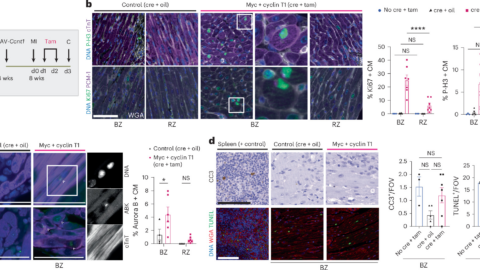
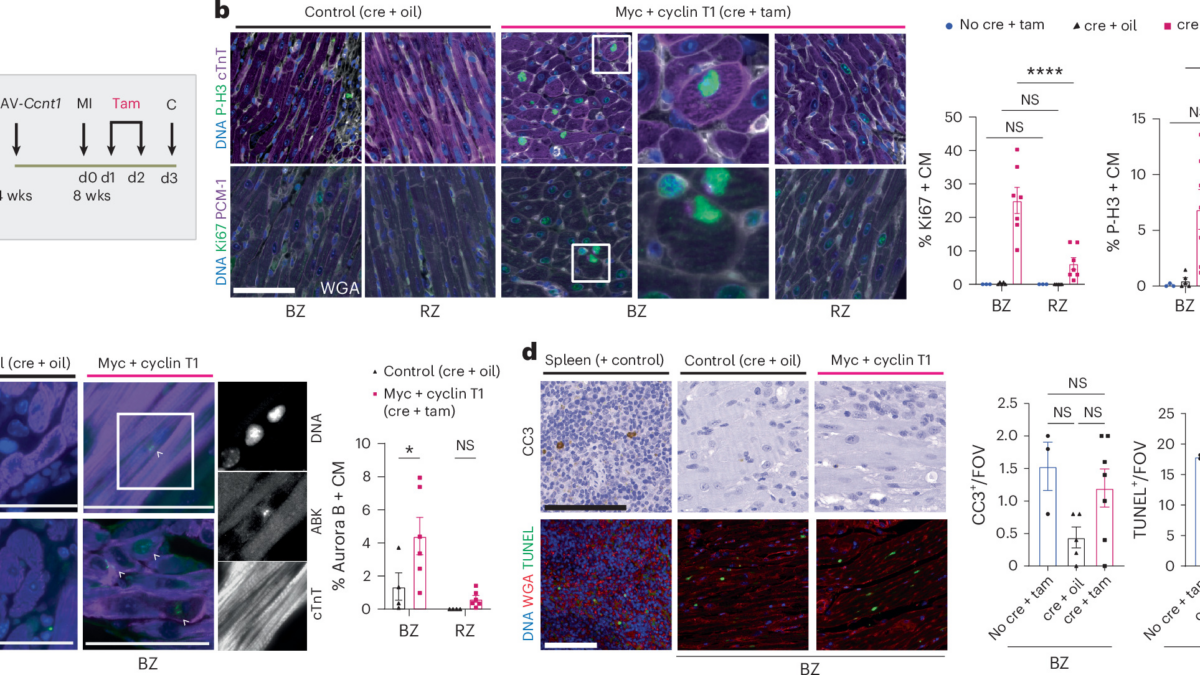
Tamoxifen was used to transiently activate MycER T2 in the heart after left anterior descending coronary artery ligation.
Histological analysis at 48 to 72 hours after myocardial infarction showed higher frequencies of Ki67-, phospho-histone H3- and Aurora B kinase-positive cardiomyocytes in Myc and cyclin T1-expressing hearts compared with controls, particularly in the border zone adjacent to the infarct. Levels of cleaved caspase-3 and TUNEL staining were low, indicating that elevated Myc and cyclin T1 activity did not lead to cardiomyocyte cell death.
Single-nucleus RNA sequencing identified cardiomyocyte subclusters, including a proliferative population that was largely absent in controls and enriched in Myc and cyclin T1-expressing hearts after injury. Analysis also showed Myc-driven activation of mTORC1 signaling, glycolysis and oxidative phosphorylation, along with changes in cell-to-cell signaling such as increased VEGF-A and IGF-1 pathways.
The authors state that these findings establish localized and transient delivery of cardiac regenerative genes as a potential therapeutic strategy for cardiac regeneration. The article reports on preclinical mouse research, and the publisher article notes it was not independently verified.