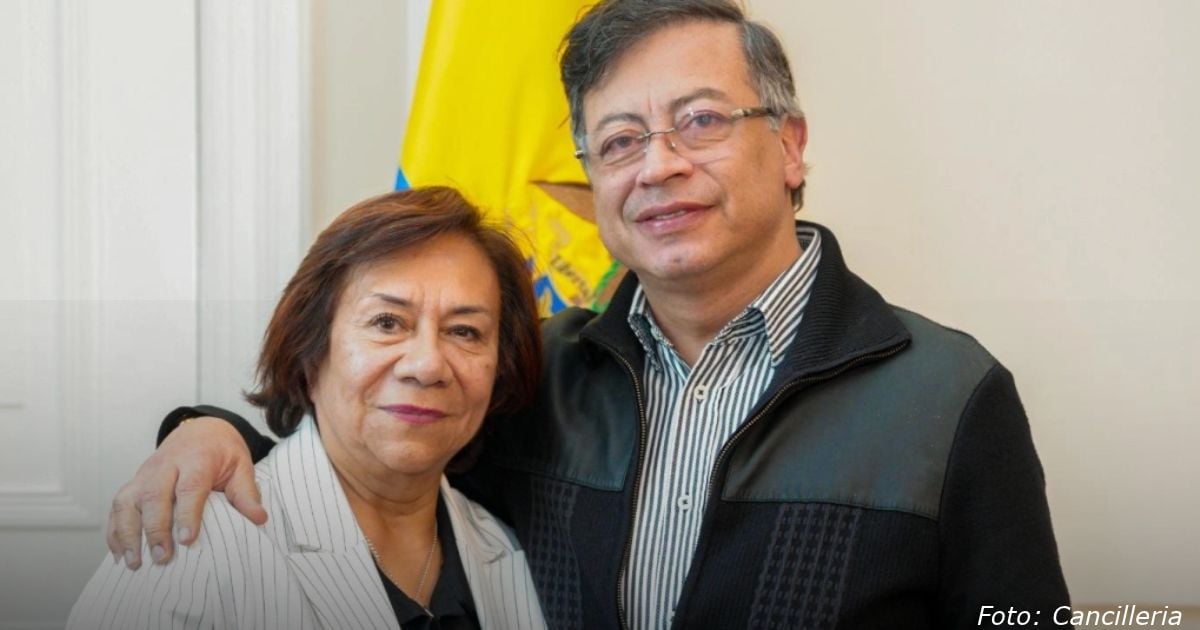
Petro government Mexico consulates Tijuana Monterrey Tuxtla Gutiérrez, Digi Mart USA News: Under President Gustavo Petro, Colombia sought closer ties with Mexico, a country the government regarded as a natural ally of its progressive project in Latin America, first under Andrés Manuel López Obrador and later under his successor, Claudia Sheinbaum. As part of that effort, the foreign ministry proposed opening three new consulates, in Tijuana, Baja California; Monterrey, Nuevo León; and Tuxtla Gutiérrez, Chiapas.
The project was formalized through Decree 1405 of November 22, 2024. Former Colombian ambassador to Mexico Moisés Ninco Daza played a role in structuring it, but his appointment was challenged before the Council of State, and he left Mexico on September 30, 2024, before the plan took shape.
For the three locations, the Ministry of Foreign Affairs initially projected a combined annual budget of more than 60,000 million Colombian pesos. However, much of those funds were never spent, due to the absence of detailed planning on key matters such as leases, staffing and office equipment.
Moisés Ninco, a prominent Petro supporter, moved forward with arrangements for the Tijuana consulate in office 202 of the Torela Corporativo building in the city’s Zona Dorada district. The office was officially created on November 22, 2024.
By then, however, the ambassador had already left Mexico after the Council of State annulled his appointment over procedural irregularities and failure to meet the experience requirements for the post.
Luis Gilberto Murillo headed the foreign ministry at the time, but he resigned formally on January 28, 2025, and was succeeded by Laura Sarabia. In July 2025, Sarabia was unable to remain as foreign minister because she was to take up the post of ambassador to the United Kingdom.
Rosa Villavicencio then took office and justified the Tijuana consulate on the basis of the high number of migrants. She said the Directorate of Consular Affairs was responsible for advancing the project and ensuring the site was ready, and she lamented the stagnation that prevented the work from being completed.
In January 2026, Maryory Pabón was appointed consul general in Tijuana. Her earlier appointment to Calgary, Canada, had also been annulled.
Pabón had worked from Vancouver on Gustavo Petro’s presidential campaign. After her Canadian designation did not proceed, she was transferred to Tijuana, where she reportedly received about 500 million Colombian pesos in salaries and per diems.
The consular office nonetheless remained unfinished, in rough construction condition.
In Monterrey, a Colombian honorary consulate already existed in Santa Catarina, a municipality near the state capital of Nuevo León. Its capacities were limited, however, and it could not provide the full range of general consulate services, such as issuing passports, authorizing public deeds or processing visas for foreigners wishing to travel to Colombia.
Converting the office cost 409.3 million Colombian pesos. Although no major physical alterations were made, the range of available consular services was expanded.
Finally, the Petro government justified opening a consulate general in Tuxtla Gutiérrez, Chiapas, as the entry point for irregular migration flows through this corridor toward the United States. The new office was also intended to reduce travel and ease the workload of the consulates in Mexico City and Cancún, which had to handle requests from remote areas.
However, the project never moved beyond paper.
Amid the irregularities and the project’s results, the Procuraduría and other oversight bodies opened investigations to determine possible responsibilities. Ninco maintains that the initiative failed because of alleged sabotage rather than inefficiency, negligence or excessive costs.