
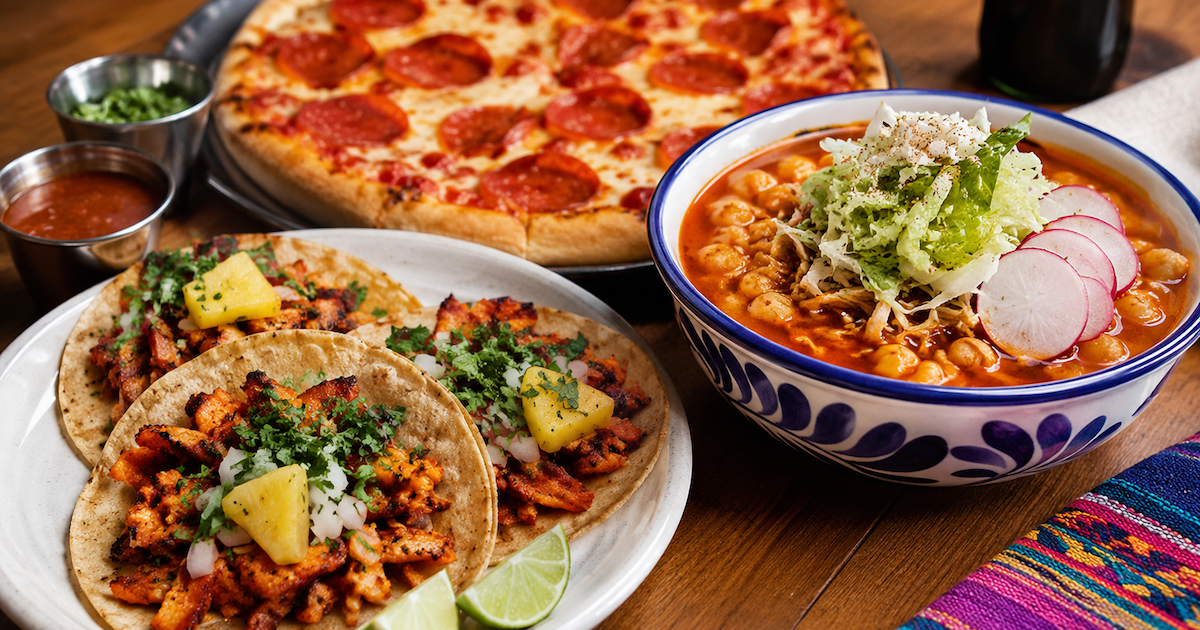
Most-ordered foods in Mexico on Uber Eats, Digi Mart USA News (Mexico): Tacos, pizza and pozole are the three most-ordered dishes for home delivery in Mexico, according to historical records from Uber Eats. Although delivery apps have expanded dining options, Mexican food maintains a prominent presence among consumer preferences.
Data shared by David Mínguez, communications manager at Uber Eats, show how consumption habits in Mexico have changed over the last decade, both in purchases of prepared food and in grocery orders through the platform.
The results highlight the dominance of tacos al pastor, followed by other traditional varieties. Soft drinks, beer and bananas also lead grocery purchases made through the platform.
Mexico City also recorded one of the most striking figures: a user placed a single order for 400 products, the largest the platform reports in the country during the period analyzed.
Uber Eats’ historical records place tacos first among the foods users request most often on the app. Pizza ranks second, while pozole completes the top three.
The results show that consumers combine fast-food options with traditional Mexican preparations. Pozole stands out because it requires several hours of preparation and is typically part of family gatherings, celebrations and festivities such as Fiestas Patrias.
However, delivery services allow consumers to order this dish without preparing it at home, even outside the dates traditionally associated with its consumption. Pizza, meanwhile, retains an important place among shared meal options, particularly given the variety of sizes, ingredients and presentations offered by establishments.
Within the taco category, the platform’s records identify three varieties that account for users’ historical preferences. Taco al pastor ranks first, followed by bistec and suadero tacos.
Tacos al pastor are part of the food offering in many Mexican cities, particularly the capital, where taquerías serve different presentations of the dish. Bistec and suadero also maintain a steady presence on the menus of taquerías and establishments offering delivery.
These preferences reflect Uber Eats order history and do not necessarily represent total taco consumption in Mexico, which also includes establishments without digital service and direct sales.
Delivery apps no longer concentrate only restaurant orders. In recent years they have also expanded to include supermarkets, convenience stores and other commercial establishments.
In this category, Uber Eats’ historical records identify three products with notable demand. Beverages occupy the first two positions, while bananas are the only fresh food among the three most-requested products.
The presence of this fruit coincides with its wide availability in the national market. According to information from the Secretaría de Agricultura y Desarrollo Rural (SADER), Mexico is among the countries that produce bananas, a food that forms part of the regular diet of many households.
The fruit also provides carbohydrates and potassium, so it is often eaten at breakfast, between meals or as an ingredient in various preparations.
The results reveal differences between purchases of prepared food and the products users order to stock their homes through apps.
The expansion of digital platforms has changed how consumers access restaurants and grocery products, mainly in large cities. According to the Cámara Nacional de la Industria de Restaurantes y Alimentos Condimentados (CANIRAC), takeout orders and off-premises consumption have gained greater importance in the purchasing dynamics of urban households.
Workdays, commuting and the ability to order food from mobile devices are among the factors associated with these changes. Millennial and Generation Z consumers also play a role in adopting digital tools to check menus, compare options and place orders.
Still, the growth of delivery services is occurring against a backdrop of pressure on household spending and higher costs for restaurant operators. Faced with rising prices, some consumers are seeking lower-cost alternatives, such as fondas, home-cooked meals and takeout options.
In this environment, restaurants combine multiple sales channels, from traditional dine-in service to delivery through digital platforms. CANIRAC has also noted that the industry faces challenges related to operating costs and consumers’ spending capacity.
Uber Eats’ historical records show that, despite the diversification of digital food offerings, tacos al pastor, pizza and pozole remain the top foods requested on the platform, while soft drinks, beer and bananas stand out in grocery purchases.










