
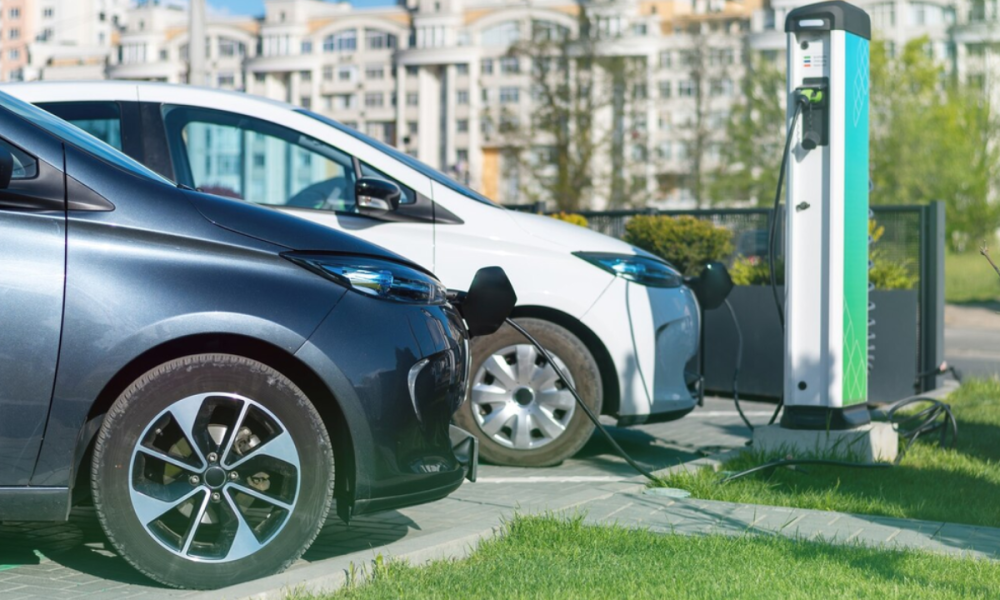
Mexico battery recycling challenges as electromobility grows, Digi Mart USA News (Mexico): Mexico faces a significant challenge in expanding its capacity to recycle electric vehicle batteries as electromobility grows. The automotive industry is seeking to attract new investment, increase energy supply and adapt to environmental requirements.
During a roundtable with industry representatives, Ana Lilia Cortés, circular economy manager at Veolia Mexico, said there is currently no company in the country capable of fully processing an electric vehicle battery. “Although some companies work on parts of the process, there is no complete recycling chain,” Cortés explained.
The multinational Veolia is considering developing electric vehicle battery recycling processes in Mexico, given the growing need to recover metals and projected increases in waste generated in coming years. Cortés said the company is evaluating business models but still needs to gather sufficient volumes of used batteries and contracts to justify the investment.
Although partial recycling operations exist, the country lacks a national chain capable of dismantling batteries and recovering materials such as lithium, nickel and cobalt. Currently, part of this waste is shipped to other countries, including the United States, to complete treatment.
The Mexico Lithium Institutional Program 2026-2030 acknowledges that battery recycling infrastructure is limited and that available volumes make new plants difficult to make profitable.
During the meeting, it was estimated that more than 80% of an automobile’s materials are technically recoverable, including steel and copper, although there are no precise figures on how much is actually recovered in Mexico. Informality and lack of infrastructure remain persistent problems in this area.
Omar Martínez, original equipment and aftermarket manager at the National Auto Parts Industry (INA), said electrification also presents retooling opportunities for traditional component manufacturers, who could diversify into producing battery housings and electrical connections, although this will require investment and new capabilities.
Regulatory changes are also under consideration, including the draft standard PROY-NOM-160-SEMARNAT-2026, which seeks to strengthen hazardous waste management plans by increasing information on waste origin, volume, reduction and final destination. Cortés warned that this level of detail could increase administrative tasks for plants.
On the energy side, Gabriela Montemayor, energy business development manager at Veolia Mexico, highlighted self-consumption and cogeneration options for electricity and heat for automotive suppliers, especially in areas with supply restrictions. Mexican regulation allows interconnected self-consumption permits for installations between 0.7 and 20 megawatts.
Montemayor stressed that each project should be sized to its needs to avoid unprofitable investments and to identify the most viable energy sources for operations.
Elisa Crespo, executive president of the Metropolitan Automotive Cluster, stressed that expanding material recovery requires investment, technology and greater formalization in the sector.
The Federal Electricity Commission (CFE) has announced a call for tenders on 32 projects in the second half of the year, related to electricity transmission and transformation. These projects cover a total of 245 works and require an approximate investment of 35,904 million pesos.
The initiative is part of the 2026-2030 Expansion Plan, which aims to expand, modernize and strengthen the National Transmission Network in response to growing electricity demand, the development of new industrial and productive centers, and the incorporation of new generation sources.
The projects include 107 transmission line works and 138 electrical substation works, totaling 2,152 circuit-kilometers, 7,180 megavolt-amperes (MVA) of transformation capacity, 2,208 megavolt-amperes reactive (MVAr) of compensation and 124 feeders. They will be executed under three schemes: 16 projects through CFE Fibra E, two through budgeted public works and 14 under the financed public works scheme.
Highlighted projects include San José Iturbide Bank 4 in Guanajuato, comprising seven works with 300 MVA of transformation capacity and 76 circuit-kilometers of transmission lines, intended to increase supply capacity in the region. The El Arrajal Bank 1 and associated network project in Baja California includes eight works, 300 MVA of transformation and 260 circuit-kilometers of transmission lines, aimed at expanding and reinforcing electrical infrastructure in San Felipe and surrounding areas.
Under the public works scheme, the Guadalajara Industrial Bank 2 project in Jalisco includes 18 works to expand and modernize substations and transmission lines, plus 300 MVA of transformation capacity to strengthen the electrical grid in the metropolitan and industrial zone. In the southeast, the Energy Supply project covers 10 works between Chiapas and Tabasco, while the Northwest–North Generation Integration Transmission Network, Stage 4, includes five works in Chihuahua and Coahuila, including the Torreón Sur–Derramadero transmission line, rated 400 kilovolts and 238 circuit-kilometers.
The project portfolio aims not only to expand energy infrastructure but also to create contracting opportunities for companies specializing in engineering, construction, manufacturing, supply and installation of electrical equipment and materials. Components required include autotransformers, power transformers, capacitors, reactors, STATCOM reactive compensation equipment, switches, metal structures, conductors, insulators and optical fiber ground wires.
The CFE expects 11 of these projects to be tendered through the Special Scheme Contracting System (SCOEE), while the remaining 21 will be carried out through the Tender Microsite (MSC). Tender publications are scheduled between October 2026 and March 2027.











