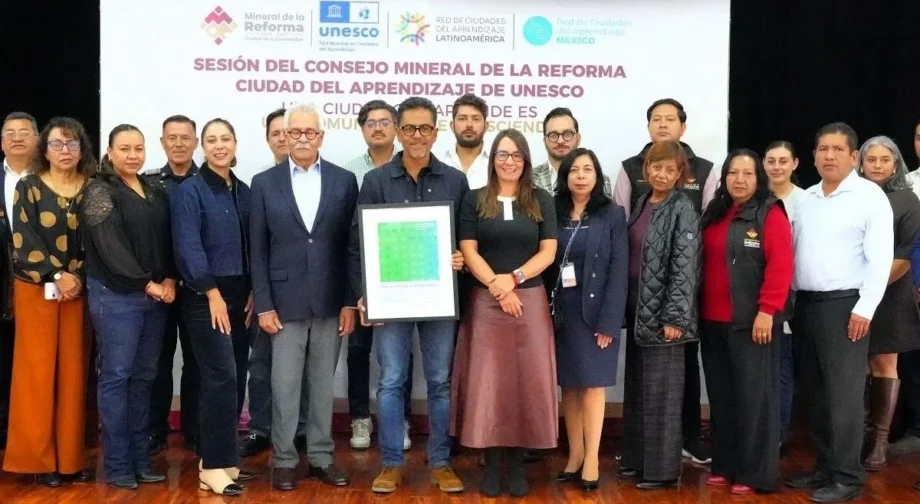
Eduardo Medécigo vice presidency of Mexico’s Learning Cities Network, Digi Mart USA News (Mineral de la Reforma, Mexico): Eduardo Medécigo Rubio, mayor of Mineral de la Reforma, has assumed the vice presidency of the Learning Cities Network of Mexico, which is linked to the United Nations Educational, Scientific and Cultural Organization (UNESCO). The appointment is intended to strengthen the municipality’s educational and social development policies.
The appointment was made during the Second Ordinary Session of the Council and was carried out by Luis González Arenal, the network’s technical coordinator, who recognized the mayor’s work and his initiatives in learning and community participation.
Medécigo Rubio said the new responsibility will allow the municipality to establish ties with other municipalities in Mexico and abroad, exchange experiences, and learn about strategies that could be implemented in Mineral de la Reforma to address various needs of the population.
“A city that learns is a city that progresses, grows and opens the doors to a new panorama,” the mayor said, adding that knowledge and learning are rights that should be promoted as part of social development. He also stated that the results of public policies should be reflected directly in communities and in meeting the needs of their residents.
González Arenal said the appointment represents an opportunity to expand the municipality’s institutional links with other cities, national and international organizations, and specialized institutions.
According to the municipal government, education has become a cross-cutting axis of the administration, through programs that aim to take learning beyond the classroom and involve different sectors of the population. Initiatives include the installation of the Mineral de la Reforma Learning City Council and the transformation of Community Development Centers into Development and Learning Centers.
Other initiatives highlighted include the Aprendimóvil program, the Jefas Transformadoras program, the recovery of public spaces and urban nodes, and the continuation of activities at the Casa de Ciencia and the Centro Mineralense de las Artes (CEMART).