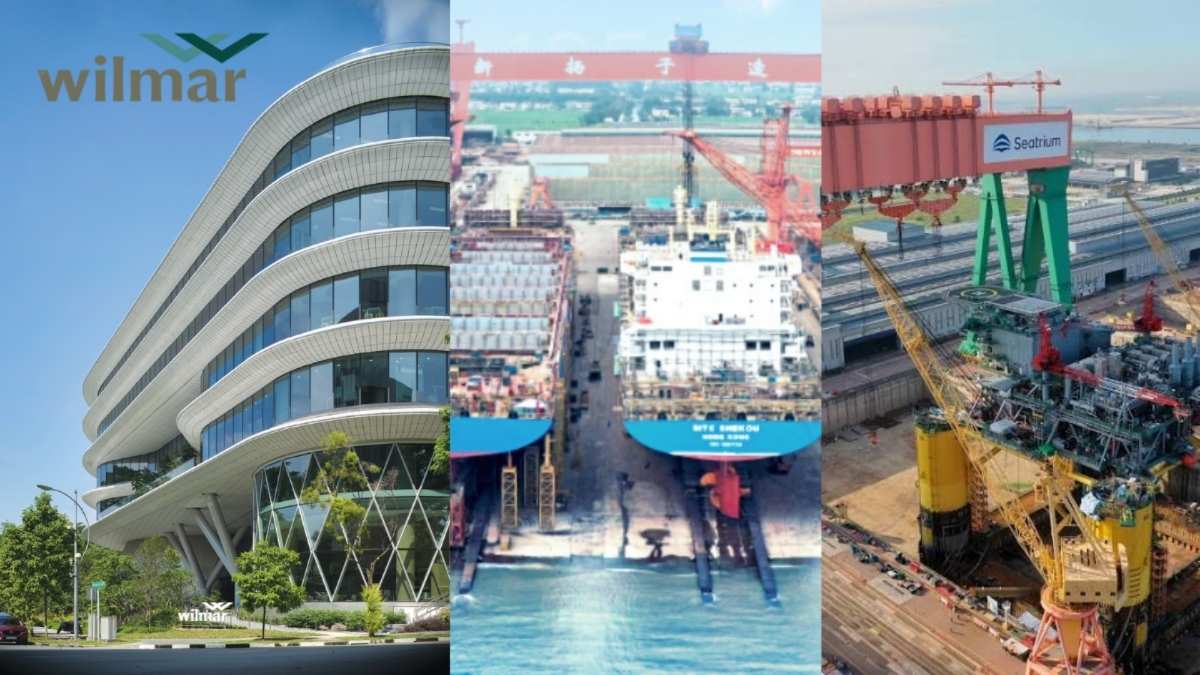
Singapore blue chip stocks October 2026 decline, Digi Mart USA News: The Straits Times Index (STI) declined 5.1% in October 2026, with Wilmar International, Yangzijiang Shipbuilding and Seatrium recording even sharper falls. The publisher examined what has changed for these three Singapore blue chips and whether their lower share prices warrant a closer look.
According to FactSet, Wilmar International was the worst performer, falling 16.6%, followed by Yangzijiang Shipbuilding at 11.3% and Seatrium at 10.7%. Yangzijiang Shipbuilding had been the best-performing Singapore blue chip in September before reversing course in October.
Wilmar International, one of Asia’s largest agribusiness groups with operations in oil palm plantations, oilseed crushing, edible oils, food products and sugar, reported third-quarter 2026 revenue of US$21.66 billion, up 13.6% year on year. Core net profit fell 25.2% year on year to US$267.3 million, reflecting higher raw material costs in its food products business and weaker soybean crushing margins.
The publisher noted that Indonesian police have made preliminary inquiries into fires affecting land associated with Wilmar’s subsidiaries in West Kalimantan, adding regulatory and reputational uncertainty. Wilmar’s earnings per share growth of 20.9% outpaced revenue growth of 4.5%, and its price-to-earnings ratio of 10.3 times and price-to-book ratio of 0.66 times sit below historical averages.
However, its net debt-to-equity ratio of 129.1% is above the screener’s 100% threshold.
Yangzijiang Shipbuilding, one of China’s largest privately owned shipbuilders, reported first-half 2026 revenue up 36.2% year on year to RMB17.5 billion. Net profit attributable to shareholders rose 28.4% to RMB5.4 billion, supported by higher-priced vessel contracts and a favorable vessel mix.
Its group gross profit margin improved to 36.2%, and its shipbuilding segment margin reached approximately 37%.
The company reported an order book of US$22.4 billion across 256 vessels at the end of June 2026, with deliveries scheduled through 2030. Containerships accounted for 151 of those vessels.
Yangzijiang also held a net cash position of approximately RMB12.5 billion at the end of June 2026. The publisher noted that the recent share-price decline raises a question about whether expectations for future earnings have become too optimistic.
Seatrium, which provides engineering solutions to the offshore, marine and energy industries, reported first-half 2026 revenue of S$5.6 billion, up 4.7% year on year. Net profit rose to S$373 million from S$144 million a year earlier, but part of the increase came from divestment gains.
Excluding these gains, net profit rose 54% to S$212 million, and its gross profit margin improved to 8.6% from 7.4%.
According to the publisher’s fundamental checklist, Seatrium was the only one of the three companies to pass all three checks, with earnings per share growth of 105.9%, a net debt-to-equity ratio of 16.6%, and a price-to-earnings ratio of 13.3 times. The publisher cautioned that this should not be treated as a buy signal and recommended that investors examine whether earnings are improving, whether the balance sheet can support growth, and whether valuations offer sufficient potential returns for the risks involved.