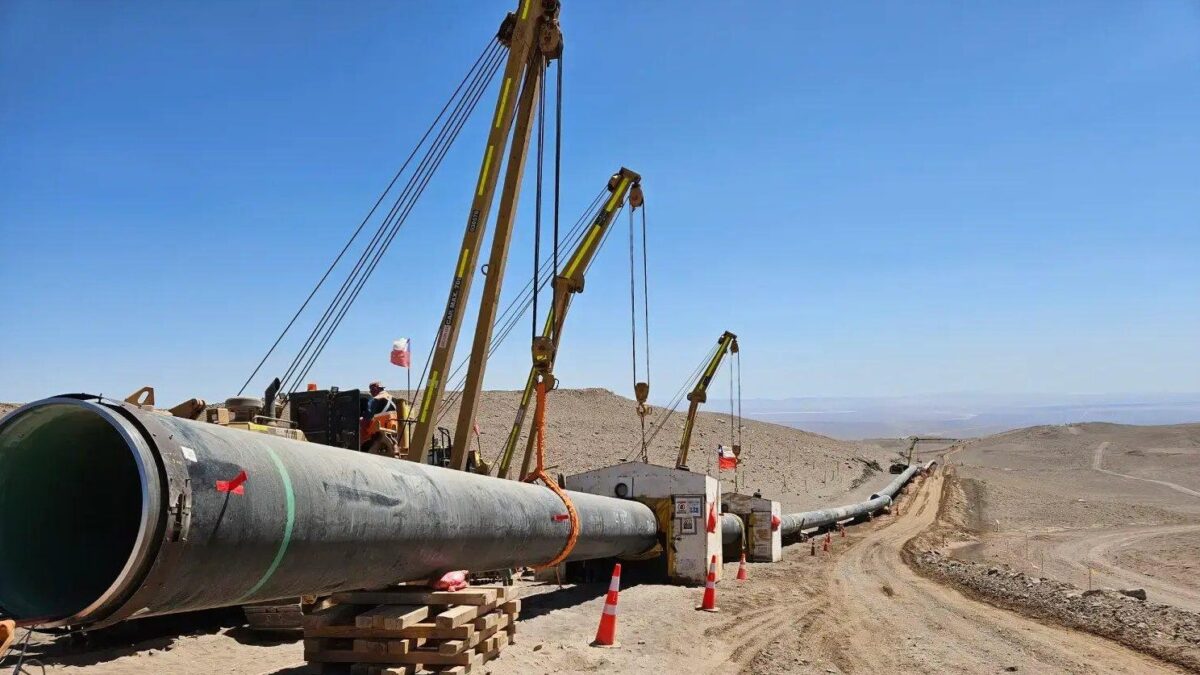
Collahuasi copper mine seawater desalination pipeline Chile, Digi Mart USA News (northern Chile): Chilean mining company Collahuasi, which operates one of the largest copper deposits in the world, plans to carry seawater from the Pacific coast to the summit of the Andes. The project is located in northern Chile, in the Atacama Desert, and will bring water to mining facilities situated more than 4,400 meters above sea level.
The project, called C20+, is estimated at $3.5 billion, with about $1 billion allocated to building 194 kilometers of pipelines and pumping stations. According to Argentine outlet Uno, the project is expected to allow the mine to continue operating for at least 20 more years.
The water journey begins at Puerto Patache on the Pacific coast, where a desalination plant developed by Spanish group Acciona is designed to produce 1,050 liters of fresh water per second. Construction firm Techint built the roughly 200-kilometer pipeline, about 1.10 meters in diameter, which crosses desert, mountainous terrain and difficult-to-access areas.
Because the route must climb several thousand meters, Techint built five successive pumping stations, six drainage installations and a transfer station with a reservoir of about 49,000 cubic meters. Some installations sit around 4,600 meters, where thinner air and temperatures that can drop to -10°C complicate work.
Chile is the world’s leading copper producer, and the metal, essential for electrical networks, industrial equipment and electric vehicles, has risen nearly 60% in two years to more than $14,200 per tonne. Copper mining requires large amounts of water, and scarce fresh water in the Atacama has pushed companies toward alternatives such as desalinated seawater.
According to Reuters, Collahuasi produced 406,100 tonnes of copper in 2025, a decline of more than 27% over one year, partly due to harder-to-process ore with lower metal content. Techint announced it has finished building the water transport system, which began in 2022, though the full C20+ project is not yet operating at nominal capacity, as the desalination plant, electrical equipment and other facilities still need to be integrated and commissioned.
The project faces legal uncertainty. On May 15, a Chilean environmental tribunal annulled the favorable environmental authorization issued for C20+, following appeals filed by two indigenous associations from the Chanavaya region.
Plaintiffs contest aspects of the environmental assessment, including impacts of marine facilities on local communities and the effects of seawater intake and brine discharge. The ruling does not permanently ban the project but requires the environmental assessment procedure to resume, creating uncertainty about the timeline.
The Chilean government hopes the courts will not obstruct the project. The minister in charge of mining expressed concern that the system allows such revocations after construction has already taken place, saying: “We see with great concern that our system allows this type of revocation after the fact, after construction.”