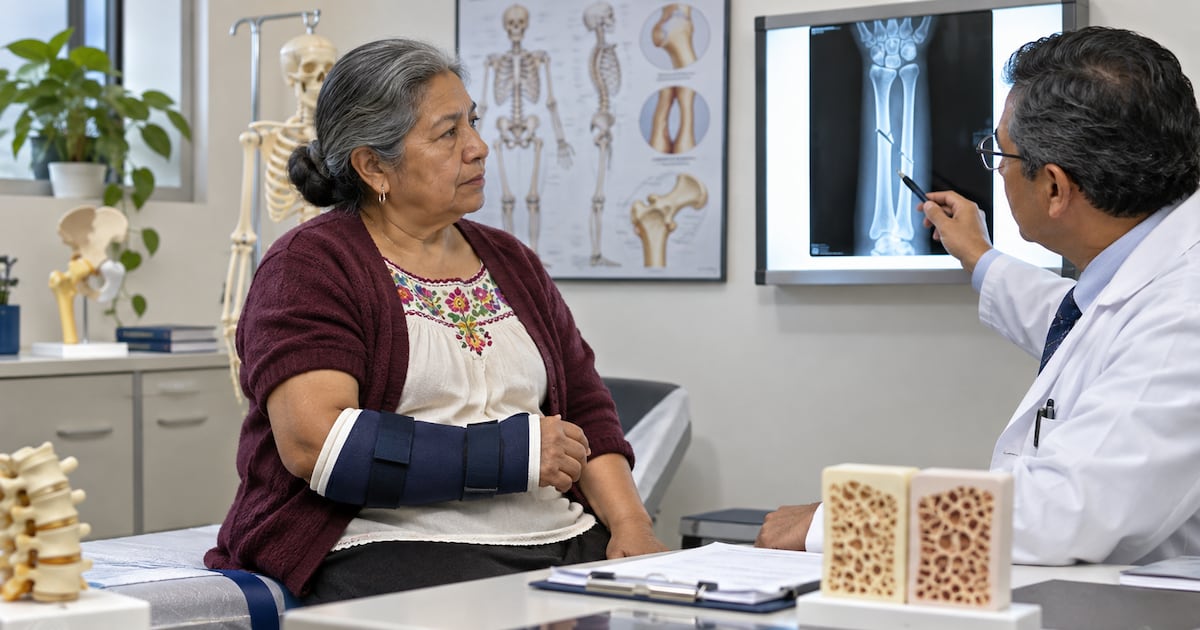
Bone fractures and osteoporosis risks in Mexico after age 50, Digi Mart USA News (Mexico): Bone fractures represent a public health problem in Mexico, particularly among people over 50, due to the risk of complications that can affect mobility, independence and quality of life. According to estimates released by the Secretaría de Salud, one in three women and one in five men over 50 could suffer a fragility fracture over their lifetime.
The problem does not end when the injury occurs. Depending on the affected bone and the patient’s health, recovery may require immobilization, surgery, rehabilitation and medical follow-up for several months.
Given this situation, Mexican orthopedic and trauma specialists emphasized the need to strengthen research into bone consolidation processes, with the aim of improving care options for patients with complex fractures and injuries.
Over time, bones can lose density and strength, increasing the likelihood of injury even after minor falls or everyday movements. One of the main diseases associated with this problem is osteoporosis, which weakens bone structure and raises the risk of fractures, especially in the hip, spine and wrists.
The Secretaría de Salud has noted that approximately 10 million people in Mexico live with osteoporosis, a condition that can progress without obvious symptoms until a fracture occurs.
In addition, a prior fragility fracture increases the probability of new injuries, so medical care should address both bone recovery and the identification of possible causes. In this context, Armstrong Laboratorios presented the third edition of its Atlas on Bone Consolidation, a publication that brings together clinical experiences from Mexican physicians specializing in orthopedics and traumatology.
The document includes new cases related to the use of aminocaproic acid, a medication that has been used as an adjuvant in certain treatments, and whose role in bone repair remains under investigation.
Alejandro Herce Santiesteban, an orthopedic and trauma specialist and editor of the Atlas, explained that aminocaproic acid does not replace established treatments for fractures or bone consolidation disorders, but is presented as a complementary option within medical management. For his part, Dr.
Diego Eduardo Buendía Valdez stressed the importance of documenting cases of Mexican patients to better understand the clinical response to these interventions.
The publication is part of a project that began in 2021, had a second edition in 2024, and now incorporates a greater number of national clinical experiences. Beyond improving treatment options, bone health specialists stress the importance of preventing injuries, particularly among people with osteoporosis risk factors.
The Secretaría de Salud recommends a diet providing sufficient calcium, vitamin D and protein, physical activity adapted to each person’s condition, and avoiding habits that can weaken bone resistance. Early identification of osteoporosis and fall prevention are also important, especially for older adults who have already had a fracture.
Prolonged recovery, persistent pain or difficulty regaining mobility require medical evaluation, as they may indicate complications in the consolidation process. The presentation of the new Atlas aims to expand the exchange of experiences among Mexican specialists, although the next step will be determining, through broader research, which of the studied alternatives can translate into verifiable benefits for patients.