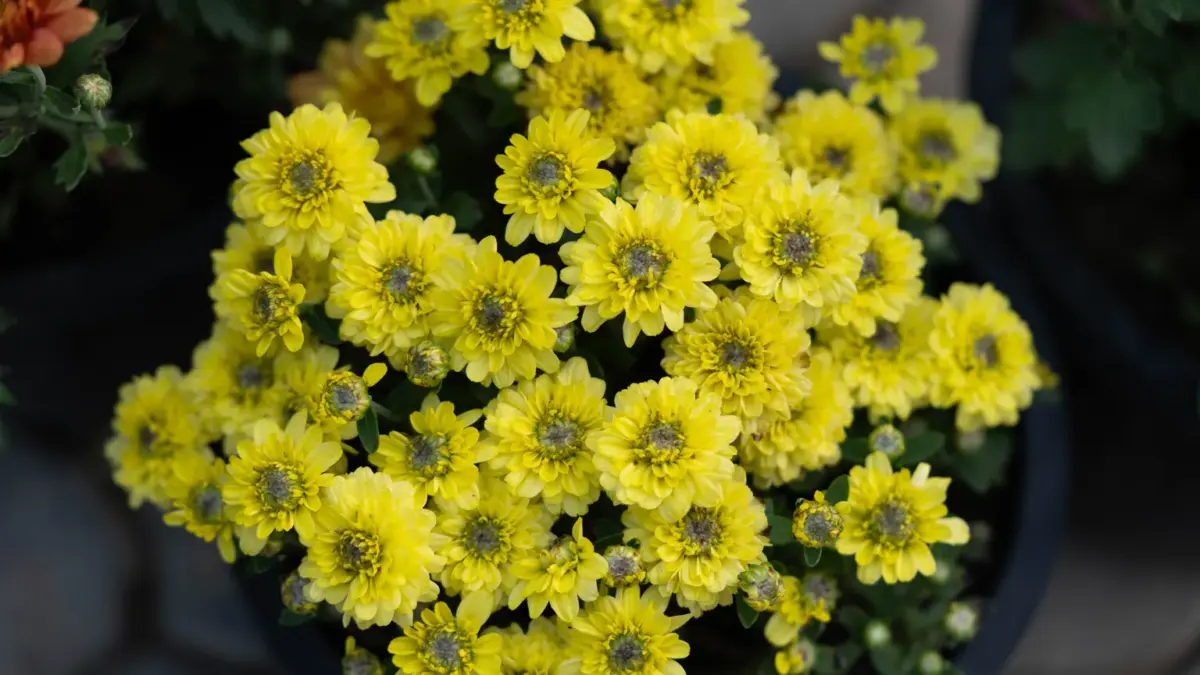
Saving Toussaint chrysanthemums after blooming, Digi Mart USA News: Each early November, faded Toussaint chrysanthemum pots line up outside homes before being taken to the dump. Many families assume the plant has finished its short autumn life and cannot be saved.
This is a persistent misconception.
The Société Nationale d’Horticulture de France reminds gardeners that the Toussaint chrysanthemum is a perennial capable of blooming again. Millions of these plants are bought in France each year, so giving even one pot a second life makes a difference.
Before throwing a plant away, check whether it is truly dead. A plant that has finished flowering is not necessarily dead.
In Wallonia, the ECOCIM initiative collects thousands of faded chrysanthemums from cemeteries, cuts them back, overwinters them in a cold greenhouse, and resells them the following autumn, showing that the root stock often survives well.
At home, the test is simple. Remove the root ball from the pot: if the roots are pale and firm with no suspicious odor, the plant is still alive.
The stems may have turned brown, but as long as they are not completely soft at the base, recovery is possible. The real enemy is a pot left standing in stagnant water in a saucer.
Two steps can give a faded chrysanthemum a second life. First, cut all stems back to about 10 to 15 cm above the soil with a clean cut using pruning shears.
This dry “small skeleton” protects the heart of the clump. Second, mulch with 8 to 10 cm of dead leaves.
Ideally, the leaves are shredded with a lawn mower to keep them airy. They form a blanket that limits frost damage, retains moisture without waterlogging, and feeds the soil.
In a pot, keep the container drained, avoid a water-filled decorative cover, and place it against a sheltered wall.
Editor’s tip: Efficacy 9/10. Implementation time 10 minutes.
Why it works: the short cut limits the part exposed to cold while keeping buds ready to regrow. The leaf mulch acts as an insulating coat, cushioning frost, stabilizing moisture, and turning autumn waste into nutrients.
Extra tip: add a handful of mature compost under the leaves in spring to encourage regrowth without chemical fertilizer. Never let the pot soak all winter in a saucer of water, as this is the best way to rot the roots.
In cold regions, keep the pot outside against a sunny wall or in a cold greenhouse, sheltered from hard frosts, with very light watering. In milder climates with well-drained soil, the root ball can be planted in the ground under its mulch.
In midwinter, simply check that the soil is neither dry and hard nor waterlogged. Around March and April, gradually remove the dead leaves, resume watering gently, and watch for new shoots.
Badly damaged plants go to the compost, pots are reused for the next season, and the best chrysanthemums bloom again for the following Toussaint without a new purchase.