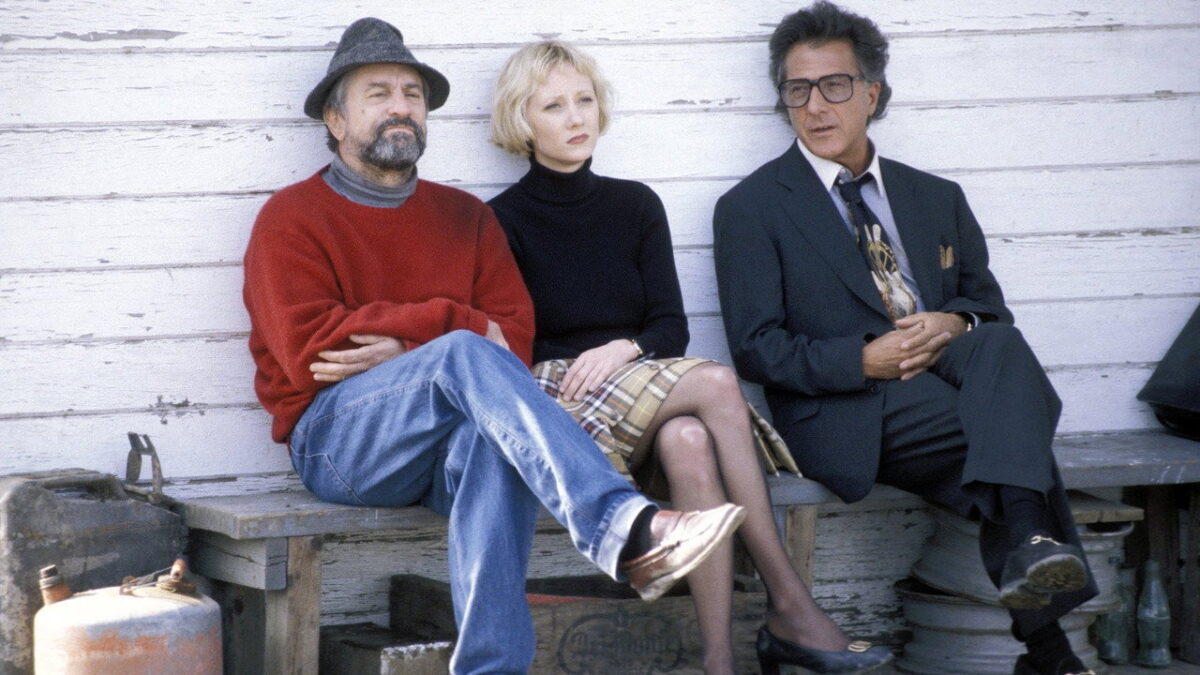
Des hommes d’influence on France 5, Digi Mart USA News: France 5 will broadcast Des hommes d’influence on Friday, November 6, 2026, at 9:05 p.m. The political satire, directed by Barry Levinson, stars Robert De Niro and Dustin Hoffman.
It was released in the United States in 1997.
The film imagines a communications operation designed to divert attention from a presidential scandal by inventing a war. The story begins a few days before a presidential election, when the president faces a sexual scandal that could jeopardize his reelection.
To shift media focus, his advisers turn to Conrad Brean, a political communications specialist played by De Niro.
Brean proposes a bold operation: convincing the public that the United States is engaged in a conflict with Albania. He recruits Stanley Motss, a Hollywood producer played by Dustin Hoffman, to fabricate the images needed for the deception.
Their goal is to create a media event spectacular enough to push the scandal off the television news.
The film is a fiction and is not based on a documented presidential scandal. It is adapted from the novel American Hero by Larry Beinhart, published in 1993, which already imagined manipulating public opinion around a politically motivated war.
The film, whose original title is Wag the Dog, was released in the United States in December 1997.
The Monica Lewinsky affair became public in January 1998, after the film’s release, so it would be inaccurate to say the screenplay was directly inspired by that scandal. However, events in 1998 created a striking parallel.
That year, the United States launched military strikes against targets in Sudan and Afghanistan, and later against Iraq, and those operations drew questions and political accusations about their timing.
Some commentators compared those strikes to the film’s plot. That comparison, however, is not evidence that the military operations were organized to divert attention from the scandal.
The film has nonetheless become a cultural reference for describing media diversion strategies.
A central theme of the satire is the fabrication of information. The characters do not merely control the narrative of an event; they invent the event entirely.
Using filmmaking techniques, they create images meant to convince the public that a war is underway. The film questions public trust in televised images and how collective emotions can be exploited for political purposes.