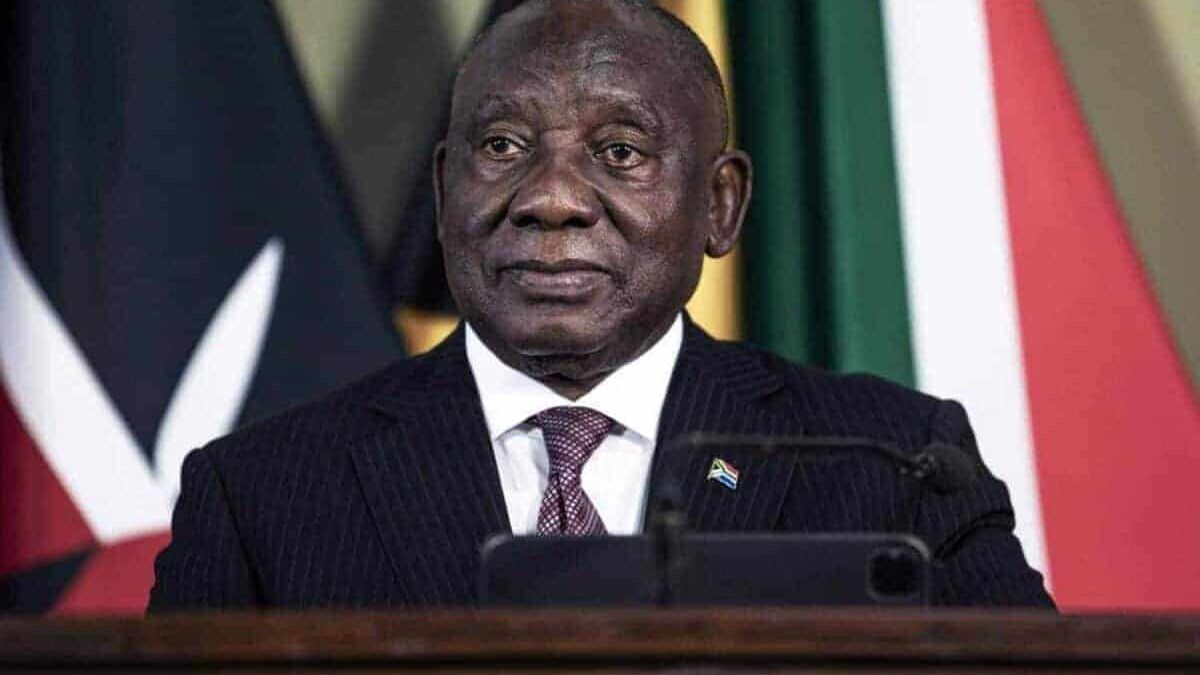
SOE reform South Africa, Digimart Global (South Africa): President Cyril Ramaphosa is set to oversee the financial performance, strategy and governance of South Africa’s struggling state-owned enterprises (SOEs) through a proposed Presidential Coordinating Commission, according to a Moneyweb report. Minister in the Presidency for Planning, Monitoring and Evaluation Maropene Ramokgopa confirmed to Moneyweb that the commission is in the pipeline and that her office will propose it to Cabinet.
The commission might be operational from early 2027. Ramokgopa said it will be established by the president under Section 84(2)(f) of the Constitution and chaired by the president, supported by the ministers of planning, monitoring and evaluation and finance, and members of the Presidential State Enterprises Council (PSEC).
Ramaphosa’s earlier attempts at SOE reform
This is not the first time Ramaphosa has led efforts to reform SOEs. In December 2014, then deputy president Ramaphosa was initially assigned by former president Jacob Zuma to oversee the turnaround of key SOEs, including Eskom, South African Airways and the SA Post Office.
According to the report, that plan did not succeed, and SOEs have continued to weigh heavily on economic growth and public finances. National Treasury figures cited in the report show that SOE requests for bailouts and debt takeovers cost the fiscus R520.6 billion over the past decade.
In 2023, the administration published the draft National State Enterprises Bill for comment. The bill sought to place SOEs under one holding company with centralised control, but the department withdrew it from Parliament in September 2026 after widespread criticism that it gave the president too much power, including the power to appoint SOE board members.
Investors also raised concerns about possible political interference. Ramokgopa said a new version will be introduced in Parliament after Cabinet approval, with a new bill expected in the near future.
What the proposed commission would do
Ramokgopa said the commission’s main aim would be to reposition SOEs as effective instruments of economic development. Its mandate would include introducing an overarching act governing SOEs, finalising an appropriate shareholder ownership model, appointing competent boards and executives through a transparent process, and reviewing remuneration guidelines.
It would also review SOE business models, capital structures and financing, identify opportunities for private sector participation, and oversee interventions to address governance, liquidity, turnaround strategies and corruption allegations.
According to Ramokgopa, the government studied international models, including those in Norway, China, Singapore and South Korea, and the eventual approach will be a hybrid model suited to South Africa’s developmental and business approach. The commission would be supported by a secretariat in the Department of Planning, Monitoring and Evaluation and would submit regular interim reports and a final report at the end of its term.
Ramokgopa also said the commission will cover an estimated 720 entities at national, provincial and local government level.
Veteran economist Iraj Abedian, who served on the Transnet board from 2004 to 2009, told Moneyweb that the core problem is not a lack of political oversight but a failure to run SOEs as commercial entities. He said SOEs should be financially sustainable, generate profits and be accountable for failures, with competent executives and boards allowed to operate without interference.