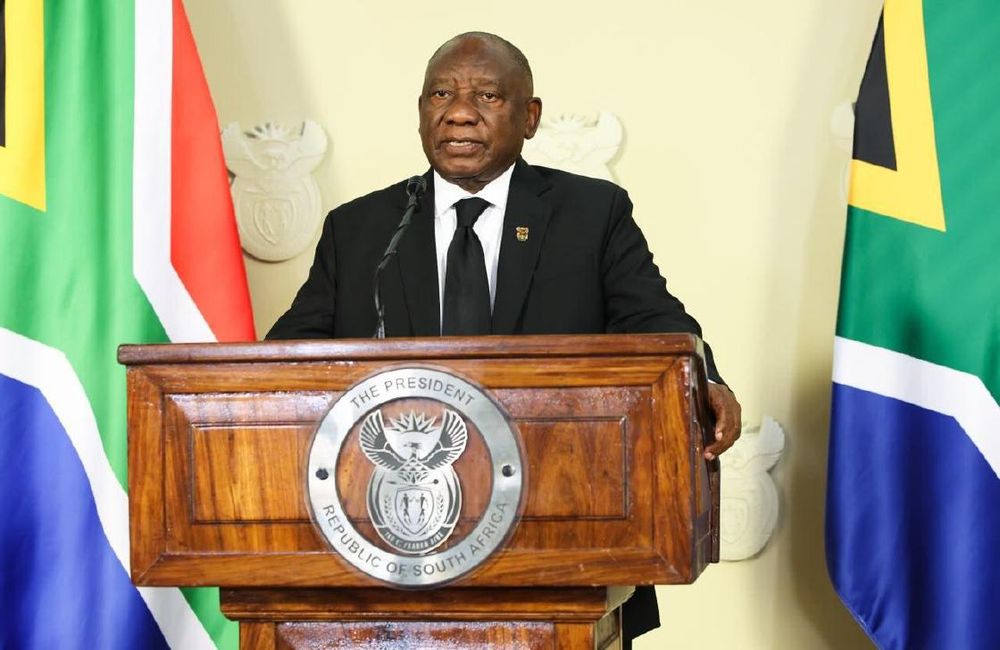
AGOA export markets, Digimart Global (South Africa): President Cyril Ramaphosa has said South Africa is no longer holding out much hope of reversing the United States’ decision to withdraw the country’s preferential trade benefits under the African Growth and Opportunity Act (AGOA). He made the remarks in answer to oral questions from MPs in the National Council of Provinces (NCOP) on Tuesday, according to the publisher report.
South Africa received 60 days’ notice on November 2 of the US intention to terminate its AGOA benefits from January 1, 2027. The notice period gives government an opportunity to address concerns raised by Washington before the proposed withdrawal takes effect. Ramaphosa said government was continuing to engage Washington but was pessimistic about changing the outcome.
Government pursues alternative markets
Ramaphosa said the government had been pursuing alternative markets since US President Donald Trump announced increased tariffs on imports from several countries under his Liberation Day measures. Officials, including the Deputy President and the trade, industry, competition and international relations ministers, have undertaken international engagements to open new markets and avoid over-reliance on a single trading partner.
One significant opportunity cited was China’s offer of tariff-free access for products from African countries. Ramaphosa also stressed that losing AGOA benefits would not stop all South African goods from entering the US market, as other exports continue to enter outside the programme.
The impact would fall on products that had previously benefited from tariff-free access under AGOA.
Jobs and sector support
Responding to ANC MP Mary Ndlangisa-Nodada, Ramaphosa said automotive companies were already finding alternative destinations for vehicles previously exported to the US, including other markets in North America. He said government was working with companies, departments and other stakeholders to minimise the impact on employment.
He did not identify specific alternative markets for agricultural exports, nor confirm whether a separate sector plan would be presented to Parliament. He also did not provide a specific update on negotiations to reduce the 30% tariff on South African exports.
To help businesses enter new markets, Ramaphosa outlined several interventions. These include the Export Marketing and Investment Assistance Scheme, which covers half of product registration costs in foreign markets.
The Competition Commission has committed to fast-tracking block exemption applications for exporters, and companies can apply to the International Trade Administration Commission for customs rebates.
Wider trade agenda
Beyond the AGOA concerns, Ramaphosa said South Africa continues to pursue its trade and industrial objectives through BRICS, the World Trade Organization, the G20, the African Union and the Southern African Development Community (SADC). He cited the 18th BRICS Summit in India and the African Continental Free Trade Area (AfCFTA), under which preferential trade began in 2024. Government is also using SADC trade agreements, the SACU-Mercosur agreement and China’s zero-tariff treatment policy, while SACU is pursuing an early harvest arrangement with China and a preferential trade agreement with India.