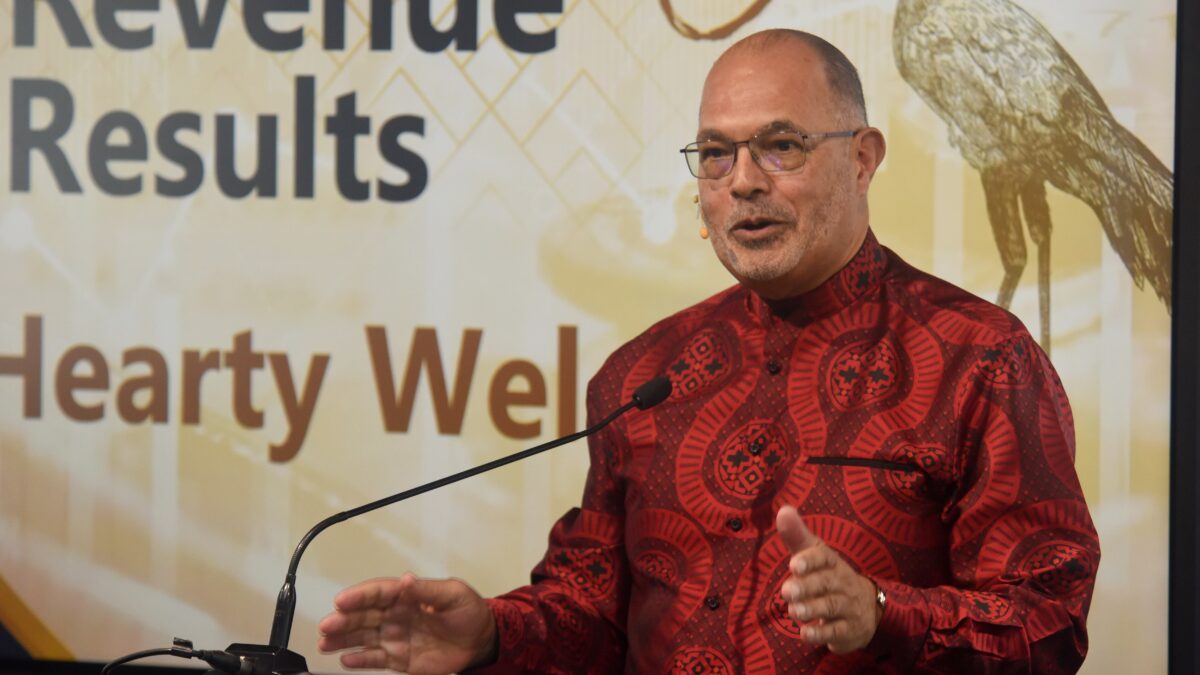
illicit economy South Africa, Digimart Global (South Africa): Former South African Revenue Service (Sars) commissioner Edward Kieswetter has argued that disconnected state institutions are at the core of the weak fight against organised crime and an illicit economy he estimated at R1.2-trillion. He made the remarks while testifying at the Madlanga commission on Wednesday, according to the publisher’s report.
Kieswetter, who led the tax revenue service for seven years, said the commission is investigating allegations of criminal infiltration in law enforcement. The commission has heard evidence that large drug consignments entered the country from South America after passing through customs.
A fragmented institutional response
Kieswetter said efforts to fight criminals would remain futile as long as law enforcement agencies continue to work in silos. “South Africa has an ecosystem of institutions; we do need more institutions, but we do not have an institutional ecosystem.
They are fragmented; they do not operate as one,” he said. He added that even if every institution were made more effective, weaknesses in the fight against crime would remain.
He said he was not arguing for institutions to be less independent or for their mandates to change. Instead, he called for an organisational arrangement that would align their mandates towards a common objective.
He also stated that the state is responding, but that its response is inadequate to deal with the phenomenon, and that research shows criminality has grown faster than the state’s ability to resist it.
Prosecution and legal gaps
Kieswetter’s recommendations included involving the National Prosecuting Authority (NPA) and sharing information between agencies. He pointed to a legal gap: even when Sars refers a case to the NPA, there is no legal obligation on the NPA to prosecute.
If it declines, cases provided by Sars would remain stalled.
He said Sars handed over more than 80 illicit tobacco cases to the NPA more than three years ago, but the NPA has hardly provided updates. He added that Sars prepares files that are prosecution-ready, but because it lacks a mandate to prosecute, it depends on the Hawks or the NPA.
Ports and customs vulnerabilities
Kieswetter said ports are essential to the economy but are also vulnerable to smuggling, customs fraud and trafficking, with false invoices and misdescribed cargo sometimes used. The commission previously heard evidence about two large drug consignments entering through the Port of Durban, with evidence suggesting harbour officials might have been involved.
In one case, police seized 715 kg of cocaine in a container driven by truck from Durban to Aeroton, south of Johannesburg, in 2021.