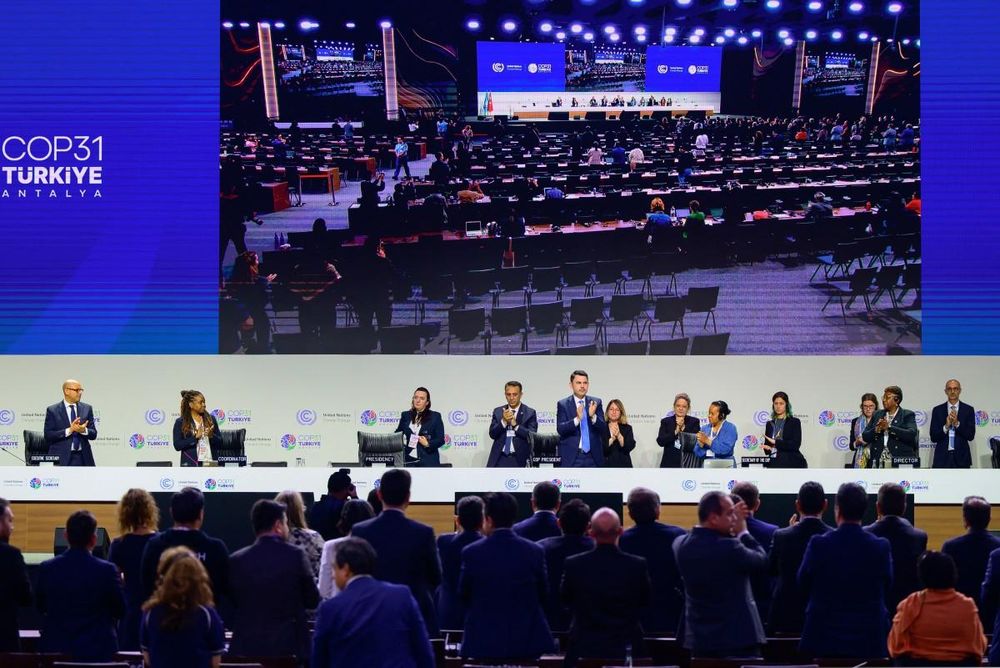
COP31 climate talks collapse, Digimart Global (Antalya, Turkey): The United Nations climate conference COP31, held at the Antalya Expo Centre in Turkey, ended without agreement on Sunday, two days behind schedule. Negotiations were deadlocked on fossil fuels, finance, science and carbon-removing technologies, according to the publisher report.
The conference was run under a dual presidency shared by Australia and Turkey. Negotiations chair Chris Bowen, Australia’s climate minister, said the outcome was “very disappointing”.
Fossil fuel language blocked progress
The main dispute centred on whether the so-called cover decision would mention phasing out planet-warming fossil fuels. Several countries refused a deal without that mention, while others, including Saudi Arabia, were strongly opposed to its inclusion.
Other faultlines included the timing of scientific work from the Intergovernmental Panel on Climate Change and language on carbon capture.
Finance was also a major sticking point for developing countries, which need funding to transition their energy systems and adapt to climate disasters. According to the report, there was no progress on finance.
Consensus rule under scrutiny
The collapse has renewed calls for reform of the consensus-based process, in which any one country or a small minority can block progress. Climate law expert Nikki Reisch of the Center for International Environmental Law said decision-making requiring every country to agree on every detail was not fit for a climate emergency.
Former US vice president Al Gore called for a reinvigorated multilateral process. Bowen noted that changing the consensus rule itself also requires consensus, which he described as a particular challenge.
Legal action and side agreements
Some observers are looking beyond the COP process. An International Court of Justice advisory opinion has already confirmed that states have a binding legal obligation to combat climate change.
International lawyer Harj Narulla, who advised the Solomon Islands at COP31, said states may turn to the ICJ and other international courts if negotiations fail to deliver.
Interest is also growing in agreements made outside the COP framework, such as the Santa Marta initiative, which brings together countries committed to phasing out fossil fuels. The initiative grew out of the COP30 meeting in Brazil, and its members have agreed early steps, including an expert scientific panel to advise on pathways.
Bowen said the process would become “increasingly important”, adding that it “doesn’t replace COP”.