Tesla AI5 chip, Digimart Global: Tesla has changed its plans for its next-generation AI5 inference computer, according to a publisher report from BASENOR. The chip, long expected to power both future Tesla vehicles and the Optimus humanoid robot, will now be reserved for Optimus and Tesla’s AI training supercomputers.
The shift was reaffirmed by Elon Musk on November 22, 2026, and surfaced publicly through the @TeslaNewswire account. The report describes it as a departure from roughly two years of messaging in which AI5 was presented as the common computing platform across Tesla’s robotics and automotive products.
What changes for vehicles
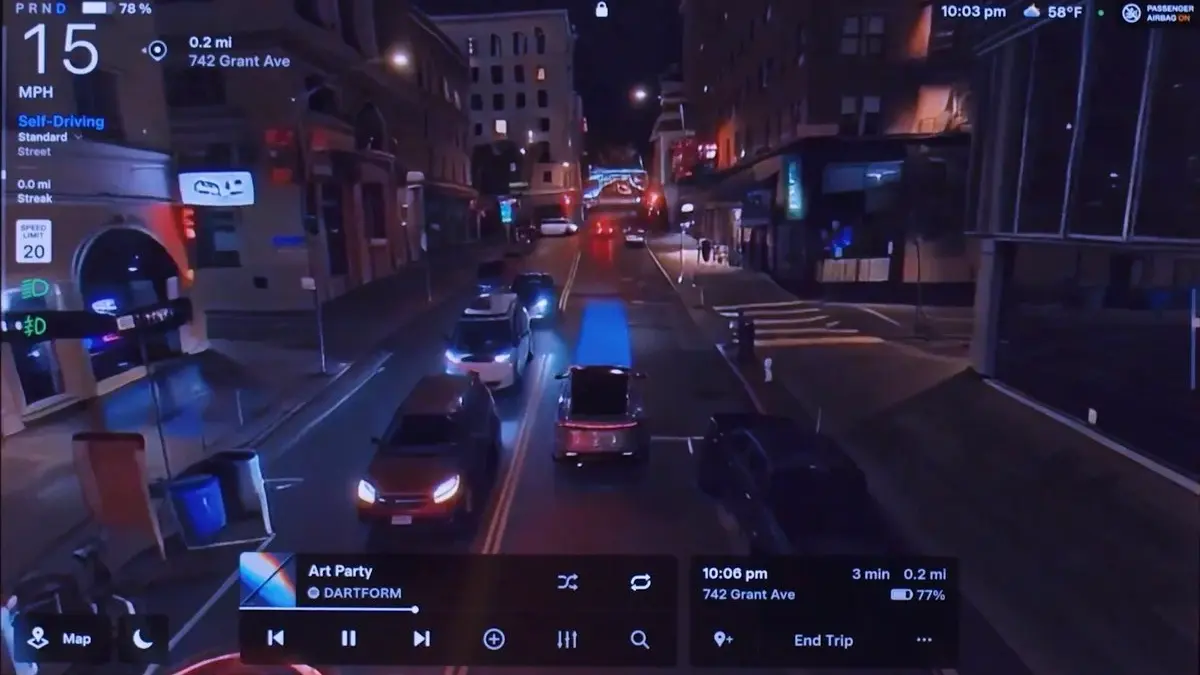
Under the new framing, AI4, the HW4 computer shipping in current Tesla vehicles, is the long-term platform for Full Self-Driving. Musk argued that AI4 has enough headroom to reach what Tesla describes as superhuman driving, meaning FSD performance meaningfully safer than a human driver, and to render features such as Reality View on the in-car display.
The report says the three reasons behind the split are based on public Tesla disclosures and prior reporting. Optimus requires significantly more compute than driving, the report says, and AI4 has already been optimised through recent FSD releases.
Chip production capacity is also finite, and concentrating advanced silicon on Optimus and training clusters keeps vehicle hardware costs stable.
Implications for owners and robots
For owners of HW4 vehicles, the report characterises the decision as reassuring, since FSD development will continue on the hardware they already have. It raises a harder question for HW3 owners, who were previously promised FSD capability and whom Tesla has said need a retrofit path.
The report notes that HW4 is now the official floor rather than a transitional stage.
For Optimus, the report says a dedicated inference chip gives the humanoid a clearer hardware runway as its models grow. It also notes a downside: any Optimus production ramp is now tied to AI5 availability, so schedule delays to AI5 would also delay Optimus.
The report says it has not been independently verified and is based on a single publisher article.