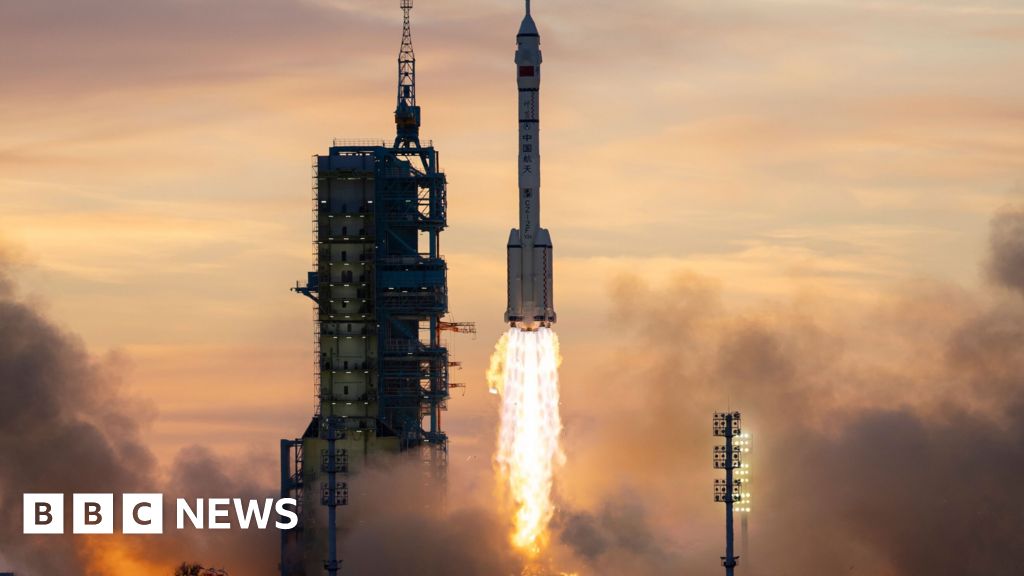
Shenzhou-24 Pakistan astronaut, Digimart Global: China launched its Shenzhou-24 space mission on Wednesday carrying three astronauts to its Tiangong space station, including Pakistan’s Muhammad Zeeshan Ali, the first foreigner to join a Chinese crewed space mission. The mission took off at 08:18 Beijing time (00:18 GMT) from the Gobi desert and was declared a “complete success” minutes later.
Beijing said it hopes the flight will strengthen ties with Islamabad as the two countries mark 75 years of co-operation in space. Speaking to reporters at the Jiuquan Satellite Launch Center, Ali said he was “carrying the name of Pakistan on my shoulder, the hopes of 250 million Pakistanis.” The mission also includes commander Tang Hongbo and flight engineer Wu Yi.
Research aboard the Tiangong station
While in orbit, the Shenzhou-24 crew will carry out experiments and test technology in areas such as aerospace medicine and combustion, and will study the effects of space on living organisms. The crew will also examine how the space environment affects aging, with the aim of developing new ways to prevent and treat age-related vascular diseases.
Ali will conduct studies on photosynthesis in bacteria and on the effects of radiation and microgravity on seeds. He is a former fighter pilot and will return to Earth after a short stay.
Tang and Wu will spend six months at the station alongside Zhu Yangzhu, a member of the Shenzhou-23 crew that lifted off in May this year, who has been studying how the human body adapts to long periods in space.
A diplomatic and strategic milestone
The mission is also a diplomatic moment for Beijing. China has invested billions of dollars in its space programme, and it is now seeking to show that Tiangong can become an international research platform rather than an exclusive Chinese facility.
The launch comes as Beijing positions itself as an alternative to the US-led space programme, with a goal to land Chinese astronauts on the Moon by 2030.
For Pakistan, which does not have its own spacecraft to send astronauts into space, the invitation is significant. Ali and Khurram Dawood, the other candidate who reached the final stage of crew selection, were trained in China and worked in Chinese space stations under the supervision of Chinese experts.
Ali told Pakistani media that mastering the Chinese language was one of his “biggest challenges.”