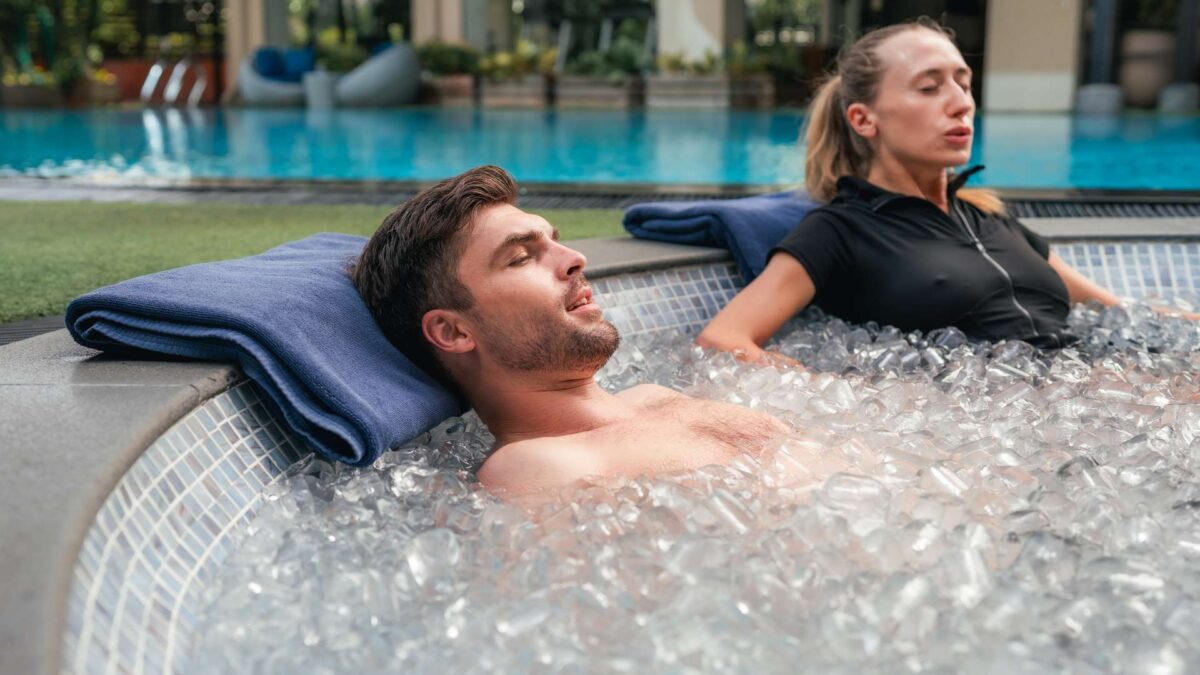
Ice bath recovery, Digimart Global: Cold-water immersion is a popular recovery method among athletes and amateur sportspeople seeking faster muscle recovery and better performance. A large review published in Sports Medicine – Open examined the results of 15 reviews and meta-analyses covering 161 individual studies and 3,210 participants, according to the publisher’s report.
Benefits for soreness and muscle markers
The researchers reported that ice baths can relieve muscle soreness for up to four days after exercise, with the greatest benefit following intense effort. Cold immersion was also associated with lower blood levels of creatine kinase, an enzyme that serves as a marker of muscle damage, between 24 and 72 hours after immersion.
The review further found that cold water helped the nervous system return more quickly to its resting state, improving heart rate variability.
Performance effects depend on timing
The effects on athletic performance were less clear-cut and depended largely on when immersion took place. According to the review, endurance appeared to improve temporarily, but only when athletes trained within about an hour of immersion, after which the benefit generally disappeared.
Lead author Erfan Berjisian, an exercise science researcher at Edith Cowan University in Australia, said cold immersion may be particularly useful when recovery time is limited, such as during tournaments or repeated high-intensity training.
Possible drawbacks for strength and muscle growth
The review also identified drawbacks. Explosive performance appeared to decline in the first hours after immersion, which co-author Kristina Kendall of Edith Cowan University said could be counterproductive if athletes must perform rapid or explosive movements shortly after cooling, unless they warm up sufficiently.
The most significant concern concerned athletes seeking to build muscle mass: several of the selected studies suggested that ice baths after resistance training may slow hypertrophy, leading to smaller gains in muscle volume and strength over time.
Individual decisions
Because of these limits, the researchers recommended that athletes tailor cold-water immersion to their individual needs at a given time. As the study’s authors concluded, the benefits depend strongly on the athlete’s goals, the type of exercise performed, and the timing of the next training session.