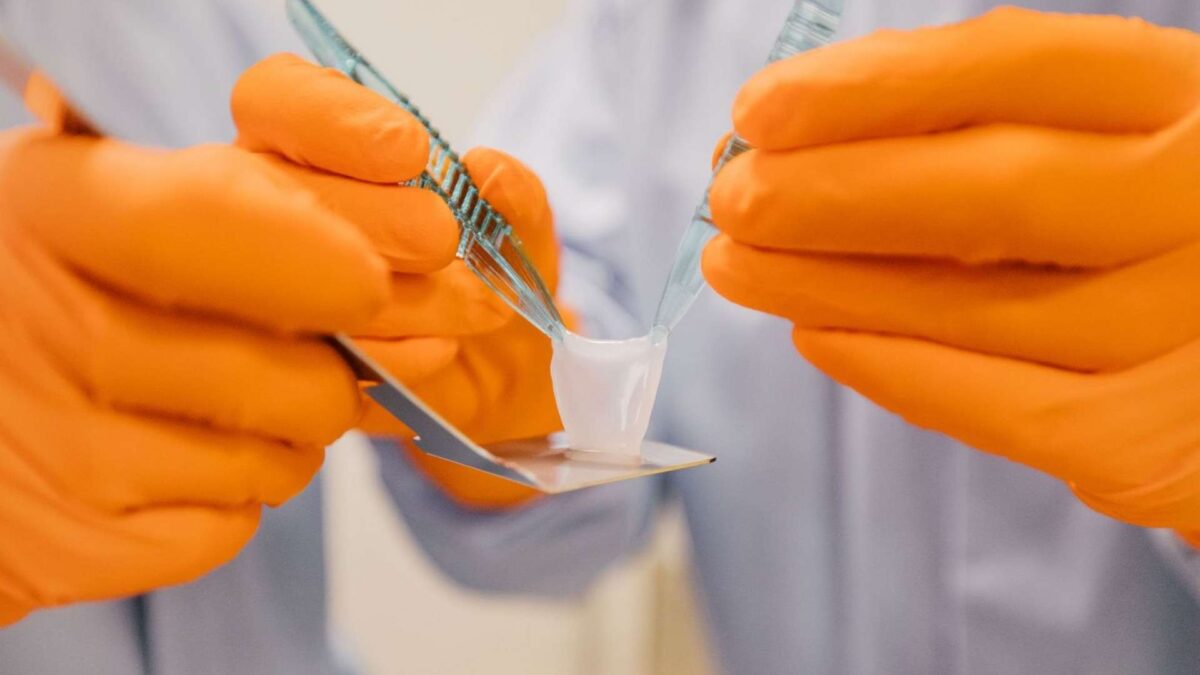
Artificial living skin, Digimart Global (France): The French healthcare group Urgo announced on November 20 that it had created a living artificial skin in the laboratory, designed to be grafted onto patients. The company, which specialises in medical wound healing, described the advance as a world first after five years of research with its partners.
Current treatment of severe wounds often relies on taking healthy skin from the patient’s own body. For people with large burns, repeated procedures, pain, infection risk and long hospital stays can add a heavy physical and psychological burden.
When burns cover a large part of the body, the available healthy skin may not be enough, forcing medical teams to carry out multiple operations to cover the affected areas gradually.
According to Urgo and its partners, the project, called Genesis, has produced a living skin made of cells that is strong enough to be handled by a surgeon. It can also be frozen, stored and thawed while keeping its cells alive and functional.
The stated goal is to give clinicians skin that is available immediately in the operating theatre, without taking healthy skin from the patient.
Urgo said the artificial skin would initially target severe burn patients, for whom self-donated grafts are sometimes difficult to obtain. The company said clinical trials could begin from 2030 in pharmaceutical facilities of the Établissement français du sang, and that marketing could follow from 2040, provided trials confirm safety and efficacy.
The announcement marks the end of the research phase, with the project now moving into development.
The work involves Lyon 1 University, the CNRS, the Centre d’étude des cellules souches, the I-Stem laboratory, the Établissement français du sang and Dassault Systèmes. The timeline and effectiveness remain to be confirmed through clinical testing, as the company itself notes that many clinical and regulatory hurdles remain before any market launch.