

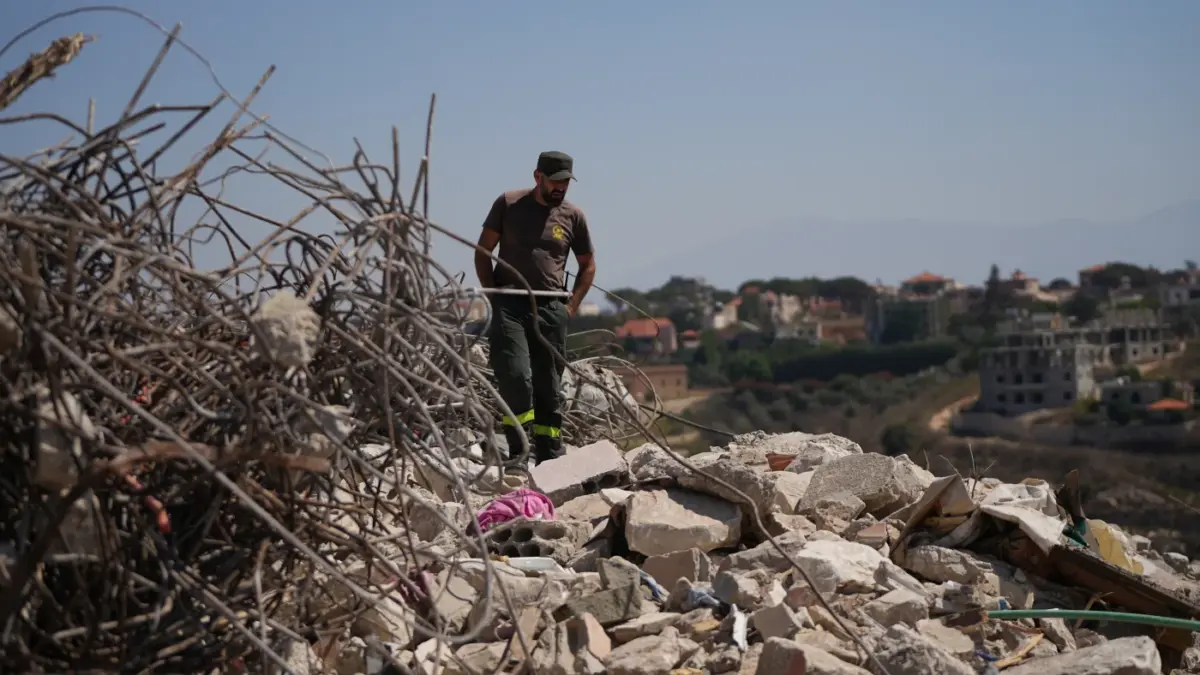
Lebanese villagers return home, Digimart Global (Zawtar al-Gharbiyah, southern Lebanon): Families returning to the village of Zawtar al-Gharbiyah in southern Lebanon have found their homes badly damaged after Israeli forces occupied the village and then withdrew under a U.S.-brokered plan. NPR reported that the Kadouh family returned in July, when the village became the first and so far only test of the plan for Israeli forces to pull back and the Lebanese army to take over.
The family’s house was occupied by Israeli soldiers and then set on fire as they left, according to the family. Atef Kadouh said almost everything inside had been destroyed, with appliances bearing bullet holes and furniture pushed off the second-floor balcony.
The Lebanese army told the family that many houses in the village had been rigged to explode, and said it dismantled explosives left in their home and others.
Destruction extends beyond the house
The family says Israeli forces also demolished two other homes belonging to extended family. Trees were uprooted with a bulldozer, including pine trees that produce pine nuts, and the family’s garage and tractor were destroyed.
Kadouh described the situation as being back to square one. The Israeli army did not respond to NPR’s questions about why the house was damaged or set on fire, but said military policy bars burning homes or leaving explosives.
No essential services and lasting fears
Residents said the village has no electricity or running water, and that the Israeli military destroyed the solar panels. The family said no one from the Lebanese state or outside groups had checked on them after the damage.
Kadouh said he still feels the area is dangerous because Israeli forces remain nearby, and said smoke was rising from an Israeli attack in a nearby village where strikes continue despite the ceasefire.
The report also covers the family’s earlier loss. Their youngest son, Adel, a volunteer ambulance driver, was killed on March 28 in an Israeli drone strike along with four other medics while they were burying a man who had died in hospital.
The Israeli military said without providing proof that militants routinely pose as paramedics, and did not respond to follow-up questions noting the five were killed at a burial, not in an ambulance. Lebanon’s Health Ministry says Israel has killed more than 135 first responders and medical staff in the past two years.