Maharaja Hollywood remake, Digimart Global: Producer Sudhan Sundaram has confirmed that a Hollywood agency approached the team about remake rights for Maharaja, the 2024 Tamil thriller starring Vijay Sethupathi. He made the comment during a panel at WAVES Film Bazaar, the market held alongside the 57th International Film Festival of India in Goa.
The film’s success in China is the reason given for the approach. According to a report cited by the publisher, Maharaja reportedly grossed approximately INR910 million ($9.6 million) at the Chinese box office.
Sundaram, the Chennai-based founder of Passion Studios, produced the film.
Why the film was used as a case study
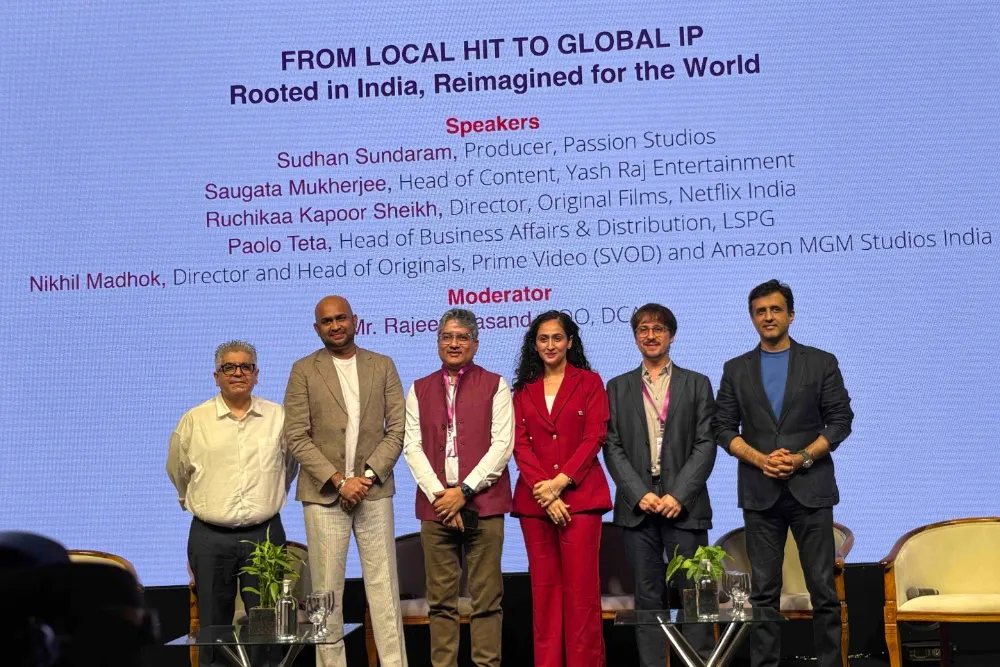
The panel, titled “From Local Hit to Global IP: Rooted in India, Reimagined for the World” and moderated by Rajeev Masand, used Maharaja to discuss the growing reach of Indian film intellectual property. Speakers included Nikhil Madhok of Prime Video and Amazon MGM Studios India, Saugata Mukherjee of Yash Raj Entertainment, Ruchikaa Kapoor Sheikh of Netflix India and Paolo Teta of LSPG.
The speakers commended the film’s success.
Madhok said Indian stories have not yet reached a consistent global breakthrough comparable to what Korean content has achieved, though he described the journey as underway. He cited Prime Video series Made in Heaven and Raakh as examples of locally rooted shows that travelled beyond expectations, arguing that authentic local stories tend to stand out internationally more than those built on existing formats or trends.
Local, global and franchise questions
Kapoor Sheikh said streaming has reduced the barrier of language, pointing to universal themes such as revenge, love and a mother’s love for a child. Mukherjee noted that Indian films such as Mother India (1957) and Dilwale Dulhania Le Jayenge (1995) have travelled internationally for decades, and said the key distinction now is between a story finding viewers abroad and its IP being adapted or remade in other markets.
The panel also addressed franchises. Madhok said a compelling standalone film should come first, with an extension only if there is another worthwhile story, and Mukherjee agreed that franchises should be driven by story rather than commercial appeal.
The panel also identified animation as an opportunity, given India’s folk narratives and cultural traditions.
Advice on rights and adaptation
Teta said understanding the legal and commercial framework early need not constrain creativity and can help filmmakers make informed decisions about future use of their work. He suggested agreements should find ways to recognise and reward original writers if a property is later adapted, and urged producers to weigh adaptation and remake rights when rights are acquired or a project is commissioned.