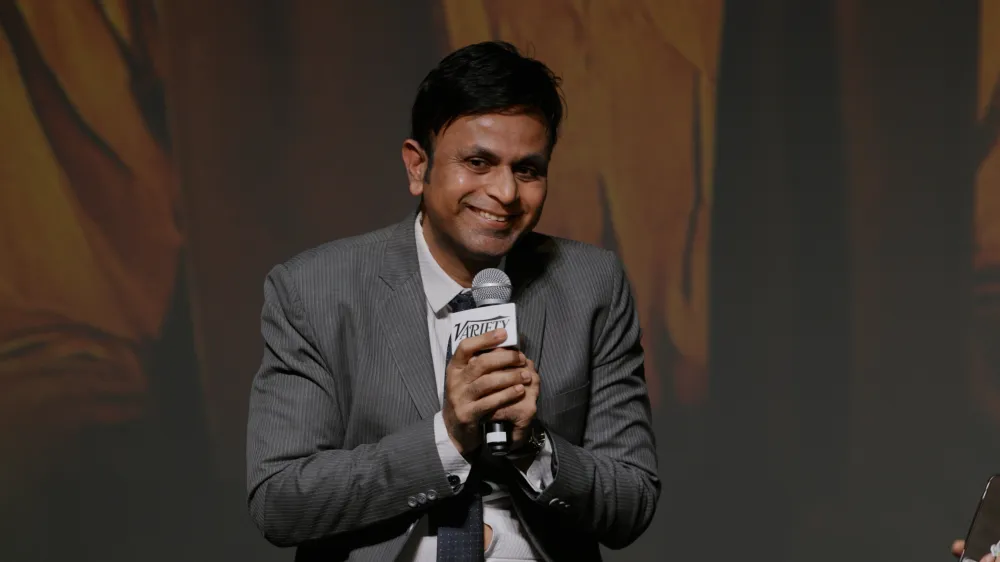
Gondhal Oscar entry, Digimart Global: India’s official selection for the 2027 Academy Awards is Gondhal, the debut feature film from director Santosh Davakhar. Following a screening of the film, Davakhar spoke with Variety’s Jazz Tangcay about making the movie, the Oscar films that influenced him and the Indian heritage he wants to share.
The film is set in 1960, a post-colonial era when illiteracy was widespread and women had little agency, Davakhar said. He chose that setting deliberately and shaped the character of Suman around how her situation would have been.
He described her as clever, manipulative and selfish, but also a 17-year-old girl who cannot break the barriers imposed by society, so she makes her choices slowly rather than challenging patriarchy openly.
The title refers to a traditional night-long devotional ritual performed for a newly married couple, and the plot unfolds during that ritual. Davakhar said the main instrument used in the ritual is close to disappearing as electrical instruments take its place.
The team recorded the music live during performances, because he felt studio recordings would lose the energy and devotion he wanted to capture.
Much of the film takes place at night, which created unique challenges. Davakhar said the production used over one kilometer of lighting, took seven days to complete the opening shot, which has two or three stitches, and spent 22 days on the entire project.
The score was composed by Ilaiyaraaja, the 83-year-old Indian composer, who agreed to work on the film on the condition that he visit the remote village where it was shot to watch the ritual. Davakhar said Ilaiyaraaja travelled 1,700 kilometers, watched the ritual until morning, and then composed the music at the studio.
The film opens with a 25-minute one-shot sequence. Davakhar said he was inspired by the 2001 Oscar-nominated Hindi-language film Lagaan, which lost the Best Foreign Language Film award to No Man’s Land, and he wanted to understand why.
He said powerful cinema depends on story, screenplay and craft, not only on stars or budget. He also cited Birdman, 1917 and Roma as films that shaped his approach to the single-take style, which he said allows the story to flow without visual disruption.
Davakhar said his experience at Cannes, where his short Adnyat screened, showed him that global perceptions of Indian cinema were limited, often tied to poverty or class. He said he wanted to present Indian heritage with pride, with the heritage forming the backdrop while human emotion and conflict drive the story.