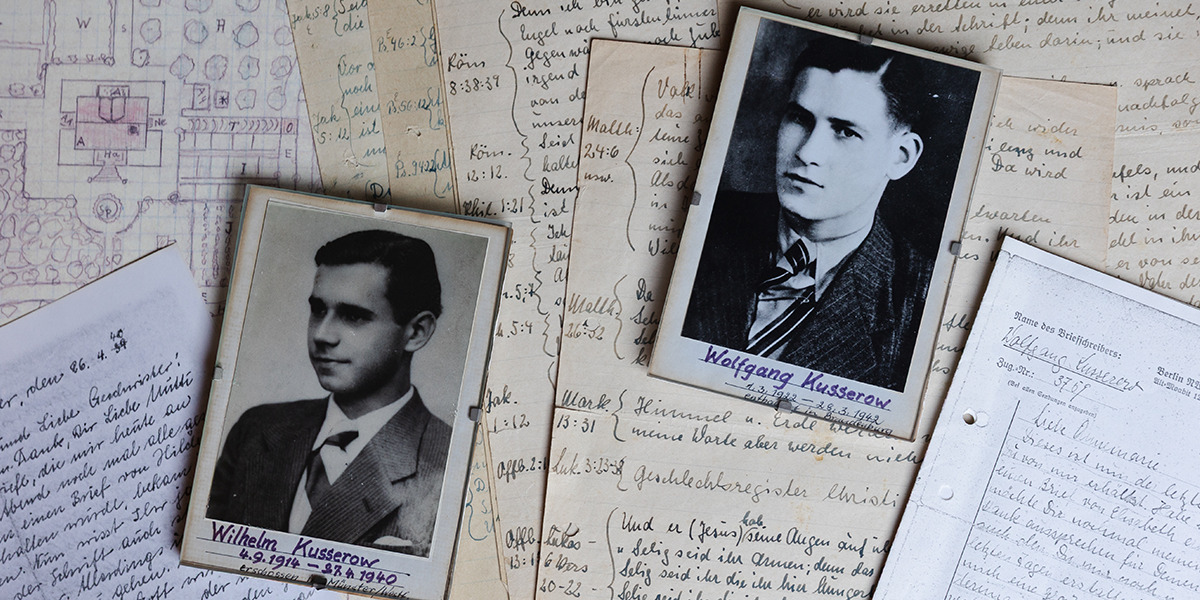
Jehovah’s Witnesses archive, Digimart Global (Germany): Jehovah’s Witnesses have reached an amicable settlement with the German government that would fully transfer the Annemarie Kusserow archive to the organisation in the coming months. According to the publisher report, the settlement was reached on Thursday, 19 November 2026, and the Higher Regional Court of Cologne issued an order establishing that the parties had entered into it the following day.
The archive documents the Nazi regime’s persecution of the Christian denomination. It chronicles the experiences of the Kusserow family, several of whose members were imprisoned and murdered by the Nazis because of their faith.
The report describes the collection as an important part of the Witnesses’ cultural heritage and as a record of abuses the group faced during the Second World War that are often overlooked.
The archive has been held by the Bundeswehr Military History Museum in Dresden for more than a decade. It was sold to the German government in 2009 by a member of the Kusserow family.
Jehovah’s Witnesses argued before several courts in the intervening years that this family member was not the legitimate owner, stating that the archive had been bequeathed to the organisation in Germany by Annemarie Kusserow, who compiled it and was herself a victim of Nazi persecution.
Sebastian Stock, a spokesman for Jehovah’s Witnesses, said the organisation was extremely happy to have reached the settlement and would soon have the archive in its possession. He said it intended to make the material available for research.
Petra Pau, a former vice president of the German federal parliament, was quoted in the report describing the archive as a unique testament to the history of persecution.
The report notes that Jehovah’s Witnesses were the first religious organisation to be outlawed when the Nazis came to power, and that over 1,800 members of the faith died under the Nazi regime, with some 4,500 sent to concentration camps. It also states that the group’s suffering is often omitted from Holocaust accounts and memorials, as reported by The New York Times and other media organisations.
The Kusserow family’s experience is cited as a stark example. Two of the boys, Wilhelm and Wolfgang, were executed for not supporting the Nazi military effort.
Annemarie, the eldest of the children, was arrested by the Gestapo in 1944 and imprisoned until well after the war ended. Her meticulous efforts to track down and preserve documents continued until her death in 2005. The collection includes photographs, drawings, farewell letters written before executions, death penalty pronouncements and classified Gestapo reports.