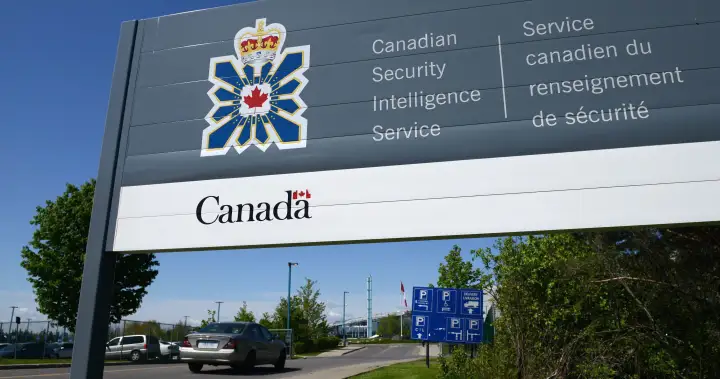
CSIS foreign posts expansion, Digimart Global (Canada): Canada’s spy agency, the Canadian Security Intelligence Service (CSIS), is planning to increase its international presence “significantly” following a recent $6 billion budget boost from the Liberal government. In a statement to Global News, CSIS said a bigger footprint abroad will “diversify and strengthen” intelligence-sharing arrangements with foreign governments.
A CSIS spokesperson said the expanded foreign operations would support the agency’s mandate, including counter-terrorism and counterespionage. The statement said the government’s investment would allow CSIS to address its most pressing challenges and build what it described as sovereign capacity, global partnerships and a domestic presence for a more complex future environment.
Limited foreign collection today
Canada does not have a foreign intelligence service, and CSIS is limited in the information it can collect abroad. The agency publicly acknowledges stations only in a handful of allied capitals, including Washington, D.C., London and Paris.
Signals of a possible mandate change
Prime Minister Mark Carney has recently stressed the need for “sovereign” intelligence gathering, and his government’s budget, which gives CSIS $6 billion over ten years, talks about reducing Canada’s reliance on allies. Some national security observers have speculated that CSIS may eventually receive a foreign espionage mandate similar to that of the U.K.’s MI6 or the U.S.
CIA. The government has not confirmed such a change in the material provided.
Wesley Wark, a senior fellow with the Centre for International Governance Innovation (CIGI) and a longtime national security researcher, said in an interview that he expects CSIS will look to expand its number of overseas stations and its operations in under-served regions. He suggested possible areas could include the Nordic countries and the Baltics, as well as Japan and South Korea, which would give Canada a closer view of developments in the Indo-Pacific.
Wark also said many of CSIS’s existing stations in the Middle East and Africa are very small.
Economic security and the North
CSIS’s statement also referred to “economic security,” a major concern for the current government as it navigates new trading relationships and Donald Trump’s trade war. The agency also wants a larger regional presence within Canada, including in the North, a region increasingly viewed for economic opportunity in mining and critical minerals, but which also presents national security vulnerabilities.
CSIS works with northern authorities but does not have a permanent presence there.
Updated national security strategy
In October, the Carney government released an updated National Security Strategy, described in the source as the first major overhaul of Canada’s approach to intelligence since 2004. The document stressed the need for sovereign capabilities to reduce reliance on intelligence collected by allies. In his introduction, Carney wrote that the belief that geography, interconnectedness and a rules-based international order could substitute for Canadian sovereign capacity “is no longer tenable,” adding that the global order that long protected Canada’s sovereignty “has ruptured.”