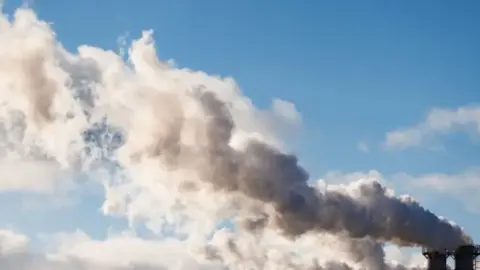
Toronto emissions spike, Digimart Global (Greater Toronto and Hamilton Area, Ontario): Planet-warming emissions across the Greater Toronto and Hamilton Area rose by eight per cent from 2024 to 2025, the largest annual increase since tracking began in 2015, according to a new report from The Atmospheric Fund, a regional climate agency. The report says emissions have now risen for a fifth straight year.
The agency says the region is now well off track to meet its climate commitments. If Toronto’s 2030 target were used as a regional benchmark, emissions would need to fall by about 16 per cent each year.
What drove the increase
Buildings, which account for nearly half of the region’s emissions, were among the largest contributors. Building-sector emissions, mostly from burning gas for heat, rose 15 per cent annually.
Electricity-related building emissions increased 26 per cent, which the report links to Ontario’s increasingly carbon-intensive grid.
Nearly a fifth of Ontario’s electricity was generated by fossil fuels last year, the most since the coal phase-out, as the province turned to gas to fill the gap left by nuclear reactors taken offline for refurbishment. Heating-related emissions rose 14 per cent largely due to a colder winter, and remained up three per cent even after researchers adjusted for weather, which the report suggests points to an aging, inefficient housing stock.
Policy and transportation
The report says municipalities have lost a key tool after Premier Doug Ford’s government blocked Toronto and other cities from enforcing green building standards. Purcell said this set Toronto back “about 10 years” in efficiency and technology for new buildings.
Toronto’s proposed building emissions performance standards were highlighted as one of the most significant local policies under consideration.
Transportation emissions rose between one and three per cent across most of the region, driven mainly by more cars on the road and a preference for larger, less fuel-efficient vehicles. Industrial emissions from steel and cement manufacturers showed no sign of progress, with decarbonization plans described as stalled.
Bright spots and next steps
The report points to some progress, including Toronto’s removal of local barriers to heat pumps and electric vehicle chargers, a record amount of Ontario battery storage procured this year, and a federal $2-billion investment in building retrofits that includes heat pump rebates. Purcell argued that many emissions-cutting measures can also ease household costs, challenging the view that climate action must wait for affordability concerns to be addressed.
The report, first published November 24, 2026 by The Canadian Press, is a publisher report that has not been independently verified by Digimart Global.