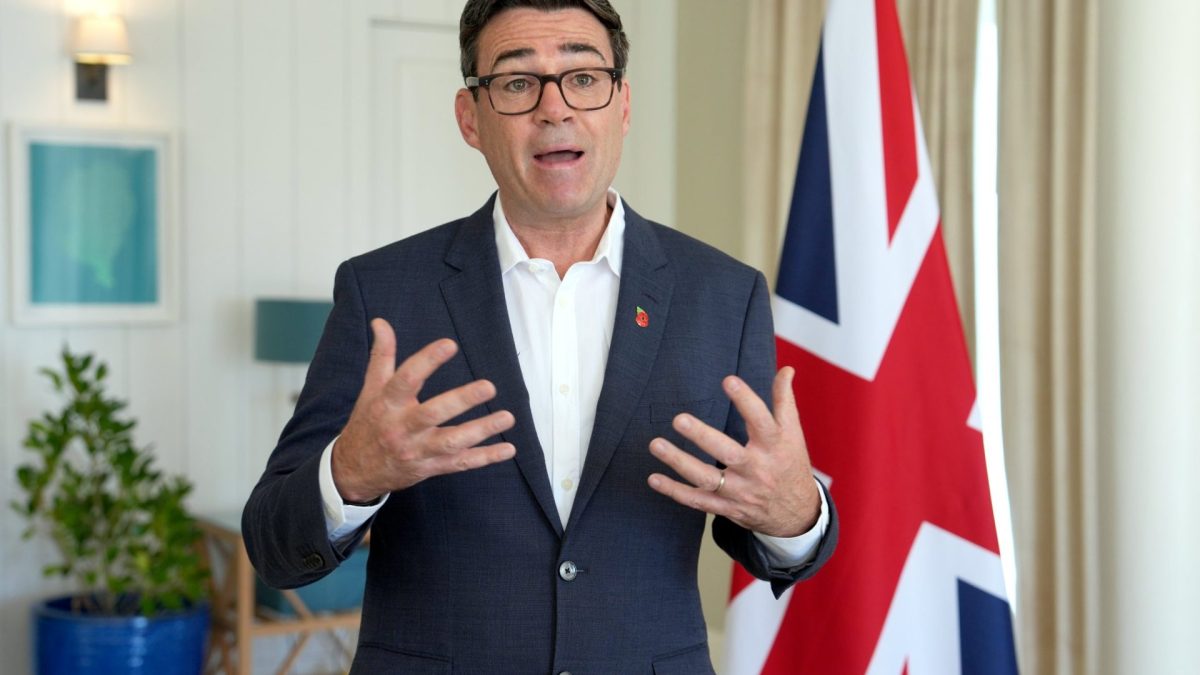
Burnham UK-EU summit Brussels Brexit relationship, Digi Mart USA News (United Kingdom): The upcoming summit between the United Kingdom and the European Union is set to be a major test for Prime Minister Andy Burnham. Burnham has been vocal about his thoughts on Brexit and a potential realignment of the UK’s relationship with the EU.
Since Brexit was completed in 2020, the relationship has been governed by a set of agreements, including the EU-UK Withdrawal Agreement, the Windsor Framework, the Trade and Cooperation Agreement, and the Agreement in relation to Gibraltar. Burnham has made it clear that he is open to readjusting the post-Brexit relationship, although it is still unclear what that might look like.
With Labour leading in the polls, he may use that popularity to set the wheels in motion.
Each summit, the first of which was held in 2025 and saw a new strategic partnership agreed, offers a new chance to redefine individual deals and elements of the relationship. On November 20, the Prime Minister will meet António Costa, President of the European Council, and Ursula von der Leyen, President of the European Commission, in Brussels for the second event.
The Government says the UK will push for deals to “cut costs and red tape for British farmers and businesses, support industry and boost growth in every part of the country.”
Decisions will have to be made on a range of subjects, but the three main ones are food, emissions trading and youth mobility, and it is thought that deals will be agreed at this summit. The Erasmus+ programme, which allows students from the UK to study in Europe, is expected to be one area where a deal will be confirmed.
University tuition fees remain unresolved, however, and any concessions to the EU will need to be balanced against domestic political and financial pressures.
Reports suggest agreements will also be made on linking the EU and UK carbon markets, a deal that would allow manufacturers on both sides to avoid additional carbon border charges. Rules on food trade are another major goal for the UK Government, which hopes to reach a deal on food standards to cut costs for British companies trading with Europe.
When asked about EU food rules, Burnham told broadcasters: “What’s facing me two weeks on Friday is a UK-EU summit where I have the opportunity to add to UK growth. It’s estimated up to 0.4 per cent extra on GDP.” He added: “I think people in Britain would expect me to take that with both hands, given where we’ve been in recent times, and that’s what I’m doing.
We’re not in the EU, therefore, we do have to work with them in a different way.”
Burnham further said: “But if that can get growth, if that can help our farmers, if that can remove red tape from British businesses, I think most people would expect me to go to that summit and negotiate the best deal that I can.” His recent statements on Brexit have led many to suggest the summit may lead to wider discussions on the UK and EU’s relationship in general, with broader ramifications.
The Prime Minister has said he is open to a wider conversation about Britain’s future relationship with Europe, and has said he would like to see the UK rejoin the EU in his lifetime. Burnham, who has insisted he would “not move ahead of the public” on the issue, said he wants to examine the options available for the UK and EU’s future relations: “We have to look at what is doable and what would be the pros and cons of each.”
At Labour’s annual conference in Liverpool last month, he said Brexit had done “more harm than good” and that later this year he wanted to set out “what I believe the different options are for Britain’s long-term relationship with our European partners.” A Government spokesperson insisted he is not suggesting a reversal of Brexit currently, stating: “The Prime Minister isn’t proposing a return to freedom of movement or any option.
He is saying that it’s time for us to discuss what kind of long-term relationship with Europe is best for Britain.”
Apart from a bespoke deal for Britain, the main options could include fully rejoining the EU and reversing Brexit entirely, rejoining the customs union, or rejoining the single market. The EU, however, sets four freedoms that must be agreed to before any country gains access to the single market: free movement of goods, services and establishment, capital, and, crucially, people.
Free movement of people, which gives EU citizens and workers the right to move, reside, study and work in any member state, was a major point of debate in the 2016 Brexit vote, and agreeing to it would be politically controversial for many Brexit voters. Burnham has said he wants an “honest discussion” about returning to free movement, but has agreed to stick to Labour’s 2024 manifesto, with no return to freedom of movement, the EU single market or customs union before the next election.
The EU has expressed hope for more deals with the UK at this summit. António Costa said in a statement: “The European Union and the United Kingdom are like-minded partners, united by common values and shared interests.
Our security and prosperity are closely intertwined, making a strong partnership between us essential.” He added: “By deepening our cooperation, we can strengthen our ability to address the challenges of our time, strengthen our resilience and promote stability in Europe and beyond.”
On the ground in Brussels, Burnham’s reopening of Brexit is seen as a bold move, according to reports, though there is a wish for him to clarify what he means and what Britain is willing to discuss. Sandro Gozi, a Member of the European Parliament, told Euronews: “Burnham now needs to clarify what he means.
And on our side, we should show openness to engage in a new sort of partnership.”
The EU’s former Brexit negotiator Michel Barnier said he felt the EU is unlikely to give up on its key red lines. He told the BBC’s Laura Kuenssberg on Saturday: “I said very, very often during these negotiations, the Brexit, there is no cherry picking.
There will be no possibility to have one freedom and not the other. The four freedoms are clearly the four conditions to be inside a single market.” Barnier also said the EU would reject recreating the favourable financial terms Britain had with the EU, which were negotiated in 1985 and lowered the UK’s contributions to the bloc’s budget.
The Guardian also reported on Saturday that five European leaders have called for closer ties with Britain, including those of Germany, Belgium, the Netherlands, Luxembourg and Denmark.