Polar vortex early weakening, Digi Mart USA News: Meteorologists said Friday they were observing a “unique” early disruption of the polar vortex phenomenon, bringing uncertain consequences for weather in the Northern Hemisphere this winter.
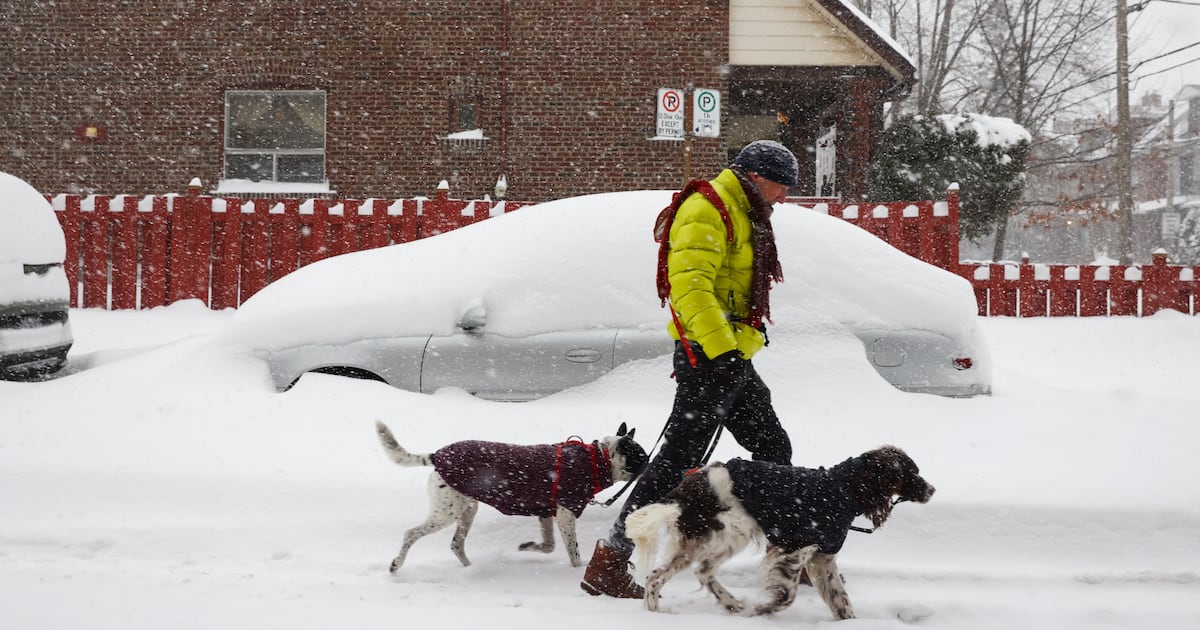
The polar vortex is a vast region of cold, low-pressure air that normally circulates high above the Arctic. During an El Nino year, which 2026 is, the vortex generally weakens toward the end of winter, releasing bitterly cold winds across Europe and North America around January to March.
Scientists say they are witnessing a weakening in early November, when temperatures are milder. “This is very early, and possibly that earliness is triggered by the amplitude of the El Nino event in the Pacific,” Grahame Madge, a spokesperson for Britain’s Met Office, told AFP.
He said the event could result in temperatures being less “severe” because air temperatures in “places like Siberia or over the Arctic are not as cold yet as they will be by February.” “It’s exceptional. It’s not unique.
It’s not necessarily worrying,” Madge added.
France’s Meteo-France weather agency said models “point to a major disruption of the vortex in the upper atmosphere (between 10 and 50 km in altitude) early this November.” “In climate reconstructions dating back to the 1950s, such a disruption has never occurred before the end of November, making this an unprecedented event,” the French agency told AFP.
“At this stage, the potential consequences for France remain highly uncertain. They will depend on how the disruption evolves, its positioning, and whether or not it propagates down to the lower layers of the atmosphere.”
Some research suggests climate change could be playing a role in disruptions to the polar vortex. Scientists advancing this theory argue that uneven Arctic warming across Europe and Asia can amplify large atmospheric waves, making it more likely for the polar vortex to wobble and spill south over North America.
The science, however, remains contested, and researchers caution that natural climate variability also plays a role.