BYD Yangwang U9 Xtreme 500 km/h speed record, Digi Mart USA News (Abu Dhabi, United Arab Emirates): BYD announced on Friday, November 6, that it had broken its own world speed record with the Yangwang U9 Xtreme, crossing the 500 km/h threshold for the first time. The company said the milestone is one the automotive industry has sought for nearly a century without success using conventional combustion engines.
In September 2025, German driver Marc Basseng reached 496.22 km/h on a test track in the hypercar, a performance that surpassed the Bugatti Chiron, the previous holder of the title, which is assembled in Alsace, France. The group, however, was not satisfied with that result.
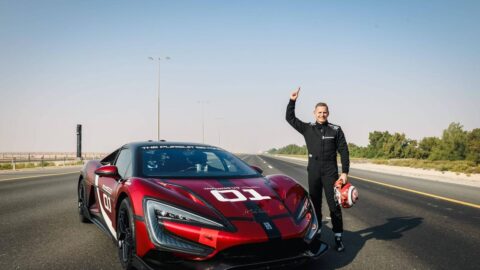
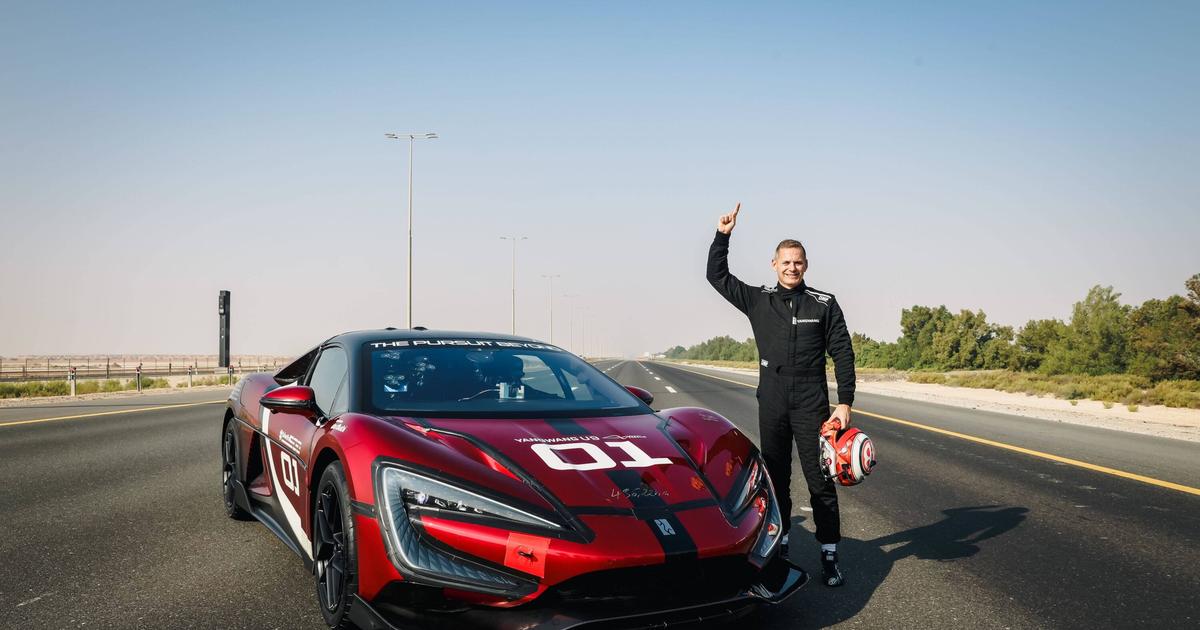
Thirteen months later, on November 1, Basseng accelerated to 503.17 km/h.
The run took place on a closed road on the outskirts of Abu Dhabi in the United Arab Emirates. The International Automobile Federation was on site to homologate the record.
BYD, the world’s leading electric vehicle maker, said the Yangwang U9 Xtreme set two records: the fastest production car in a one-way test, across all powertrains, and the fastest production electric car under the same conditions.
The Yangwang U9 Xtreme is offered in a limited series of 30 units, with a price of around 3 million dollars. A few days before the event, BYD had published images of a high-speed crash involving the same model.
The driver walked away unharmed, which the company used to highlight the safety of its vehicles.
Stella Li, executive vice president of BYD, said in a statement that the company’s engineers are young, bold and perhaps even a little crazy, in the best sense of the word. Because the attempt took place on a road normally open to traffic rather than a circuit, BYD teams swept a 10-kilometer stretch to provide a straight line.
Each meter was then inspected to remove residual metal particles from the cleaning brushes that could pose a risk to Basseng, the vehicle or its Giti tires.
Two attempts were made on October 31. Afterward, Yangwang engineers used the Halloween night to make final adjustments.
According to the manufacturer, the rear wing angle was changed to increase aerodynamic downforce on the rear axle, the suspension software was tuned to strengthen rebound damping over minor road irregularities, and tire pressure was precisely adjusted to improve high-speed stability.
Besides its four electric motors producing 755 horsepower, the hypercar incorporates an ultra-compact battery, an intelligent body control system and lubricated competition tires. BYD said these adaptations allowed the car to pass 500 km/h safely on November 1.
For context, the Venturi VBB-3, an electric vehicle developed by the Monaco-based company in partnership with Ohio State University, previously exceeded 500 km/h, reaching 549 km/h on the Bonneville Salt Flats in Utah. Venturi now focuses on building lunar exploration rovers.
Tesla is also preparing a new Roadster that is reported to be capable of exceeding 370 km/h.