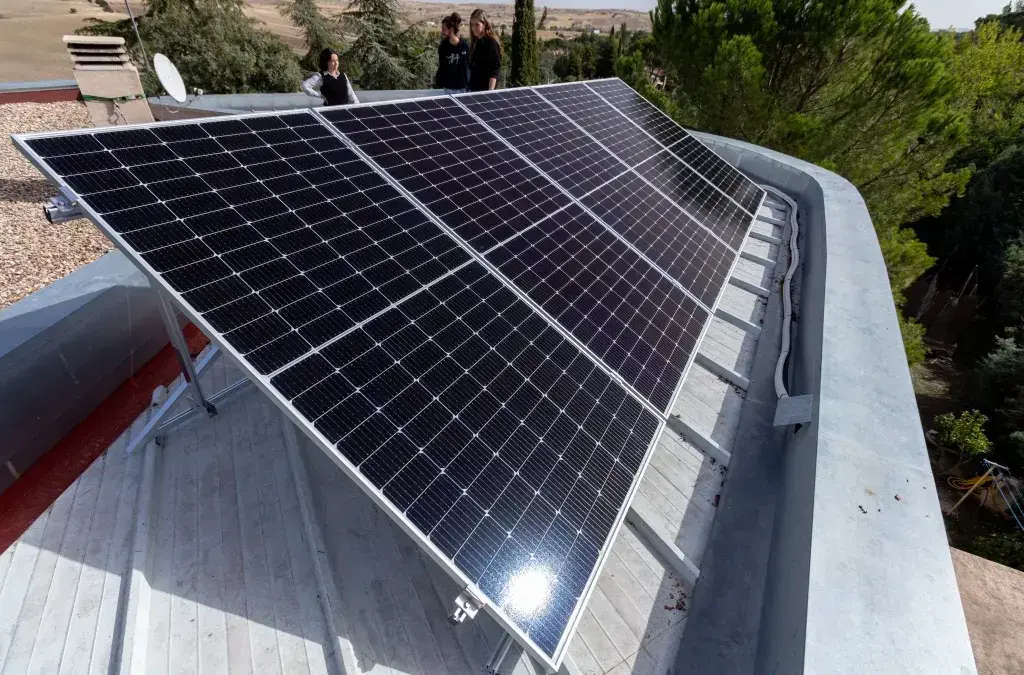
Mexico approves six solar generation projects worth $750 million, Digi Mart USA News (Mexico): Mexico’s National Energy Commission (CNE), through its Technical Committee, has approved six permits for photovoltaic electricity generation that will add 649 megawatts (MW) of net capacity to the National Electric System (SEN).
The permits were issued under the Second Call for priority attention to requests for generation and interconnection permits to the SEN, in line with the binding planning issued by the Ministry of Energy (Sener). Sener defined the grid’s expansion needs and the criteria projects had to meet, while the CNE evaluated and resolved applications submitted through the Ventanilla Energía, in accordance with the Second Call and subsequent amendments published in the Official Gazette of the Federation.
Together, the six plants involve an investment of around $750 million and are expected to generate an estimated 1,881 gigawatt-hours (GWh) per year. They will also incorporate storage systems, which the government says will provide greater operational flexibility and strengthen the stability and reliability of the grid.
Of the approved capacity, 37 percent will enter operation in 2028 and the remaining 63 percent in 2029. By region, the Western Region will add 350 MW, the Eastern Region 289 MW, and the Northeast 10 MW.
The Second Call received 57 applications. Of these, 31 met the requirements to obtain a permit, but only six projects satisfied all of the criteria.
Details of the approved projects are available through the published results of the Second Call.
The commission noted that participation in this process does not preclude projects not approved this time from being considered in other calls or through the conventional route, under the applicable requirements and procedures.
With these resolutions, the energy sector is advancing an orderly energy transition based on binding planning, expanding generation from renewable sources and contributing to the goal of raising their share to 38 percent of electricity generation by 2030.