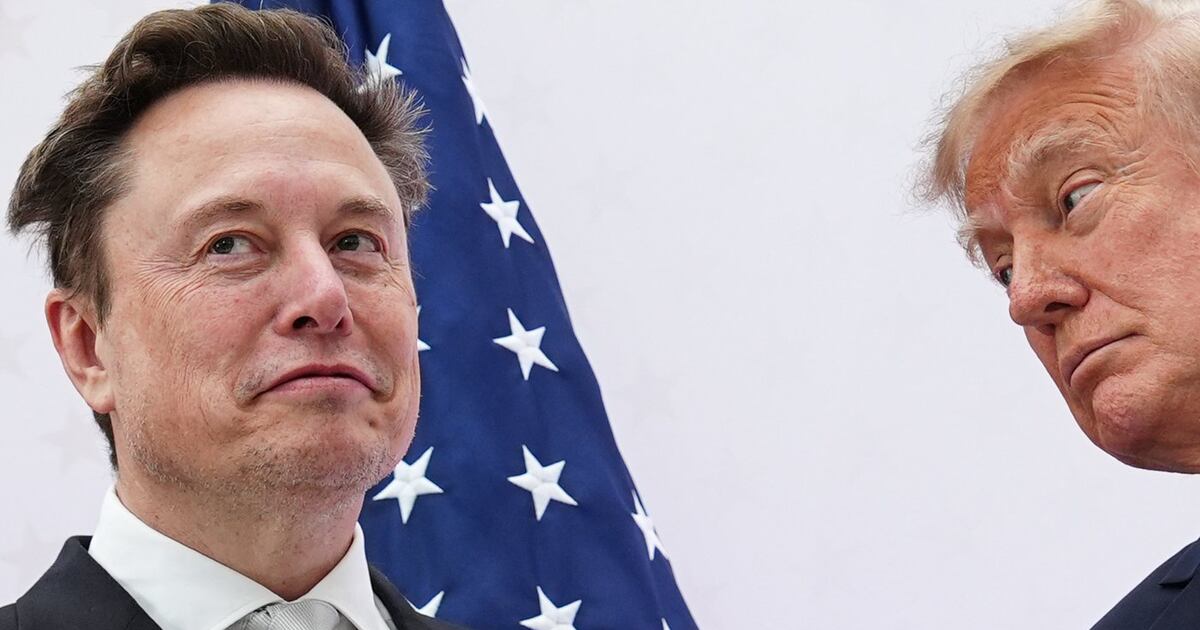
Elon Musk midterm election spending and Republican losses in Texas, Digi Mart USA News (Austin, Texas): Elon Musk spent at least US$445 million in an effort to help Republicans keep control of Congress, an amount roughly equivalent to someone earning a $100,000 annual salary saving every penny for 4,400 years. To the world’s first trillionaire, the sum is small, but the business his companies do with the federal government is not.
On Tuesday night, the Republican Party that had embraced Musk lost again and again, ceding control of Congress to a Democratic Party wary of the world’s richest person. Democrats are expected to put his companies and his work at the Department of Government Efficiency under closer scrutiny, and lawmakers were already preparing possible subpoenas and investigations.
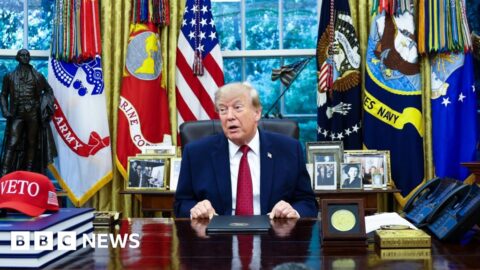
President Donald Trump suffered significant losses on Tuesday, but few had more riding on the outcome than Musk, who made a large bet and received the midterms’ poorest return on investment. As the election wore on, Musk joked on X, the social media site he owns: “Guess my election-interfering space lasers didn’t work this time,” adding a shrug emoji.
Musk now faces new risks to his business in Texas, where he has based himself and several of his companies. He spent at least $5 million trying to re-elect Republican Gov.
Greg Abbott, who lost. Democrats also won control of the Texas House and the U.S.
Senate, in part by defeating Texas Republican Attorney General Ken Paxton, who had effectively benefited from $158 million of Musk’s spending but lost his Senate race to Democrat James Talarico.
It was the first statewide win for Democrats in Texas in more than 30 years, and the candidates won in part by criticizing Musk, the tax breaks and grants his companies receive, and his relationships with elected Republicans. “This era of open corruption is going to come to an end,” said Rep.
Gene Wu, chairman of the state legislature’s newly empowered Democratic Caucus. Musk did not respond to requests for comment.
Slightly more than half of Texas voters said they had an unfavorable opinion of Musk, according to The AP Voter Poll of more than 5,000 voters in the state. While Musk is overwhelmingly viewed positively by MAGA Republicans, those numbers drop among non-MAGA Republicans and fall sharply among independent and Democratic voters, the groups Talarico and Democrat Gina Hinojosa, who defeated Abbott in the governor’s race, were targeting.
The two often framed politics not as partisanship but as billionaires versus everyday Texans, and Musk’s emergence as a major Republican benefactor reinforced that message. “Paxton is funded by one dude.
Elon Musk wants our land. He wants our water.
He wants our tax dollars. He wants his very own personal United States senator,” Talarico told a crowd at his final rally of the campaign.
Hinojosa made a similar case on the same Austin stage, saying, “We know that Elon Musk got a $1.7 billion property tax break here in Texas, property taxes that the rest of us have to pay full price on.”
Even as Musk’s money helped flood Texas with negative ads largely aimed at Talarico, the Democrats’ message targeted an electorate with a median household income of $85,000 a year, a group under pressure as prices for gas, groceries, rent and mortgages keep rising. Outgoing Rep.
Chip Roy, R-Texas, said there was a point at which the sheer size of Musk’s donations stopped helping the GOP. “You’re reaching the upper bound of the benefit of any of these dollars,” he said in an interview.
“People are so turned off by all of the ads, and all you’re doing is running the same ad every single time.”
Musk’s two publicly traded companies, Tesla and SpaceX, both saw their share prices fall considerably on Wednesday, even as the tech-heavy Nasdaq Composite index rose. Tesla shares declined Wednesday afternoon and wiped out about $40 billion from the electric carmaker’s market capitalization, which stood at $1.54 trillion.
SpaceX also lost about $40 billion in market value, now at $1.83 trillion.
Musk lost about $45 billion of his net worth on Wednesday, which stood at $865.6 billion according to Forbes, though it could rebound. Investors signaled some concern about the election’s impact on Musk’s businesses.
Worries that he may face congressional investigations “contributed to the early plunge for his benchmark firms,” said Joe Mazzola, head of trading and derivatives strategy at Charles Schwab.
Michael Morris, a professor of leadership at Columbia Business School, said Musk’s strategic thinking helps him in business but may lead him to believe he can take control of politics as well. “It’s a different animal,” he said.
“He obviously has way more money than he will ever need, and his companies are doing well. I do think it’s kind of a game to him.”
Democrats have not forgotten Musk’s time in Washington last year leading DOGE, which moved quickly through agencies cutting federal workers, or a recent problem in which Starlink, SpaceX’s internet service, was throttled in Ukraine amid the war with Russia. “Elon Musk waved a chain saw on stage and laughed while he fired public servants and gutted the services Americans rely on,” wrote Rep.
James Walkinshaw, a Virginia Democrat, in an X post just before the election. “He must answer for it under oath.”
In Texas, with an incoming Democratic governor, Musk’s dealings with the state, including tax breaks, could face similar scrutiny. In August, Musk’s companies received a $30 million grant through a state program to build a semiconductor plant estimated to create 3,000 jobs, one of several cash infusions he has received through state programs.
He has also pushed the state legislature to pass laws favorable to his businesses.
Musk has also railed against what he calls the “woke mind virus,” and posted heavily on X before the election attacking Talarico, largely over the Democrat’s past positions on transgender rights and other progressive causes. That was also Paxton’s central attack, though it fell well short.
“You couldn’t pull the wool over their eyes anymore with these culture wars, and they are frustrated with the costs,” said Rep. Christina Morales, a Democrat from Houston whose party now holds the majority in the state House.
“We’re not saying you don’t belong here,” she said, but “Texans can’t be bought.”