Day of the Dead traditions across Mexico, Digi Mart USA News: Saying that “in Mexico we celebrate the Day of the Dead” is accurate, but it leaves out a decisive part of the story. There is no single ceremony repeated in exactly the same way from the Huasteca to the Yucatán Peninsula.
In some communities the gathering centers on a household altar; in others, dances, cemetery visits or meals prepared with seasonal products take center stage.
The language used to name the dead also changes what the celebration means. UNESCO recognized in 2008 the indigenous festivals dedicated to the dead for their social function and their relationship to the maize cycle, families and the memory of ancestors.
That description should not be used to place all communities under one identical image. Knowing four traditions helps explain how a national identity is built without erasing the way of life of each people.
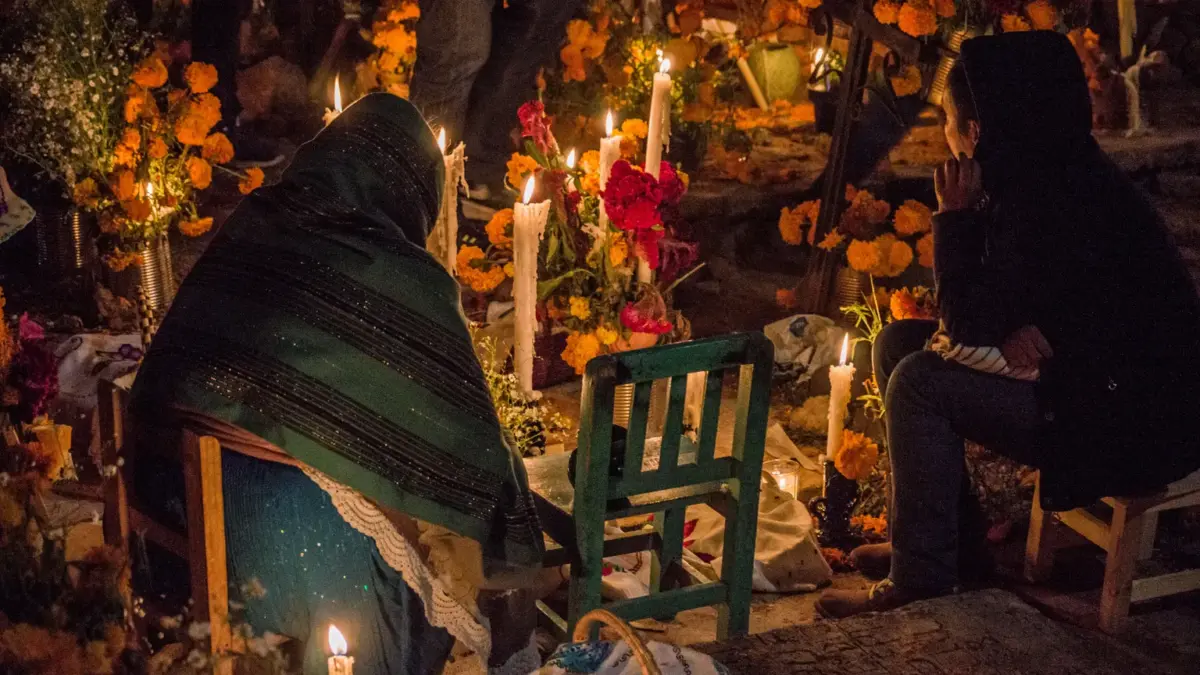
In Michoacán, Purépecha communities in the Lake Pátzcuaro region prepare offerings and ceremonies tied to remembering their dead. Janitzio is the best-known site for visitors and media, but it does not automatically represent the whole of the Noche de Ánimas in Michoacán.
Tzintzuntzan and other towns maintain practices that should be documented separately, without copying one locality’s descriptions onto the others.
According to research from the UNAM Institute of Geography publicized by Ciencia UNAM in 2025, tourist promotion gained strength in Janitzio during the 1930s, and what had once been more restricted became part of the public image of Michoacán. The research cites historical testimony that access to the cemetery during the commemoration was once different from what visitors know today.
This change does not mean the ceremony has disappeared; it means participants must reconcile a family memory practice with the presence of observers.
In Nahua and Tének communities of the Huasteca, Xantolo includes altars, music, food, grave visits and various ceremonial expressions. Describing it as a permanent parade of masks would be a mistake.
The INPI’s Atlas of Indigenous Peoples notes that for the Nahuas of Hidalgo the ceremony is family-centered, with the household altar at its heart, although it culminates in community gatherings at the cemetery. Comparsas, dances and huehues can be highly visible, but they do not necessarily displace the home.
The INPI also documents the importance of zacahuil and other foods shared during family and community gatherings. Preparing these dishes requires time, cooperation and knowledge usually passed down across generations.
For travelers, the Huasteca spans several states and peoples, so not all dances, calendars or offerings are the same, and responsible reporting should identify the community where observations were made and the language of its participants.
In the Mazatec region of Oaxaca, huehuentones, associated in INPI ethnography with the chamaa dance, or dance of the old men, take part in Todos Santos celebrations. Music may include violin, guitar, güiro and drum.
The masks and costumes respond to meanings specific to local tradition, not to a Mexican version of commercial costumes. Collective participation depends on knowledge that is not always written down, and the language deserves care: translating everything into Spanish can erase nuances in how ancestors are remembered.
On the Yucatán Peninsula, Hanal Pixán or Janal Pixan means, in common translation, “food of the souls” or “of the spirits.” The INAH explains that this Maya celebration maintains a particular relationship with the land, maize and family memory. Offerings include foods prepared specially for these days, among them tamale varieties such as mucbipollo or pib, whose preparation can vary between localities.
Cooking is part of the symbolic welcome of loved ones, and in some homes several generations take part in the preparation.
In Pomuch, Campeche, the relationship with ancestors also takes an exceptional form: some families clean and care for the bone remains deposited in ossuaries. The INAH has documented this practice and links it to the Janal Pixan celebration.
That ritual merits its own explanation and should not be treated as a tourist attraction; it will be the subject of a separate report in this series.
The four regions share a decision to keep those who died present, doing so through visible actions that can require weeks of preparation. They also share a contemporary tension: tourism and social networks can spread traditions but often demand easily recognizable images and overly brief explanations.
The risk is turning diversity into a uniform. The wealth that UNESCO recognizes lies precisely in communities able to preserve and recreate their practices, not in homogeneity.
Respecting the memory of a people begins with understanding that its practices have living authors. Their names should be known, their versions heard, and it should be accepted that some parts of a ceremony are not meant to be recorded.
Mexican identity grows stronger when it admits difference, and learning about these traditions does not separate Mexicans; it helps recognize how much can be shared without asking anyone to give up what is theirs.