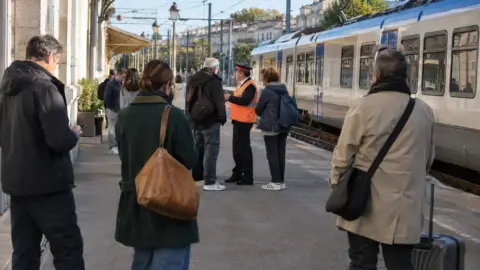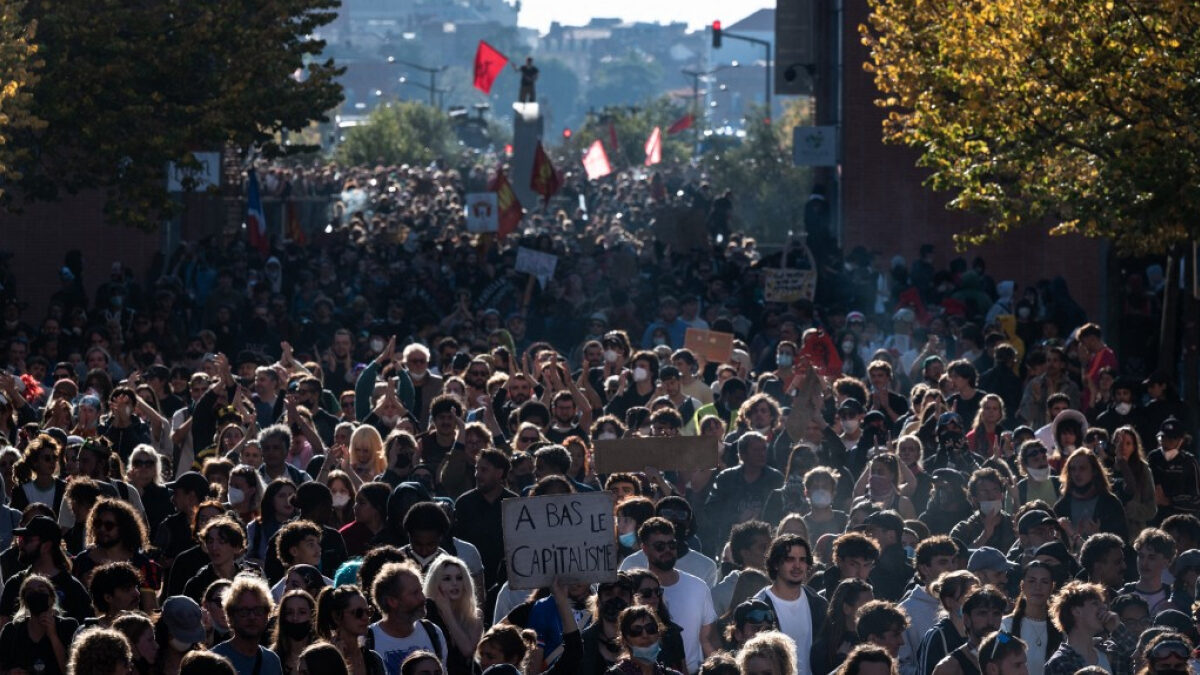
European cost-of-living protests November 20-22 2026, Digi Mart USA News (Paris, France): Representatives of trade unions and housing rights associations from seven European countries, meeting in Paris, said they hope to bring “millions” of people into the streets on November 20, 21 and 22. The groups, from Belgium, the United Kingdom, Spain, France, Greece, Italy and Portugal, announced the call on Tuesday, November 3, as cost-of-living pressures mount across the continent.
Carme Arcarazo, spokesperson for the Spanish Confederation of Tenants’ Unions, which initiated the meeting, said at a press briefing that the groups had “decided to coordinate to move forward together” at a “crucial moment” in the purchasing-power crisis in Europe. Their main demands include a “guarantee of the right to housing” and “control of prices for housing, food and energy.” They also call for higher wages and pensions, public services including education, health care and public housing, and the “right to work” without excluding migrants.
The organizers also seek the taxation of the wealthy, an end to rearmament policies and an end to the development of fossil fuels. Benjamin Ball, a member of the yellow vest movement’s coordination, who attended the meeting, said that “by the millions, we will take to the streets and show that peoples must lead, not billionaires.” The CGT and Solidaires trade unions and the Droit au logement (DAL) association are also backing the call.
The participants denounced what they described as an “unbridled rise in the cost of living” and a lack of measures by governments. In Spain, the September eviction of Maricarmen Abascal, an 87-year-old retiree from Madrid who died a few days later, sparked large protests and put the housing crisis at the center of public debate.
That led Prime Minister Pedro Sánchez to call early legislative elections for November 29. Spain’s main unions have called a general strike on November 11.
Encampments appeared in October in the Portuguese cities of Lisbon and Porto in echo of the Spanish protests. In France, high school students launched the mobilization to demand more resources for education and to denounce the Parcoursup university admissions system, before cost-of-living protests that also involve unions and yellow vest activists.
A “youth strike” is also scheduled for November 20 in twenty countries, coordinated by a Portuguese student association opposing fossil fuels.
The French high school movement has echoed in other European countries. In Greece, more than 10,000 people demonstrated in several cities, some carrying banners in Greek and French reading “Hope lies in the struggle of the peoples.” Last Saturday, several hundred thousand people marched in France, and tens of thousands of young people took to the streets in Germany.
The day before, hundreds of thousands of Italians also demonstrated. In Italy, the movement brings together students, port workers, truck drivers and farmers, and Chiara Capretti of the USB union, which initiated a general strike on October 30, complained that “the government is not answering anyone.”
Housing is a common demand across the protesting countries because of its central role in the cost-of-living crisis. In the European Union, housing prices rose by more than 60% between 2010 and 2025, and rents rose by about 29%.
In 2024, more than 16.5 million European households spent over 40% of their income on housing, a threshold known as the excessive housing cost burden, representing 8.2% of EU households.