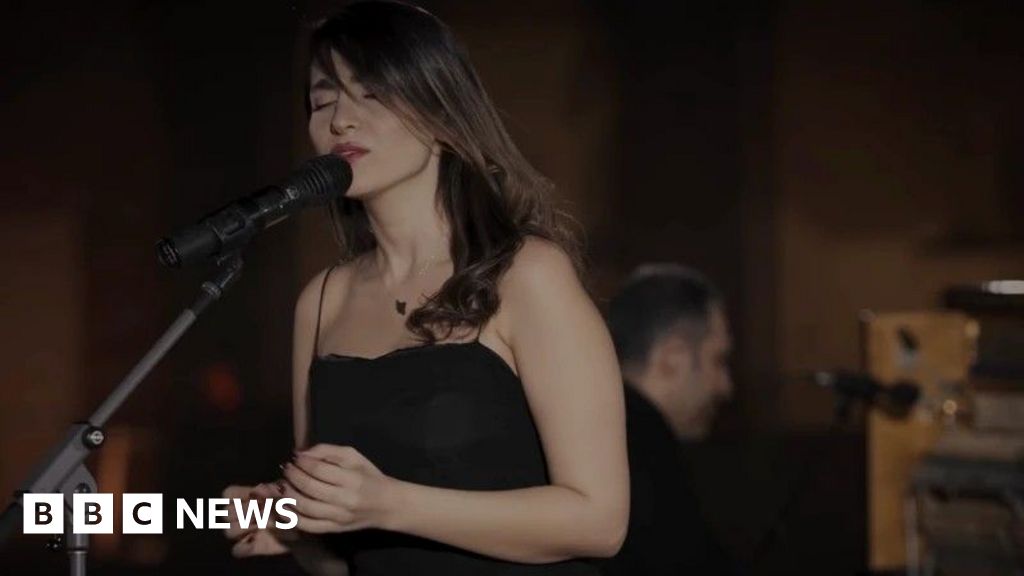
Iran singer flogging, Digimart Global (Qom, Iran): A prominent Iranian singer who performed without the mandatory hijab, along with four members of her band and production team, has been flogged by Iranian authorities, according to their lawyers. A member of the defence team told the BBC that Parastoo Ahmadi, three musicians and a producer each received 74 lashes in the city of Qom.
Ahmadi, 29, wore a sleeveless dress during a concert that was livestreamed in December 2024. Iran’s laws ban public performances by women and require them to wear headscarves and modest clothing.
In June, a criminal court in Qom convicted Ahmadi and eight others of “offending public decency” through the publication of “obscene and indecent material,” which the defendants denied. In addition to the lashes, they were banned from audiovisual activities and from leaving the country for two years.
At the end of September, an appeals court in Qom rejected the defendants’ appeal and confirmed the sentence, according to her lawyers.
Lawyers Say Enforcement Was Immediate
On Monday, one of the defendants’ lawyers told the BBC that Ahmadi and four of her male co-defendants were flogged at the third branch of the Criminal Sentence Enforcement Office in Qom. The lawyer said the defence had sought to overturn the verdict or secure a reduction, suspension or postponement of the sentence, but the enforcement branch insisted on carrying it out immediately.
The pro-reform daily Etemad, citing another defence lawyer, Mostafa Nili, named the four men as Soheil Faghih-Nasiri, Amin Taheri, Amirali Pirnia and Mohsen Lashkari.
Rights Groups Condemn the Punishment
Bahar Ghandehari, director of advocacy at the US-based Center for Human Rights in Iran (CHRI), described the flogging as a flagrant violation of Ahmadi’s fundamental rights. Other Iranian artists and human rights activists have also condemned the sentences, warning that flogging constitutes cruel, inhuman and degrading punishment and violates the international prohibition on torture.
Context of Iran’s Dress Code Rules
Under Iranian law, based on the country’s interpretation of Sharia, women and girls above the age of puberty must cover their hair with a hijab and wear long, loose-fitting clothing. The rules were a focus of nationwide protests in 2022 after the death in custody of Mahsa Amini, a 22-year-old Kurdish woman detained by morality police in Tehran for allegedly wearing her hijab “improperly.” Since then, many women have stopped covering their hair in public, and authorities have responded with periodic arrests, warnings and business closures.
According to the Norway-based group Iran Human Rights, cited by the BBC, authorities have intensified their use of the death penalty against protesters since the start of Iran’s war with the US and Israel in late February. The group says at least 39 men convicted over January’s protests and two convicted over the 2022 unrest have been executed, and that another 121 protesters detained in January have been sentenced to death and are at imminent risk of execution.