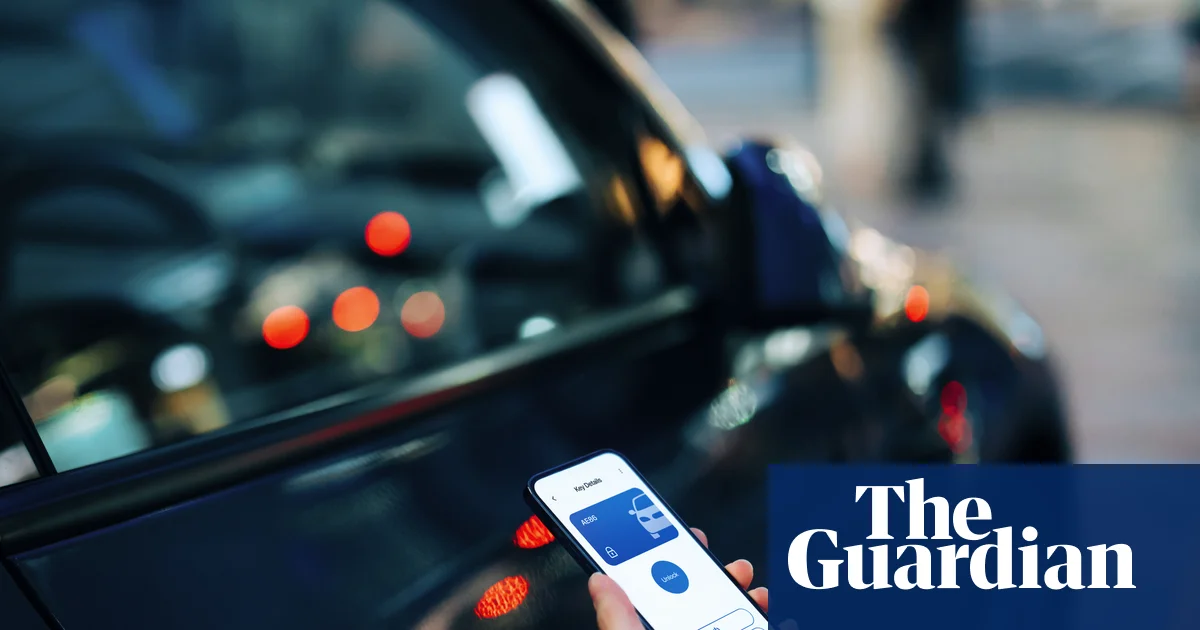
Smart car domestic violence abuse, Digimart Global (Australia): A report by University of New South Wales researchers, released on Tuesday, warns that smart car features are being misused by perpetrators of domestic violence to facilitate abuse. The researchers describe the problem as emerging and say it could worsen.
The report cites an Australian case earlier this year in which a man was found guilty of using a connected car app to harass his former partner, including restricting the speed at which she could drive, sometimes to 40km/h. It also refers to a 2022 case in the United States, where a woman found her former husband had used a car app linked to her vehicle to track her, and a 2020 case in which a woman found a baseball bat her former partner had used to threaten her in the back seat of her car.
How the features can be misused
According to the researchers, many car functions, including tracking and monitoring, remote control and digital key access, can be controlled remotely through an app. They identified three main scenarios in which these functions could be misused: the abuser owns the car and created the account, the abuser has been granted access as a secondary user, or the abuser impersonates the victim and creates an account on their behalf.
The report found that these functions are mainly marketed by carmakers as tools for owners to keep an eye on and protect their vehicles. It cited an advertisement on Kia’s Australian website for Kia Connect, which describes geofence and time fencing alerts that notify an owner when another user leaves preset areas or times.
Kia was contacted for comment.
Features found across major brands
The researchers mapped the functions advertised by 15 of the top car brands. Geolocation, which shows a vehicle’s real-time or parked location, was advertised by all 15, sometimes as “Vehicle Tracking”, “Vehicle Locator” or “Find My Car”.
The report says this could be used to track people. About 60% of the brands advertised a zone exit alert, which the researchers warn could be used to monitor whether a victim leaves a designated area.
Around 20% advertised speed or acceleration restrictions, which carmakers say are intended for young drivers or valet parkers but which the report warns could be used to prevent a victim from escaping at speed. Digital key access, which lets drivers unlock a car or start the engine with a phone, was advertised by 67% of brands in the Australian market.
The report warns an abuser could use it to remotely deactivate a victim’s access, potentially leaving them stranded.
Calls for action
Report co-author Katharine Kemp, a data privacy and consumer protection expert at UNSW, said carmakers need to adopt safety by design principles from the early stages of designing both apps and cars. Co-author Emma Buxton-Namisnyk said there is not widespread understanding of how the technologies can be misused and described “almost no accountability” for manufacturers to limit potential misuse.
The report recommends that carmakers assess at the design phase how a function could facilitate abuse and decide whether the risks outweigh the benefits.
Last year, eSafety Commissioner Julie Inman Grant raised concerns after frontline workers reported cars being used to monitor and track domestic violence victims. She said more than 90% of new cars sold in Australia by 2031 were estimated to have embedded connectivity and called for urgent action.
Social Services Minister Tanya Plibersek said in a statement to Guardian Australia that the government is considering what more it can do to address risks posed by smart devices, and that this will be considered as the government finalises its Second Action Plan to End Violence Against Women and Children.